Mark Schroeder

0

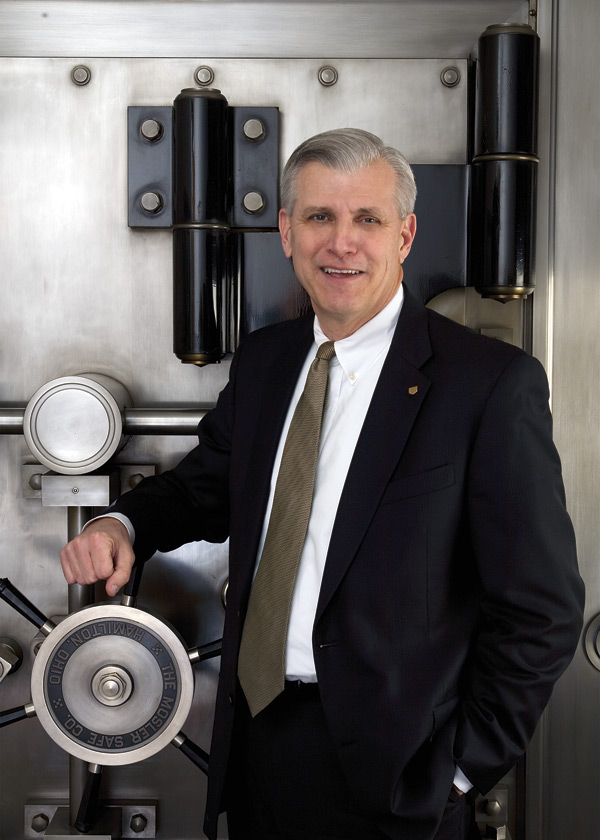
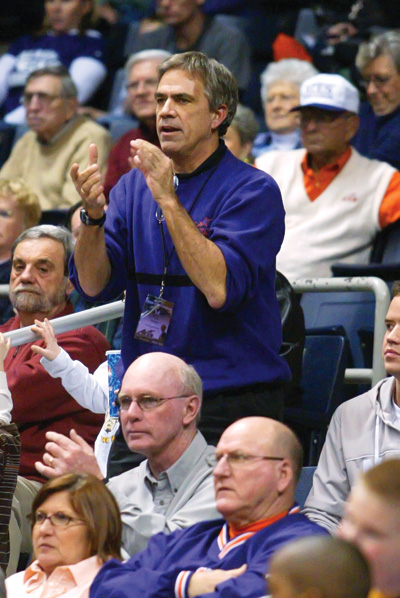
Mark Schroeder has a strong German last name. He should. His family came to Jasper, Ind., from Cincinnati in the late 1830s. It was a time when Southwest Indiana received an influx of Deutsch immigrants with classic names: Weinzapfel, Goebel, Muehlbauer, and Nurrenbern. Five generations later, Schroeder remains in the small community just east of the River City. He had joined German American Bank as a vault teller in 1972 under the influential guide of his father, Clarence. He worked his way through the ranks until landing the role of CEO in 1999.

Recently, it’s been a time in his career when many people have been focused on banks. The intrigue, borderline outrage, stems from the federal government’s $700 million bank bailout. The effects continue to have some taxpayers reeling, and so much of their anger is fueled more at governmental spending than banks “too big to fail” — such as Goldman Sachs, J.P. Morgan, Bank of America, and Citigroup — and the problems that arose from the credit crisis in the fall of 2008. Then, hundred of billions in mortgage-related investments went bad, and a credit squeeze hit Wall Street. It was the biggest crisis for the stock market since the Great Depression.

Lost in media frenzy surrounding midterm elections were issues about the banking industry. In comparison to those super banks, Schroeder’s moves with German American Bank seem wise, though he credits much of his success these past few years to the advice of his mentors who stressed the importance of time-tested management strategies. He describes German American Bank as a “regional super community bank” that didn’t get caught up in an overemphasis on the real estate securities market. Instead, one focus for German American was traditional loans, and as a lender, Schroeder focused on his clients’ long-term goals with a loan structure that was realistic for clients to repay. While the 2008 crisis had banks floundering, German American Bank posted successive record quarterly earnings.

Such successful, profitable practices continue today for German American Bank with a 100-year history in the area. In early 2010, the Jasper-based bank moved into the Evansville market by purchasing two Farmers State Bank locations. The push was needed, Schroeder admits, because Evansville is the region’s population hub. By December 2010, the company had merged with Bank of Evansville. German American’s 33 branches in the region, including five in the River City, received a boost, and the most recent figures show German American Bank had total deposits of more than $1.2 billion, total assets of nearly $1.7 billion, and shareholders’ equity of approximately $150 million.

These achievements require expert knowledge from his employees, and Schroeder says the University of Southern Indiana and the University of Evansville are two of his biggest talent pools. So in an era with banks “too big to fail,” German American Bank remains strong with an emphasis on local customers — and an employee base to match.

Switching Gears

0
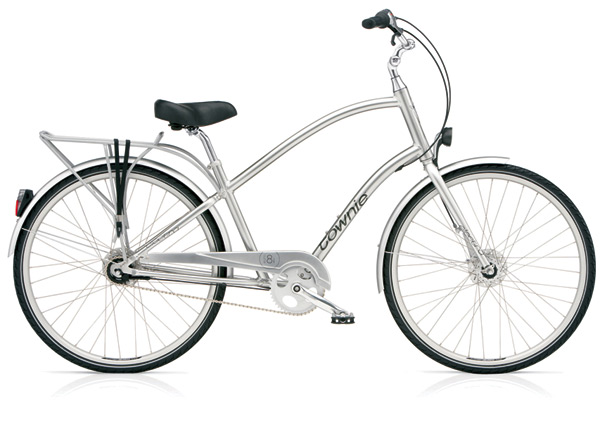
Photo of the Townie Euro 8i provided by Breck’s Bicycle Shop

Remember your first bike. Maybe it was shiny and pristine. Perhaps, your bike had streamers. You were a kid then, and though a number of efforts have been made to improve the culture of biking for adults in cities throughout America, the cons of biking to work exist. A reporter from The New York Times asks, “Will bicycling to work get you killed?”

Within the last three years, the City of Evansville has designated more than 20 new miles of on-street bikeways. The lanes include routes on Lincoln Avenue from the eastern county line to Downtown and on the West Side’s Franklin Street. Other bikeways exist; all have the same purpose to give cyclists more room and keep them safe.

For the novice ready for the benefits of commuting by bike (Healthy lifestyle! Environmentally friendly! Less gas!), the first step is to buy the right bike. In Evansville, forget about a mountain or racing bike if the two-wheeler’s main purpose is to commute. Eric Muffett, co-owner of Breck’s Bicycle Shop, recommends the Townie Euro 8i ($999.99). It exemplifies an all-around-town bike. Here’s why this commuter bike stands above the rest.

The bike’s low seat positions the pedals low to the ground, and that’s good news for bikers in heavy traffic areas. They need the balls of their feet to firmly touch the ground to stop quickly. (In the bike world, this is a big deal, says Muffett. The Townie has exclusive flat-foot technology.) Also, for commuters who ride rain or shine, Muffett says, the Townie’s roller hub brakes are special stoppers that shed water quickly to reduce dirt buildup.

The bicycle comes well-equipped with commuter essentials such as an alloy rear rack with a strap for cargo (such as a briefcase), a generator hub to power the headlight, a full-length chain guard to prevent pants from catching in the chain, and a battery-operated tail light. Additional accessories Muffett suggests for bike commuters are a bell and mirror to increase cyclist awareness. “Unless there is a designated bike lane,” he says, “people in this area aren’t programmed to recognize bicycles on the roads.” Before heading to work, Muffett suggests choosing routes that aren’t congested with traffic. “Depending on where you work, you may have to ride a little farther,” he says, “but ultimately, it’s all about safety.”

Going the Extra Mile

0

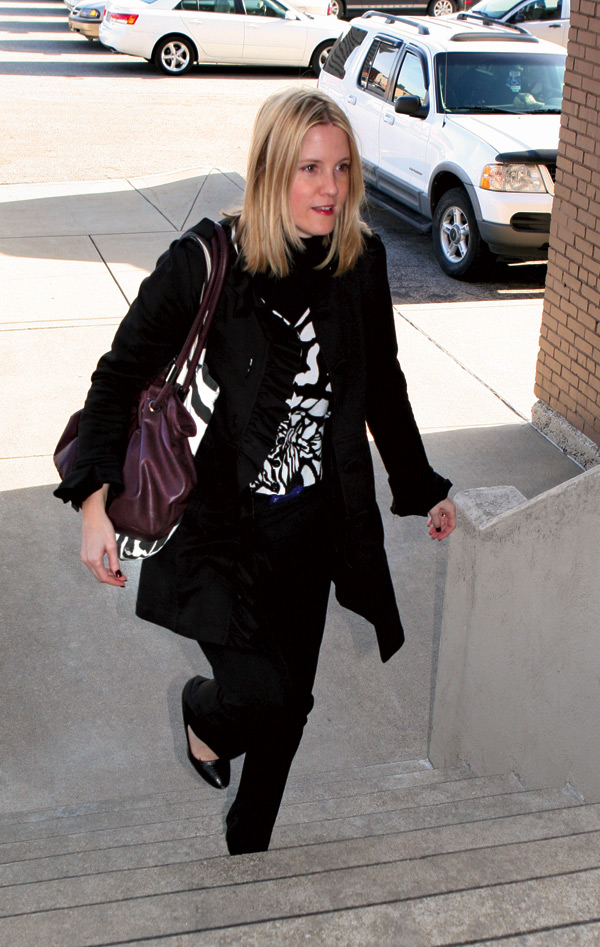
Plenty of excuses sound reasonable to me when it comes to not exercising. I have a full-time job as an account executive for this magazine (would anyone like to buy an ad?), I’m the mother of a 3-year-old (hello, Hayden), and I have a home to somewhat maintain (it’s a mess). Plus, my body type makes it easier to pass on exercise when acquaintances tell me, “You’re already thin. You don’t need to work out.”

My doctor disagrees. My HDL, or “good cholesterol,” is too low. That HDL would carry my bad cholesterol away from my arteries and into my liver, an organ that moves the bad stuff out of my body. Without enough HDL, my body can’t remove excess cholesterol from the arterial plaque. I may be slim, but I’m at risk for heart disease.

The gym is not for me, though, due to my packed schedule. Instead, I opted for a pedometer. It’s small (just centimeters wide), cheap ($8), and motivating (move!).

The rest is up to me. I’m constantly on appointments for my job, so I park my car close to work. Too often, I use the visitors’ parking spots. They’re closer to the door, and I’m in and out quickly. I also have a fondness for taking the elevator to our second-floor office. It defeats the purpose of my need for speed, but sometimes waiting for the elevator is the only break I get. Finally, I tend to overuse e-mail, including sending some to people in our office — and a few who sit next to me.

When I bought my pedometer, that all changed. The furthest spot in the parking lot became mine; the stairs were the only method between the first and second floors. I saw a lot more of my co-workers, which they may not have liked, but I needed more steps.

The concept seems deceptively ineffective. Don’t I need to be banging out more reps at the gym or crunching my abs? Not if I don’t want to. The healthy goal is 10,000 steps a day (nearly five miles), and a sedentary person averages between 1,000 and 3,000. The most steps I took in one day was 14,000, totaling 5.96 miles and burning 453 calories, according to my pedometer.

The stairs were the most beneficial. Steps are everywhere, and I rarely embraced them as an exercise option. Climbing stairs is an exercise routine providing maximum value in minimum time, with low impact. It’s the vertical element that makes stair-climbing more impactful than something like jogging, done horizontally, of course. It’s one reason why tower running has become a popular trend in cities such as Las Vegas (“Scale the Strat”) and Chicago (“Hustle up the Hancock”).

I haven’t used the pedometer long enough to see if my good cholesterol will stay with me, but these three weeks filled with steps have raised my energy level. That means a better performance on the clock and at home. The little pedometer has been the motivation I needed to be the little ad rep that could go the extra mile.

Health Care Reform

0

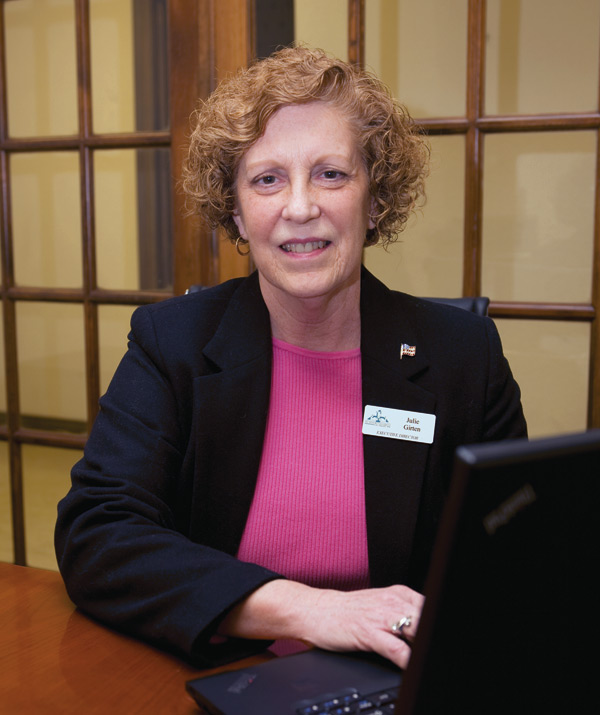
Unhealthy employees hurt a business’s bottom line, and Julie Girten hears about it daily. As the executive director of Tri-State Business Group on Health, Girten helps dozens of employers with wellness programs. Owners want healthier employees because smokers and sedentary desk jockeys are more likely to be high-cost workers requiring more health care for chronic diseases. Their sick days mean more absenteeism and less productivity. Here, Girten offers advice for starting health promotion programs to get employees healthier — and more productive.

Start small.
In the land of Super Size Me, bigger may be better, but that’s the attitude that got America into this mess. Plus, employees with busy workloads are less adept to accept new initiatives. Try for small goals, says Girten. One easy way: Invest in pedometers. Then, add a sense of accomplishment. Divide employees into teams and declare, “We’re walking to California!” says Girten. Each team adds up their mileage, and the first group who reaches the same distance as here to California (nearly 1,800 miles) wins. What do they win? Pride and a healthier body are two accolades, but you could award a more tangible prize: a free lunch, iPad, or gift card to a sporting goods store.

Lead by example.
Don’t think your employees will go for games? “You can’t force them,” says Girten. “They have to come to that point on their own.” But you’re the boss, so be enthusiastic about healthy initiatives and participate. Why should employees care about their health if you don’t care about yours? Make time for it, and they will too.

Or, stick with subtlety.
Not every method has to be a watered-down Biggest Loser competition. In the vending machines, stock healthy foods that come in single serving containers: fruits, nuts, and organic milk. If a lunch meeting is on the company’s dime, think healthy options.

Step it up.
If your employees are accepting the initiatives, expand your reach, not your waistline. Weight Watchers, the national organization with a local chapter, comes on site (for a small fee) and works with employees.

Watch for the return on investment.
Without health promotion programs, a company’s insurance costs continually will rise, but with initiatives, that insurance reduction takes time. “It’s not immediate,” says Girten. “It can take five to six years to see good, solid results.”

Ride On

0

As president of Holiday World & Splashin’ Safari in Santa Claus, Ind., Will Koch was dedicated to providing a fun, safe getaway for families. When he unexpectedly passed away last June at age 48, Southwest Indiana — and the amusement park industry — mourned. “No matter how big it has become,” wrote theme park blogger Arthur Levine shortly after Koch’s death, “Holiday World has maintained its small-town charm thanks to the personal touches of Will and the Koch family.” Five months after his death, Will was inducted into the amusement park industry’s hall of fame, a prestigious group that includes Walt Disney.

Will’s younger brother, Dan, a Florida attorney, took over. As the new president, Dan has his mother’s help. Pat is the matriarch of this family-run business known for announcing big changes every year. 2011 will be no different for the 120-acre amusement park when guests see the tyke-friendly, eight-waterslide area known as SplashLand.

Pat, while instrumental to the park’s popularity and acclaim (the three wooden roller coasters routinely make national top 10 lists), credits the staff for much of their success. Early last summer, she granted Evansville City View backstage access to one of our area’s perennial favorites. We’ll show you how that staff makes your summer fun.

Three Things…

0

We love the Greenway, the Fall Festival, and the zoo as much as the next Evansvillian, but there’s more to our city than meets the eye. From a rare book collection to a subtle war memorial, here are a few surprising local sights.

Native American Tribes Volumes

Displayed on the first floor of Willard Library (21 N. First Ave.) is a complete set of Thomas L. McKenney and James Hall’s History of the Indian Tribes of North America. The rare books, donated in 2007 by Evansville couple Paul and Adele Torian, feature lithograph portraits and biographies of 19th-century Native American leaders. Produced between 1838 and 1846, the three-volume series originally was sold as a subscription to the likes of Charles Dickens, Andrew Jackson, and the Queen of England. With little more than 1,000 copies ever produced, these books were appraised on PBS’ Antiques Roadshow for $70,000 to $90,000 dollars — and that’s “a really low appraisal,” says Willard Library director Greg Hager. The volumes are locked inside a custom-built case, but every morning, archivist Pat Sides flips the pages to reveal a new portrait to library patrons.

Monastery of St. Clare

After passing cornfields and pastures on the way to the Monastery of St. Clare (6825 Nurrenbern Road), it’s easy to see why Sister Jane Marie DeLand says, “People say we’re the best-kept secret in Evansville.” DeLand belongs to an order of cloistered nuns known as the Poor Clares, who rarely emerge from their West Side monastery. The Franciscan order came to Evansville in 1897 and lived in what now is the Christian Life Center on South Kentucky Avenue. A small group of Poor Clares now reside near Burdette Park, where they attend chapel five times daily, pray and meditate, and walk the Stations of the Cross on the monastery’s 20-acre grounds.

James Bethel Gresham Memorial Home

The modest home at the northeast corner of Garvin Park (2 Wedeking Ave.) was built for the mother of James Bethel Gresham, the first American soldier killed in World War I. Evansville, where Gresham had lived since childhood, was catapulted into the world spotlight when the 25-year-old died in a war that eventually claimed the lives of 9 million troops. He was buried in Locust Hill Cemetery, and Evansvillians collected money to build a home for his mother, Alice Dodd. That home, now owned by the City of Evansville and maintained by the Department of Parks and Recreation, often is decorated with flowers, wreaths, and other tributes to Gresham. There are no public admission hours, but Evansvillians interested in seeing the home’s interior may arrange a tour by calling the Department of Parks and Recreation at 812-435-6141.

A Film of Our Own

0
Justin Scheller with Tom Hanks

When fans head to Bosse Field this summer for Evansville Otters baseball games, they won’t see athletes in skirts, but they will see a painted message that urges the crowd to “Support the Racine Belles.” The slogan hearkens back to A League of Their Own, a $40 million movie starring Tom Hanks, Geena Davis, and Madonna.

For the fictionalized portrayal of a World War II-era women’s baseball league, Columbia Pictures officials wanted a down-home, Midwestern setting. They found it in Southwest Indiana. This year marks the 20th anniversary of the filming, which pumped $10 million into the local economy and captivated the Tri-State during the steamy summer of 1991.

Local landmarks are visible throughout the movie. The film’s featured baseball team, the Rockford Peaches, played home games at League Stadium in Huntingburg, Ind. Evansville’s Bosse Field (1701 N. Main St.), built in 1915, was home to the Peaches’ rival team, the Racine Belles. The Ribeyre Gymnasium in New Harmony, Ind., was a batting practice location; a historic Henderson, Ky., home at 612 N. Main St. served as home to the Peaches; and the north-of-Evansville Hornville Tavern was the destination for the team’s night out on the town.

Plenty of local faces, too, made it to the big screen — most were extras in crowd shots. Justin Scheller, a Wadesville, Ind., native, was cast as Stilwell Gardner. Scheller was just 5 years old when his mother saw an audition notice and took him to try out. To the family’s surprise, the kindergartener beat out hundreds of other children for the role of a ballplayer’s bratty son. He spent six months filming the movie, being tutored on set in between scenes. “I remember stupid stuff a 5-year-old would remember,” Scheller says — games of catch with Tom Hanks, gourmet food spreads with flown-in Maine lobster, swimming in Lake Michigan while filming in Chicago.

Despite his early success, Scheller — now a social studies teacher and football coach in French Lick, Ind., who turns 26 this year — didn’t pursue a career in acting. His parents, he says, “just wanted me to have a normal childhood.”

For more information on Bosse Field and a 2011 game schedule for the Evansville Otters, a Frontier League baseball team, visit www.evansvilleotters.com. General game admission is $5.

Pink Lady

0

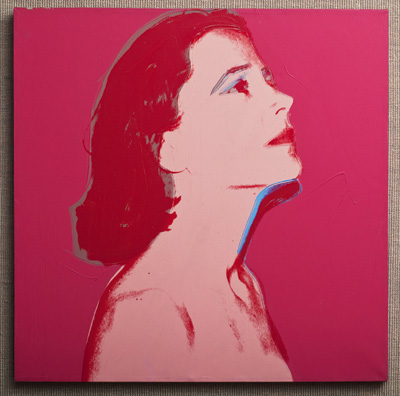
On the second floor of the Evansville Museum of Arts, History and Science hangs an eye-popping work of art: a fuchsia-toned, 40-by-40-inch portrait of a woman in her thirties. The synthetic polymer paint and screenprint canvas is signed and dated by Andy Warhol, who earned fame for his pop-art depictions of wildly diverse subjects: Campbell’s soup cans, Mickey Mouse, Marilyn Monroe, and others.

The painting, “Portrait of Carol Owen Coleman,” is displayed at the Evansville Museum on a long-term loan from the Coleman family, now residing in New Orleans. The portrait’s subject is the late daughter of Kenneth and Jane Blaffer Owen, a prominent New Harmony, Ind., couple. Kenneth was a descendent of Robert Owen, a Scottish industrialist who founded New Harmony’s utopian society. Jane, who passed away in June 2010 at age 95, was a preservation powerhouse and cultural leader who oversaw construction of New Harmony’s Roofless Church and Atheneum, the restoration of the Rapp-Owen Granary, and other community projects.

The Coleman family commissioned the portrait in 1976 through Fred Hughes, Warhol’s business manager and a friend of Carol’s. The Evansville Museum’s piece is part of a four-part series; the remaining portraits of Carol hang in the Andy Warhol Museum in Pittsburgh (Warhol’s hometown) and in a private collection in Milan, Italy.

Having an original Warhol boosts the prestige of the Evansville Museum, whose permanent collection also includes pieces by modern masters Georgia O’Keeffe and Edward Hopper and French Impressionist Pierre-Auguste Renoir. The Evansville Museum also is listed in the forthcoming Volume Four of the Andy Warhol Catalogue Raisonné, a scholarly project that attempts to document Warhol’s prolific work. Each volume of the catalogue, compiled by the Andy Warhol Foundation for the Visual Arts, includes detailed descriptions of ownership, whereabouts, and other attributes. Owning a catalogue, much less a piece of Warhol’s work, is prestigious — the volumes carry price tags of up to $700.

“We are delighted to have this on loan from the Coleman family,” says Mary Bower, the museum’s curator of collections. “Warhol’s an important American artist, and with our community tie with the subject of the painting, it certainly is unique.”

Bring Out the Wurst

0

In Southwest Indiana, we eat like Germans. (Join the weekend crowds at the Gerst Bavarian Haus, a popular West Side restaurant.) We name our streets like Germans — and we secretly love hearing newcomers bungle “Boeke” and “Schutte.”

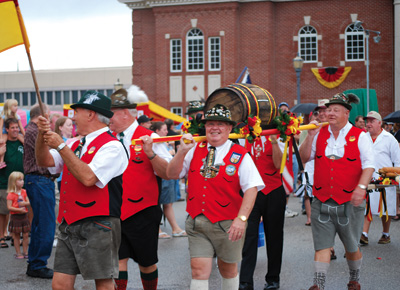
Every August, we party like Germans. Why August? Organizers swear it’s pure coincidence. Here’s a look at three of the region’s most beloved festivals and their polka-dancing, bratwurst-eating, beer-drinking patrons.

Volksfest

Evansville • Aug. 4-6, 2011 • www.evansvillegermania.com

By the mid-19th century, four out of 10 Evansvillians were born in Germany or had German-born parents. In 1900, local residents founded Germania Mannerchor, a social and singing club that still is active. At its North Side clubhouse, the group hosts Volksfest (“festival for the people”), which this year celebrates its 50th anniversary. The main attraction, says Germania’s Jim Kluesner, is the food: kraut balls, pig knuckles, and bratwurst, all made from scratch. Also on the scene are live polka bands, dancing, and plenty of men in lederhosen.

Strassenfest

Jasper, Ind. • Aug. 4-7, 2011 • www.jasperstrassenfest.org

In Jasper, Ind., school was taught in German until World War II, and many families spoke German at home. Every summer, the town’s Deutsch-loving denizens celebrate their heritage at Strassenfest (German for “street festival”). The festival draws around 30,000 visitors for events such as athletic competitions both silly and serious, polka masses (a Roman Catholic service with religious music set to a lively beat), and a beer garden playing nonstop German tunes.

Schweizer Fest

Tell City, Ind. • Aug. 10-13, 2011 • www.tellcityschweizerfest.com

The festival’s moniker may pay tribute to Tell City, Ind.’s namesake (legendary Swiss hero William Tell), but “it’s more of a town reunion than a German or Swiss-German festival,” says chairman Ken Roland. With a talent contest, a carnival, and a beer garden whose patrons rock out to country or classic rock (not polka), the Schweizer Fest is all-American fun. Similar to Evansville’s Fall Festival, local clubs, schools, and nonprofit organizations sell food to raise funds. “We’ve tried the German foods,” Roland admits, “and they just don’t go.”

Tower Assist

0
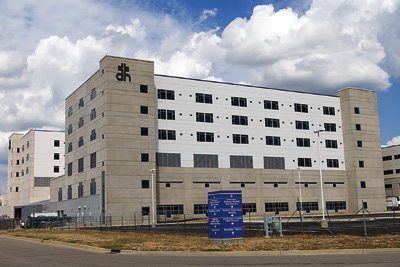
Last fall, Deaconess Gateway Hospital opened a second tower on its campus near the Vanderburgh and Warrick County lines.

Just 10 years ago, the land near the intersection of Interstate 164 and the Lloyd Expressway brimmed with untapped potential. The location, convenient to patients in Newburgh, other outlying areas, and Evansville’s fast-growing East Side, became home to The Women’s Hospital in 2001. The healthcare facility’s quick success showed administrators of Deaconess Health System (which owns The Women’s Hospital) that the area — straddling the Vanderburgh and Warrick county lines — was a prime location.

Deaconess, the region’s largest employer, operates six hospitals and more than 40 sites across the Tri-State. The Gateway campus has continued to grow, most recently with the $60-plus million addition to Deaconess Gateway Hospital. The new, six-story tower at Gateway opened last fall; it complements the hospital’s first tower, completed in January 2006.

The current addition (called Tower 2 by Deaconess employees) always has been part of the long-term plan for Gateway, although it initially wasn’t slated to open until at least 2014. But when the first tower opened, “the volume shot up,” says Bruce Epmeier, vice president of facilities and support services for Deaconess Health System, as patients arrived from Evansville’s East Side, Newburgh, and outlying areas.

The health system broke ground on the new addition in April 2009. Fourteen months later, in June 2010, several areas were complete and functional: a new loading dock and support services, a third-floor mechanical area, and a second-floor endoscopy unit. By November, the fourth, fifth, and sixth floors had opened to patients. The tower’s initial capacity was 56 beds, but it included vacant “shell space” to be configured for a maximum capacity of 110 beds. Areas in the greatest demand, predicts Epmeier, will be orthopedics and intensive care units. “We’re seeing a lot of growth in ortho cases,” he says, due to the aging population undergoing procedures such as joint replacements.

Also, because of a shortage of ICU beds, the hospital often would go “on diversion” — telling emergency medical responders to divert patients to other local healthcare facilities. “Our research shows this trend continuing,” said Deaconess spokesman Sam Rogers during the tower’s construction phase. “If beds aren’t added, the problem only will get worse.” (Since Tower 2 opened, Deaconess has been able to meet patients’ needs between its campuses instead of referring patients elsewhere.)

For inpatients, rooms were designed according to modern expectations. “People want a lot of room for their families and visitors,” Epmeier says, “and they want it private.” Although the rooms house one patient each, they’re 25 to 30 percent larger than rooms at Deaconess’ main campus (built in the ’60s and ’70s near Downtown Evansville). Studies show private rooms lower the risk of hospital-acquired infection by 11 percent, says Rogers, and patients report higher satisfaction when they stay in private rooms.

The units, too, have been designed for safer, more efficient care. Units are built around a center corridor, which makes caregivers’ trips for supplies faster and reduces hallway traffic. Computers are positioned by windows that allow nurses to check on patients while charting. Deaconess’ new EPIC system of electronic medical records went live in November 2009 for hospital inpatients, and the system aims to improve safety and accuracy: Before dispensing a medication, staff scans a bar code and a patient’s wristband. The system flashes an alert message if something is awry.

The additions at Gateway and the new electronic medical records aren’t the only changes at the health system. Deaconess Hospital’s main campus also is undergoing renovations. The hospital’s patient rooms will be converted to 275 private rooms, and older facilities such as the 1960-built Hahn Building no longer will be used for inpatient care. A new 22-bed ICU/step-down unit is planned, and construction is underway to expand the size of the emergency department and operating rooms. With the advent of laparoscopy, robotic surgery, and other developments, “the less invasive a procedure is,” Epmeier says, “the more equipment and space you require.”

Due to the investment at Deaconess Gateway Hospital, some may wonder if the health system eventually will close its Downtown hospital. The speculations are false, Epmeier says: As the population ages and the demand for health care increases, “we’re going to need both hospitals.”

For more on Deaconess Gateway Hospital and Deaconess Health System’s locations and services, visit www.deaconess.com.

Athletic Ambassador

0

In the 1950s and 1960s, University of Evansville men’s basketball games, held in the new Roberts Stadium, were so popular that husbands and wives fought over season tickets in divorce settlements. For the next five decades, this stadium was the home court of a basketball legacy. It has hosted more than 800 men’s basketball games that showcased Aces talent bound for the NBA: Jerry Sloan, Don Buse, and Ed Smallwood.

By the time John Stanley became UE’s athletic director in 2007, Evansville was entrenched in an argument: What to do with the aging facility? Roberts Stadium had a host of deficiencies and structural problems that Mayor Jonathan Weinzapfel addressed on several occasions: “The concourses and aisles are too narrow. The restrooms aren’t up to code. The HVAC system needs replacing. The stadium isn’t in compliance with the Americans with Disabilities Act.” The solution: Construct a Downtown, multi-purpose venue for athletic events, concerts, and exhibitions.

For Stanley, who grew up around the tradition of UE athletics, the new stadium was welcomed news. He was a diehard fan of the men’s basketball team, a program that had ardent support thanks in part to five championships in the college division (the precursor to Division II). UE basketball was a “leader in sports entertainment in our community,” Stanley says, and today, home games still can “give the community recognition.”

As UE’s athletic director, Stanley should think so, yet the last-place finish in the Division I Missouri Valley Conference by the men’s team in 2010 suggests the recognition needs an upgrade. Still, the team shows signs of improvement: Early in the 2011-2012 season, UE knocked off Butler University, last year’s Division I runner-up.

That’s not the only momentum the team has. In November 2011, UE hosts Indiana University at the first event held in the Downtown arena. Without the new 11,000-seat arena, Evansville never had the draw for IU to visit two hours south of Bloomington, says Stanley. We asked Stanley about the future of UE basketball.

City View: How will the new stadium better UE’s program?
John Stanley: I think that if we’re able to have success as a team and in an environment that people want to go, it will certainly enhance our attendance over time. It also will be appealing to recruits. So many of our competitors are playing in new venues, so now with our new arena, we will be able to stay up with the curve when it comes to facilities where we can play.

CV: Was there a reason to host IU specifically once plans for the new arena were underway?
JS: In scheduling, we attempt to host and play games that the community will enjoy. With the new arena, we couldn’t find any other teams to fit that mold better than IU. We thought it would be a very attractive matchup that people would come to, and that it would make a positive outcome for everyone involved. We put together a deal that makes everyone happy, which should be an objective, and that was the direction we went.[pagebreak]

CV: What are some challenges you face as athletic director?
JS: Here’s a list of 10 accountabilities I may deal with on a daily basis: fans, sponsors, donors, players, parents, NCAA, Missouri Valley Conference, the media, the faculty, trustees of the university, and others. It really makes it quite a puzzle to put together to keep things going and working for a good program.

CV: What’s your motivation?
JS: All aspects of this job make me motivated on a daily basis. I look forward to figuring out how we can improve our teams, and how we can make our student-athletes better people. Although I find it very challenging to make sure it’s a successful transition to the stadium, I’m grateful there are so many people who are willing to assist in making sure it’s fun for our fans and nice for our community.

CV: While basketball may be in the spotlight, what other UE sports get you excited?
JS: I don’t think we have a sport here that I don’t totally enjoy. We have 250-plus athletes, and I know a lot of them. It’s almost like, at some point, watching your own child play in competition. For me, going to an Aces athletic event at the end of the day is like having dessert — I look forward to it every time.

Dirt Road Warriors

0

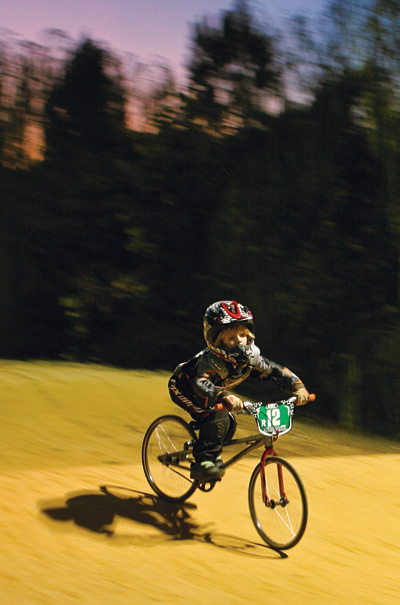
During the week, Angie Almond is an office jockey, but for the past three years, the 49-year-old mother has donned a helmet and padding to hit a dirt track with safety and style. Her adrenaline rush comes from her need for speed. “I just have such a wonderful time doing it,” she says. “It’s great exercise, and it’s a lot of fun.”

Almond was one of 436 bicycle motocross (BMX) racers who wound around the quarter-mile George Mason Burdette Park BMX track on a summer weekend last year. Riders with oversized helmets and bikes with thick tires battled for a national title by clocking speeds more than 30 mph, sprinting around hairpin curves, and launching several feet in the air over dirt hills. This annual competition attracted riders from 24 states and Canada. Their regular participation means each year the event “covers the West Side with BMX people,” says Almond, the co-track director. It’s one of 30 events held at the BMX facility from April to October.

Laura Libs from the Evansville Convention and Visitors Bureau says that the internationally recognized 1977-built track has been a valuable asset in attracting visitors to the community. Libs has George Mason, the founder, to thank for that attraction. “I wanted a place for kids to ride their bikes, and I always wanted to keep them off drugs,” he says. “It was well worth it.” Mason, a former racer, began riding when BMX was a trend. Now, retired from the sport, Mason remembers his races fondly. “I didn’t give up,” he says. “And I tell the racers: Don’t give up until you cross the finish line.” Mason still attends races each season to watch his 13-year-old grandson, his family’s third generation of racers.

His legacy continues with a small group of driven volunteers, including David Gamblin, a parent of a BMX enthusiast and co-track director. Last season, they had 30 races, such as the Battle of the Villes (Louisville, Nashville, and Evansville), an event attracting around 110 racers and hundreds of spectators. Such success is dependent on volunteers. “No one gets paid a penny,” says Gamblin. “You either ride because you love to do it, or you help out because you love to do it.”

For more information, visit www.burdetteparkbmx.org.

Justice for All

0
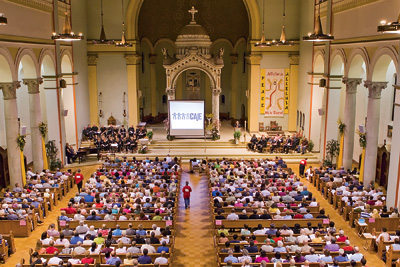
Attendees pack the pews at St. Benedict Cathedral for a public action.

The Old Testament book of Nehemiah recalls how families in Jerusalem were struggling to survive in the wake of a famine. As food costs soared, many took out mortgages on their homes and land, and government leaders continued charging interest on loans — even enslaving the children of those in debt. When Nehemiah heard a public outcry, he grew angry and called an assembly to confront officials for their unfair actions. In front of a crowd, leaders admitted their wrongdoings and agreed to cancel the debts.

This story influenced the work of Congregations Acting for Justice and Empowerment (CAJE), an interfaith organization with the goal of addressing local issues by negotiating with community leaders. The nonprofit is made up of 17 congregations: Catholic, various Protestant denominations, Unitarian Universalist, and Jewish. CAJE began in 2003 when a group of local religious leaders studied their sacred texts. One common bond: “the idea of coming together to do justice work,” says Myeda Hussain, CAJE’s executive director and lead organizer.

Each year, CAJE chooses a priority by training 60 to 70 volunteers to lead house meetings (conversations of six to 12 people) or one-on-one interviews with community members. They ask questions such as, “What makes you angry?” and “What would you like to see change?” The volunteers then report their findings and develop a ballot of the top four issues. A larger assembly of member congregations votes on the top priorities.

2011’s focuses, youth homelessness and re-entry for ex-offenders, will be discussed at this spring’s Nehemiah-inspired action assembly, open to the public. Last year, more than 1,200 people attended. Past actions have led to improvements in housing code enforcement and a new dental clinic for low-income residents. Since opening in 2006, the clinic has provided $1 million in services, Hussain says; making it happen “truly was a grassroots effort.”

2011’s public action, addressing youth homelessness and re-entry of ex-offenders, will take place at 6:30 p.m. April 11. As of press time, the location was not confirmed. Contact CAJE at 812-425-8144 or [email protected] for more information.

Where I’m From

0

We’ve digested brain sandwiches at the Fall Festival. We’ve touted the superior confections of the Donut Bank. We’ve gotten feisty in the great East/West Side debate. That makes us Evansvillians, right? Here, we offer stories about how Evansville — no matter where you are — can make you who you are.

Rain Delay

By Louis La Plante

My childhood in  Evansville was steeped in irony immediately: My last name is La Plante, French for “the plant,” and I’ve never cared much for nature. The La Plantes have a long history in Southwest Indiana. When I once called Evansville’s historic preservation officer, Dennis Au, he was excited. The La Plantes, French Canadian fur traders, settled in Vincennes, Ind., in the 18th century. Au’s hobby is French Canadian history, and he told me plenty about the La Plantes. At one time, motorists headed down La Plante Street in Vincennes, and the former cathedral there showcased a stained glass window of Jean Baptiste La Plante.

I’m not sure if Jean Baptiste, who is my ancestor, would enjoy today’s Evansville, mostly because there is no fur to trade. I once traded baseball cards in the fifth grade with a friend down the street in my Lincolnshire neighborhood. When it rained hard, he’d call me like he won the World Series. He loved playing in the rain and wanted to share the experience. I declined and opted for the more boring but more comforting feelings of being dry and warm. Once, after a rainstorm, I walked to his house where he had convinced himself of a funny skit to perform. Flooded from the downpour, the street was his stage. He lay down in the water with only his head and hands above the surface. “Don’t come over here!” he shouted to passersby. “The water’s really deep!” He wanted the illusion that he stood tall in the waters. He received not one grin, only disapproving looks and a few concerned stares.

This headliner with the one-man sewer show still is my friend, but now that he has an adorable infant daughter, he never asks me to play in the rain anymore. He’s a friend whom I bonded with specifically because we had no responsibilities. We were children with bikes, and the East Side was our territory unless it was getting dark out. It’s easy to remember we aren’t children in Evansville anymore thanks to numerous landmarks disappearing.

The Orient Express on Washington Avenue was a popular Asian eatery. The response was the same for every order. Order for one person? “Pick up in 10 minutes.” Order for 20 people? “Pick up in 10 minutes.” Everything on the menu took 10 minutes to make. Then, the building looked like it was on the verge of collapse, but the food was great. Now, the building looks like it is on the verge of collapse, but there is no restaurant inside. Wesselman Park’s batting cages — where we used to shut our eyes tightly as balls whizzed by at 70 mph — are broken, and Ross Theatre, I miss you.

While those markers from the past may be gone, other parts of Evansville have grown up with me. The riverfront now is accessible and convenient. Casino Aztar attracts a young crowd (thank you, Ri Ra Irish Pub). Newburgh developments creep west while Evansville pushes east.

One of those developments on Newburgh’s western edge is where my friend’s daughter was born — at The Women’s Hospital, a mecca to newborn beings. Six months after her birth, I offer her this advice when she is old enough to comprehend: Stay out of the rain.[pagebreak]

Puppy Love

By Dava Roth

Off Darmstadt Road on the North Side is a neighborhood that helped form my childhood. My earliest memories involve expeditions into the woods to dig caves under old tree roots where my friends and I stored our “treasures” and left secret messages for each other. We traipsed across neighbors’ yards to gather in various homes, changed our minds, and rode off on our bikes for another adventure.

After we moved into the neighborhood, my parents bought a golden retriever. Sammy was not the most brilliant creature, but he quite possibly was the sweetest. He rarely stayed home, and he became the “neighborhood dog.” If we couldn’t find him, it was because he was visiting another family. I remember many phone calls around dinnertime when I called neighbors to ask if they had seen Sammy. Once his location was discovered (as he never remained in one spot for long), I hopped on my bike to bring him home.

In his later years, Sammy fell in love with a puppy down the road. When I made dinner runs to bring home my love-smitten pup, he whined at the prospect of leaving her. We agreed with our neighbors that he was much happier with her, and he was adopted into their family. Sam retired with his new love.

Eventually, college took me away from Evansville to Taylor University in northern Indiana. I never planned to return here as I had dreams to explore. In that time, I studied and taught elementary and high school students in cities such as Cleveland and Chicago, and I traveled to Australia and England. After nearly a decade away, the love of family brought me home. I’ve now lived in Evansville since 2006 on the East Side, and I’ve never been as happy. My travels and life experiences have helped mold me into the person I am today, but I believe that it’s the upbringing I had in a small neighborhood in this city that helped me understand what “home” really is.[pagebreak]

Made by Music

Marty Harrell (As told to Louis La Plante)

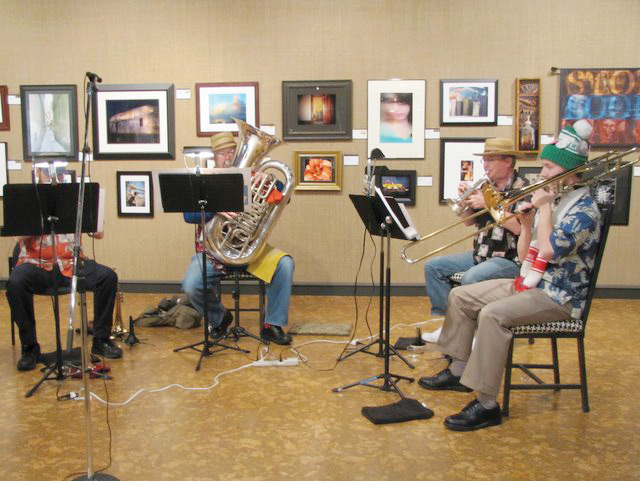
In 1960, Marty Harrell graduated from Reitz High School and spent one year at Evansville College (now University of Evansville) before transferring to Indiana University and graduating with a music degree specializing in the bass trombone. A longtime fan of big-band music, Harrell’s professional career launched after he left Bloomington, Ind.

From Asia to Europe, he’s played with legends, including Frank Sinatra in Las Vegas. For eight years, he was a part of Elvis Presley’s horn section. Now retired from professional music, Harrell looks back at the city that inspired his love of music.

I attribute a lot of my career to the educational system that Evansville provided. It was fantastic. My first memory of music was in fifth grade — deciding on which instrument I wanted to play. For some reason­ or another, I was attracted to the trombone. It just was fascinating to me how you could make different tones, different notes, and there are no valves on it.

In high school, the teachers were just fantastic. They encouraged me and guided me. There were so many different programs — high school band, marching band, high school orchestra, and an all-city orchestra and band. The programs were phenomenal, and it was like every day there were some sort of challenges or contests. Solo contests, band contests, orchestra contests — there was always something happening.

I strongly feel that the school system emphasized music. I never had any time to get into trouble because I was constantly practicing for something. (When students) get involved in the arts, there’s always a challenge. (Musicians) never perfect it. We’re always trying to get better.[pagebreak]

The Great Escape Home

By Erin Mattingly

I’m from Evansville, Ind. I didn’t always like saying that. When I was little, I wanted to live in Florida or California. According to the Encyclopedia of Earth, 65.7 percent of the world is covered by ocean, and we, in Middle America, have to drive 10 hours just to see it. Later, I dreamed of leaving my hometown for the starry lights of New York City or Boston, cities full of wonder, creativity, and possibility. It seemed that everything was happening somewhere else, and I wanted to be a part of it.

My great escape began in college when I moved to Oxford, Miss., to attend Ole Miss. Oxford is a college town with an antique heart. Classical Revival campus buildings are interspersed among the antebellum oak trees. I drank sweet tea, ate fried catfish and maple syrup in the back of run-down grocery stores, and loved my daddy and Colonel Reb like any good Southern girl.

Oxford is small, though, roughly 12,000 people, and the population doubles when the university’s classes resume. Its quaint charm pulled me in, and I became complacent in my uncomplicated life. My boyfriend had been accepted into law school at Ole Miss, and upon graduation, he planned to settle in Oxford permanently. We had been dating for two years, and my plans began to synchronize with his. He told me he’d take care of me, I wouldn’t have to work, and we’d never miss a home football game. I stopped dreaming of bustling metropolises. My chest felt heavy all the time, and I couldn’t breathe.

My life took a pivotal turn that year when I visited a friend in London. I was in awe. The history, the architecture, the fashion and personality — it was glamorous and sophisticated. I met people from France, Spain, and Australia. I took in everything and remembered the adventurous, spontaneous person I used to be. I took a deep breath for the first time in months. Things fizzled with my boyfriend when I returned.

London called again that summer when I studied abroad. I toured Westminster Abbey and the Tate Modern and watched Othello performed at Shakespeare’s Globe Theatre. I visited Holland, Northern Ireland, and spent a week increasing my melanin production on a Portuguese beach. The world kept getting bigger and bigger. After seven weeks abroad, I reluctantly returned home. I finished up my final semester at Ole Miss and came to the daunting realization that I would soon be unceremoniously expelled into the real world.

As much as I tried to get excited about this inevitable next chapter in my life, I considered the economic times. New graduates were having trouble finding a job in a downsizing market. Several friends had moved back in with their parents. Anna, an Ole Miss friend with the same affinity for exploration as me, suggested an alternative: New Zealand. I knew little about this country, but my research showed it hosted mountains, beaches, volcanoes, and rainforests. I was sold.

When Anna and I arrived in New Zealand, we didn’t have jobs, an apartment, or a single contact to assist us. After five months of working and saving, I planned a trip to see the New Zealand countryside. I flew to Christchurch and drove around the coast of the South Island in a Volkswagen camper van. I toured the celebrated wine region of Central Otago, sampled world-famous oysters in Bluff, and looked down upon the busy city of Queenstown from snow-capped mountains.

New Zealand has impacted me in a way I never thought possible. I have had my share of ups and downs, learned, and grown. Still, I was surprised how eager I was to return to the United States. After years of
expanding my horizons, I was looking forward to familiarity.

I started to notice how much Evansville was in me — my personality, my backbone, and my spirit. My high school friends laugh louder and cry harder with me than anyone else I’ve met. I appreciate the closeness of family, friends, and community in this city. We’ve all got a commonality; that muddy Ohio River water flows through our veins — whether we like it or not. I don’t know where I will end up, but I know where I am from. I will never forget.[pagebreak]

Dressed by the Best

By Adryan Dillon

My sister recently told me that she thinks I’m from the moon. A salesperson at Barneys commented on my strong English skills when he took me for a Russian girl due to my oversized faux fur hat. The woman who waxed my eyebrows thought my accent was surely southern, and that doesn’t mean Southern Indiana. And before the holidays, a colleague at my Chicago office wished me a happy trip “back east” to see my family.

I’m from Evansville. To be exact, Darmstadt, all the way out there by the Vanderburgh 4-H Center on the North Side. I love the north side of town. It has all the essentials: a beautiful public library, the airport, a movie theater with cheaper ticket prices, and Gracie’s Chinese Cuisine.

I left Evansville when I graduated high school in 2006 to attend Indiana University. I spent summers in London and New York City. Before I saw more of the world, I needed a summer closer to home, so I interned for Tucker Publishing Group. I loved driving Downtown every day for my first real job. I spent my lunch break on Main Street and learned about all sorts of places and people in the city.

One of those people was iconic fashion designer Roy Halston Frowick. Known as Halston, he changed the fashion industry in the 1970s, and decades after his death, a company bought the rights to his name for millions of dollars to re-launch the brand. His story was featured in Evansville Living that summer.

Halston’s rise from Bosse High School to Studio 54 amazed me. His list of friends and acquaintances included Jackie Kennedy, Andy Warhol, Jerry Hall, Liza Minnelli, and Evansville residents such as my gym teacher at Scott Elementary School and Halston’s childhood neighbor, Sarah Flach. Flach’s mother, Estella, received one of Halston’s first pillbox hats.

I didn’t want to be a fashion designer, but I learned a lot from Halston. He pursued his future without bypassing the lessons of his upbringing. His forward-thinking, glamour-for-all-women ethos developed in Evansville. Halston’s sister Sue Watkins summed up what Evansville meant to her brother: “He learned everything there,” she wrote in the July/August 2007 issue. “It’s where we knew he was going to make it.”

At age 23, I’m not sure where I would like to “make it” to, but Halston’s story showed me that fashion sense, more importantly an individual sense of style, could come from Indiana. I work fulltime at a public relations firm where a photo of Halston hangs at my desk, and I also write freelance fashion stories for the RedEye, a sister publication of the Chicago Tribune.

Those stories take me to incredible places. Last year, I found out I would be attending the Victoria’s Secret Fashion Show. The CBS-televised event featured today’s top models, designers, and celebrities. I was beyond excited but clueless of what to wear. I shopped up and down Chicago’s Michigan Avenue for a not too flashy (or expensive) but still statement-making dress.

I met sartorial destiny during a pass-through of Bloomingdale’s where I saw a red dress hanging on the sale rack. I knew it instantly, as I picked up the dress in my size from the rack. The dress was from the recently revived Halston Heritage collection. When I put it on, I felt like a girl from Evansville.

The Sims

0
Sim Man, a high-tech teaching tool, being used by Keith Miller, lead flight paramedic, and Pat Rauscher, chief LifeFlight nurse

The man is having trouble breathing in a St. Mary’s hospital room. He is choking on blood, and that blocked air passage means Pat Rauscher can’t perform an intubation. You remember intubation, right? George Clooney did one nearly every episode of ER by placing a tube in a patient’s mouth and down the trachea, thus saving another life. But now, Rauscher, St. Mary’s chief LifeFlight nurse, has to be the hero, and he has help: Keith Miller, lead flight paramedic.

Rauscher pours iodine on the man’s throat to prevent infection and takes a needle through the cricothyroid membrane (about one centimeter long) on the throat. With the hole in place, Rauscher guides a tube into the incision. The man, attached to a patient monitor that flashes brightly colored numbers signifying his heart rate and pulse, lies still while the nurses listen to his breathing. If it starts to return to normal, they’ve successfully surpassed the obstruction in the airway. The room — filled with nurses, a reporter, and a photographer — is so quiet. “You know, if this were a real emergency situation,” quips Miller, “the room would be this calm.”

Everyone erupts in laughter because the man with a rubber face isn’t a real patient. He isn’t a real person. He’s a mannequin — sort of. He’s a high-fidelity simulation man, a tech-heavy teaching tool for St. Mary’s employees. This mannequin, known as Sim Man around the hospital, is bilingual in English and Spanish. His fake lungs expand. His fake heart beats. His fake insides are a mix of plastic and metal. He’s one of three high-fidelity mannequins at St. Mary’s. “They are great for high-risk, low-volume procedures,” says Rauscher. The cricothyrotomy is one such procedure. “It’s a last-ditch effort where there is no air getting into their lungs,” says Miller, “and there’s not going to be any air unless you cut a hole.”

That advantage gives practitioners the most realistic experience possible without having to risk the life of a patient for the sake of practice. But to work with without life-threatening risk, the employees need Bev Farmer.

Farmer sits in a tiny room slightly bigger than a walk-in closet. In front of her are four monitors showing different angles of the adjacent room where the nurses are prepping the super mannequin for the cricothyrotomy. Her computer screen is filled with graphs of vital signs from respiratory rates to heartbeats. Another wave of the mouse, Sim Man wheezes, and St. Mary’s LifeFlight nurses work to fix it.[pagebreak]

The nurses wouldn’t work so hard if Farmer, the staff development specialist and sim lab coordinator, wasn’t controlling Sim Man. She watches and clicks. Her movements are reactions that mirror real-life responses patients experience from the procedure. For example, if Rauscher, unlike Clooney’s character, sticks the tube through the trachea, censors in Sim Man notify Farmer of the problem, and she has Sim Man’s left lung collapse. The nurses then react to a new complication when they see only one side of his chest rise. Sim Man does what Farmer tells him to do. “He does everything but move,” Farmer says.

Upstairs in the labor and delivery ward is Noelle, another high-fidelity machine that “delivers” the hospital’s third high-fidelity practice mannequin, Sim Baby. Caring for an infant is different than adults, but each high-fidelity simulation device can receive numerous treatments and procedures: defibrillation, chest tubes, needle decompression, and a long list of invasive undertakings.

The need for continued education is the reason fueling the required simulations for St. Mary’s employees from paramedics to nurses. Like pilots using flight simulators, the employees review their skills annually, and that’s enough to fill the sim lab four days a week. The technology is fairly new, popping up in only the last decade, and patient safety advocates find the labs to be good news. Pulse, a national patient safety group, estimates deaths in the United States caused by medical errors to be more than 100,000 a year. Machines like Sim Man have one function, Pulse leaders say: reducing errors and improving patient safety. Farmer leads the team of nine educators tasked to reduce that number.

Miller and Rauscher practice cricothyrotomy every three months on Sim Man. This kind of practice on Sim Man generally produces more stress, Miller admits, because in real-life situations, more people are in the room and more procedures are done simultaneously. The fast-paced stress is what increases the chances for err, but practice becomes application. “We have to deal with those stresses,” Rauscher says, “and organize our thought process. It’s nice to practice a procedure like this, but the biggest thing about (Sim Man) is improving our thought process.”

For more information on St. Mary’s, visit www.stmarys.org.

Midwest Meets Middle East

0
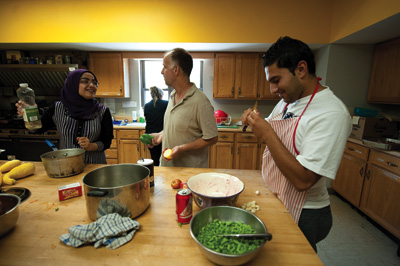
Iraqi students Veyan Agha and Areefan Ahmed join local volunteer Bill Hemminger to prepare a meal at Patchwork Central.

After a U.S.-led coalition invaded Iraq in March 2003, dramatic images filled American television screens: explosions over the Baghdad skyline, the toppling of a statue of Saddam Hussein, and looting of museums and government buildings. Less publicized was the post-invasion collapse of Iraq’s higher education system, once hailed as one of the most modern in the Middle East. Since the war’s outbreak, hundreds of academics have been killed, and students have shied away from campuses in fear of violence.

The United Nations’ refugee agency estimates that more than 4.7 million Iraqis have fled their homes in recent years; among them were Zaid Abdulmajeed and his family, who left their home in Baghdad to seek refuge in neighboring Syria. While the Mediterranean country may have been safer, Abdulmajeed — a high-school student when the war began — had little opportunity to advance his education. That changed when he heard about the Iraqi Student Project, a program that connected Iraqi refugees with American colleges and universities. He applied and was accepted.

Abdulmajeed now is a junior at the University of Evansville studying civil engineering, and the Iraqi Student Project, which brought him to the United States, is one of several education initiatives with local connections. Both UE and the University of Southern Indiana are working to provide opportunities for young Iraqis — and an important cultural exchange for Tri-State residents.

Heidi Gregori-Gahan, director of international programs and services at USI, witnessed that connection firsthand in the summer of 2010, when 23 Iraqi students arrived at USI for a six-week stay in campus apartments. The students were part of the Iraqi Young Leaders Exchange Program, a competitive program for undergraduates geared toward shaping the next generation of Iraqi leaders. After an orientation in Washington, D.C., half of the group flew to Colorado, and the other half came to Evansville.

“I have to be honest,” says Gregori-Gahan, “we were a little concerned about how the community would react to this program. But we had such an amazing response. Everybody wanted to be part of this.”

The program’s theme was community health and social services, so the group — which included Sunni and Shia Muslims, Christians, and Kurds from northern Iraq — visited Patchwork Central, toured local healthcare facilities, and participated in a Habitat for Humanity build. Along with USI staff and student mentors, they also traveled to Chicago; St. Louis; Holiday World and Splashin’ Safari in nearby Santa Claus, Ind.; and Abraham Lincoln’s boyhood home in Spencer County, Ind. The activities were well-received, but “at the end of the day,” Gregori-Gahan says, “they really enjoyed being together and hanging out with the mentors — having a normal college student experience.”

Gregori-Gahan, who has spent 30 years working in international education, calls the Iraqi Young Leaders Exchange Program the “single most amazing” program of her career: “It had such an impact,” she says, “and touched people well beyond the walls of our office.” After the students said their tearful goodbyes in August, USI allocated scholarships to bring back two of the Iraqi participants to finish their degrees at USI. They’ll return to campus this August.

Across town, UE currently is participating in three initiatives relating to Iraq: the aforementioned Iraqi Student Project, a study-abroad agreement with the American University of Iraq (which will send one Iraqi student for a semester at UE), and the Iraq Education Initiative. The latter program, administered by the Iraqi government, provides scholarships with the stipulation that students must return to work in their home country after completing a degree in the U.S.

UE is one of 22 American colleges and universities in the pilot phase, and in 2009, vice president for enrollment services Tom Bear traveled to Iraq to represent UE at a college fair. This May, four Iraqi students, all engineering majors, will arrive on the East Side campus. Bev Fowler, director of international admission and recruitment, anticipates a warm welcome from UE’s international students, who hail from 46 countries — and especially from Abdulmajeed, the first Iraqi Purple Ace. As a resident assistant in his campus dorm, an international orientation leader, and a participant in spring break service trips through UE’s religious life program, “everyone around campus knows him,” Fowler says. “He has a very easygoing, outgoing personality.”

The initiatives focused specifically on Iraq are “an opportunity to promote mutual understanding,” Fowler says. “We know the Iraqis have been through really tough times, and the young people have suffered because their education has been interrupted. (Bringing them here) hopefully will lead to a more peaceful understanding and cooperation.”

Class Warfare

0
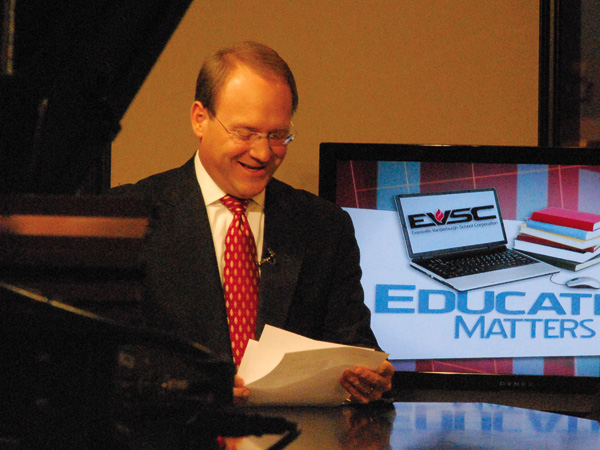
Vince Bertram laughs during a commercial break while taping Education Matters on 14WFIE.

When Vince Bertram was named the superintendent of the Evansville-Vanderburgh School Corporation in 2007, he hit the speaking circuit and met civic groups, community organizations, and political leaders. Bertram wanted change for Indiana’s third largest school system: higher graduation rates, improved test scores, and children ready for college. His first major initiative needed $171 million, and those public visits aided support for his push to build new schools and revamp facilities. After Vanderburgh County voters approved the plan, the EVSC broke ground on the Northeast Side near I-64 for a new high and junior high school. (The junior high is scheduled to open in fall 2011 and the high school in early 2012.)

Beyond the bricks, Bertram has backed new early childhood education programs and updated the technology used by students in the classroom. Those changes have seen calculable results: The graduation rate rose six percent in 2010 from 2009 to 87 percent, and standardized test scores were high enough to receive the AYP (Adequate Yearly Progress) designation, a federal requirement, for the first time since 2001’s No Child Left Behind Act was enacted.

City View: When you speak in public, you address the state of our public education system with such honesty. Is that approach beneficial?
Vince Bertram: I think we have to confront reality. We have to look at data and make informed decisions about how we are going to improve the educational system. So it’s critical for us to have open dialogue and frank discussions; in my opinion, it’s the only way we are going to improve.

CV: When the new schools open, what are your expectations?
VB: It is important to have quality facilities for our students and to have schools in areas where our students reside. We believe we are going to see a lot of growth in the northeast corner of Vanderburgh County. At the same time, we have seen significant enrollment growth in a number of our schools across the district over the last three years. We’re up over 500 students in the EVSC, which is certainly against the trend in urban school districts. In fact, we are the only urban school district in the state of Indiana that is actually growing. We hope that continues, but most importantly, we are interested in improving outcomes for our children: improving graduation rates, making sure that our children graduate from our schools with the skills and knowledge to compete in a global marketplace, and to compete for positions in higher education at their school of choice. All those things are very important to us, but if we look at programming opportunities, all those things are designed to meet the needs of students, the individual working needs of children. 

CV: One way you expect to increase graduation rates is to improve early childhood education. How will we see this affect the long-term outcome?
VB: We have a clear focus on identifying issues early and providing effective interventions. We can’t wait until students are high school seniors to determine that there’s a problem. We have educators as early as elementary school telling us that a child’s likely to drop out of high school. We’re getting to those issues earlier, more effectively.

CV: In our feature, “Where I’m From,” Marty Harrell, a 1960 Reitz High School graduate, credits much of his musical success — such as playing with Elvis Presley and Frank Sinatra — to his EVSC education and programs. How important is art and music education for today’s students?
VB: Essential. We are working to expand opportunities in the arts and to expose our students to a variety of experiences. We believe that there are a number of those types of experiences that are important. In fact, we’re getting ready for a major initiative with a company (Rosetta Stone) to provide world language opportunities to all of our students and expanding athletic participation and opportunities. All those things are very important to providing a quality educational experience.

Order in the Old Courthouse

0
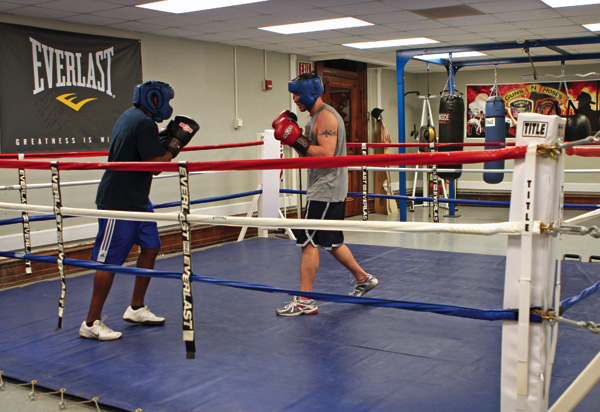
The Old Courthouse basement allows members of the Evansville Police & Fire Departments to practice for their annual boxing match

Greek goddesses and bare-bosomed muses adorn the Old Courthouse, a roughly 15,000-square-foot building with five majestic copper domes towering 216 feet in the air. “When you look at a courthouse like this, it says justice,” says Kelley Coures, the president of the Old Courthouse Foundation. With all its grandeur, the 1891-built courthouse was on the chopping block in the 1960s when a movement for newer facilities paved way for developments Downtown. What saved the courthouse from demolition, says Coures, was the high cost to tear down such a behemoth, but without the tenants who departed for the Civic Center Complex, the courthouse fell into decay.

Thanks to the efforts of volunteers like Coures, the building is 85 percent occupied today. Grants and donations helped restore what Coures calls “the significant rooms,” including the Wedgwood Room, used as a banquet hall, and a restoration of the courtroom. The latter comes from funds raised by members of the Evansville Bar Association in honor of the 100-year anniversary of the attorney organization in 2011. Renamed for the Indiana chief justice and Evansville native Randall Shepard in April, the room will serve for mock trials or, possibly, for appeals.

As much as the foundation has done for the restoration, Coures credits the tenants — from architects to haunted house operators — for improving the building. Such tenants include the Evansville Police and Fire Departments. Following a successful 2008 Guns & Hoses, a charitable boxing event that pits police officers and firefighters in the ring, the EPD’s Bill Bolin sought a year-round practice facility. The rental price he wanted: free.

He called Coures, an Evansville native, who showed Bolin the Old Courthouse basement. Like other rooms in the courthouse, plaster fell from the ceiling, and the floor showed cracks from more than a century of use. Bolin took it. He had plenty of help from the EPD and EFD. They replaced the floor with tile and built a drop ceiling. They brought in a practice ring and numerous punching bags. When thousands show to watch the annual Guns & Hoses, Coures knows the Old Courthouse played an important part.

Go With the Snow

0
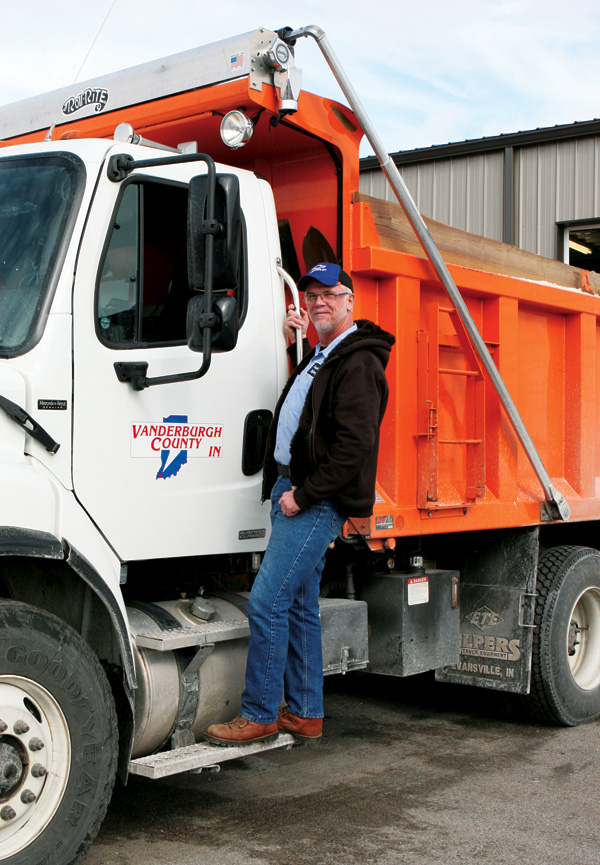
Kirk Humphrey is a 34-year employee of the Vanderburgh County Highway Department.

As Kirk Humphrey made his way down Mount Pleasant Road in northern Vanderburgh County, an arsenal of snowballs pummexled the snowplow he was driving. Humphrey traced the attack to a group of children atop a hill, and he and his coworker jumped out of the truck and launched their own lighthearted assault. But the youngsters outsmarted the drivers: They circled around the hill, and when Humphrey returned to his truck, he found the cab packed full of snow.

Childhood mischief is just one of the elements that make Humphrey’s job unpredictable. The Evansville native and Reitz High School graduate is a 34-year employee of the Vanderburgh County Highway Department, which maintains public spaces by paving roads, patching potholes, fixing guardrails, and other tasks.

Highway Department employees typically work eight to 10-hour shifts, but all bets are off when a winter storm hits. “It seems like everybody gets excited about it,” Humphrey says. As for driving the snowplow, “I tell people it’s like getting a $120 to $130,000 sled to play in — and getting paid to do it,” he says.

When a winter storm is imminent, crews pre-treat the roads with salt brine or beet juice, and when the snow begins to fall, the foremen head to the garage and call in the drivers. Humphrey’s regular route around the county’s northeastern confines takes him eight to 10 hours to cover. After main roads are clear, he tackles the subdivisions, and “that takes forever,” he says.

Highway Department workers pair up in the snowplow trucks. One person drives while the other watches for hazards — ditches, slippery intersections, and approaching vehicles. Early in his career, Humphrey once lost sight of the road and flipped his snowplow into a ditch. He walked away uninjured, but “to see the ground coming in the mirror … to see the gas tank dripping back toward the cab is kind of spooky,” he recalls. Also, before the county acquired more modern equipment, “the trucks broke down regularly,” he says, and a stalled vehicle once left him stranded for eight hours as he waited for help to come. Drivers who attempt to pass a moving snowplow pose yet another danger.

Despite the potential hazards, Humphrey says he finds his winter work relaxing. “When you get called in at 2 a.m. and no one’s out,” he says, “it’s kind of tranquil and peaceful.”

Discover the Cover

0

Need some help identifying the Evansville icons we’ve placed on the cover of City View 2011? This key should do the trick.

Old Courthouse tower: The dome of the Old Vanderburgh County Courthouse, built in 1891. (“Order in the Old Courthouse,” City View 2011)

Main Street wheel: Paddlewheel on the arch at Second and Main streets. (“The Transit Mall Paddlewheel,” Evansville Living May/June 2007)

Aces cards: Casino Aztar — or the University of Evansville Purple Aces.

Ghost and book: Willard Library, said to be haunted by its own ghost, the Grey Lady. (“Secrets of the City,” City View 2008)

Family: Married with kids? Evansville has plenty for you. (“A Perfect Day in Evansville,” City View 2009)

Four Freedoms: The Four Freedoms Monument on the Riverfront.

Dinosaur: Millie, the Tyrannosaurus rex welcoming visitors to the Koch Family Children’s Museum of Evansville. (“On the Right Quack,” City View 2007)

Cherries: The city’s various farmers’ markets, including the Downtown Farmers’ Market. (“Market City,” City View 2010)

Skyline: Cover, City View 2002.

All-America City: This distinctive sign on U.S. 41 South denotes that Evansville has been named an “All-America City” by the National Civic League. (“Profits in Partnership, City View 2008)

Basketball: We may be located in the state’s southwest tip, but we aren’t immune to Hoosier hysteria.

Snowflakes/sun/fall leaf: Evansville experiences four distinct seasons.

Marchand bridge: The Joan Marchand Bridge, part of the Pigeon Creek Greenway Passage. (“Why We Love This Town,” City View 2010)

Festival ticket: The West Side Nut Club Fall Festival, Catholic summer socials, German festivals, and other community events (“The First Full Week in October,” City View 2008; “Hot Ticket,” City View 2010; and “Bring Out the Wurst,” City View 2011)

Main Street Sign: Cover, City View 2009

Movie camera: Much of A League of Their Own was filmed in Evansville. (City View 2011)

Baseball: The historic Bosse Field is home to the Evansville Otters, a Frontier League baseball team.

Bicycle: Evansville offers plenty of bike paths (“Evansville’s Prime Paths,” City View 2007), plus a BMX track at Burdette Park. (“Dirt Road Warriors,” City View 2011)

Cross/Star of David: Evansville’s rich faith traditions. (“Binding Us Fast,” City View 2008)

Post Office window: A window in the Old Post Office, on Second Street between Sycamore and Vine streets.

Warhol painting: A painting by Andy Warhol hangs in the Evansville Museum. (“Pink Lady,” City View 2011)

Runner: The Evansville Half Marathon. (“Why We Love This Town,” City View 2010)

LST 325: The LST 325, a World War II-era ship docked in Evansville. (“52 Things to Do to Call Yourself an Evansvillian,” City View 2007)

Pizza: A few of our favorite places to grab a slice of cheesy goodness: Turoni’s Pizzery and Brewery, Roca Bar and Pizza, and The Slice.

METS trolley: Old-fashioned public transit through the Metropolitan Evansville Transit System.

Brain Sandwich: A Fall Festival favorite. (“The First Full Week in October,” City View 2008)

Beer Stein: Our heritage is so German. (“Bring Out the Wurst,” City View 2011)

Man Walking Dog: Central Bark Dog Park. (“Why We Love This Town,” City View 2010)

Greyhound: The iconic Greyhound bus station Downtown. (“Why We Love This Town,” City View 2010)

Medical Cross: St. Mary’s and Deaconess health systems

Football: High school football happens every Friday night, and Reitz High School is good. (“Coach Tony Lewis,” City View 2009).

Bridge over Ohio River: The Twin Bridges that link Indiana with Kentucky. (“Secrets of the City,” City View 2008)

Jumping Fish: Cool art on the river. (Cover, City View 2004)

Tree in Four Seasons: A state champion tree on the Evansville State Hospital grounds. (“State Champion Provides Four Seasons of Beauty,” City View 2007)

East Side vs. West Side: Rival revelry. (“Why We Love This Town,” City View 2010)

Orchid: Inside Amazonia, a Mesker Park Zoo attraction, the temperature is perfect for orchids. (“Evansville Gone Wild,” City View 2009)

Circus Tent: Thanksgiving means the Hadi Shrine Circus. (“Pure Evansville,” City View 2009)

41 Road Sign: U.S. Highway 41 — also known as Stoplight City — connects Evansville to Kentucky and our northern neighbors.

Train: Emtrac, the Evansville Museum Transportation Center. (“Historian Tom Lonnberg,” City View 2009)

Key to the City: Cover, City View 2006

Piano/Violin: We like music. (“Why We Love This Town,” City View 2010)

Graduation Hat: The River City is home to three colleges or universities. (“Educating Evansville,” City View 2009)

Vintage Car: Frog Follies car event. (“52 Things to Do to Call Yourself an Evansvillian,” City View 2007)

Ice Skate: Swonder Ice Arena. (“Evansville’s New Ice Arena,” City View 2003)

The Best Damn Chili Recipes Ever

0

Beck’s Chili

PERFECTED BY: The late Harold Beck, who acquired this recipe for the thick, bean-flavored chili from the cook at his first tavern, Harold’s Bar. He added his own ingredients when he opened Beck’s Bar, the predecessor to the popular East Side hang out now known as The Pub. In the 1990s, Harold’s son, Terry, served his dad’s famous chili at the Chili Bowl on West Franklin. Pub owner Larry “Bubbles” Pollock pulled out an old copy of recipe to share with us.

•  12 pounds of ground beef
•  4 heaping tablespoons ground cumin
•  1 heaping tablespoon garlic power
•  5 heaping tablespoons chili powder
•  3 level tablespoons cayenne pepper
•  1 No.10 can Bush chili beans and sauce
•  1 24-ounce can Bush chili beans and sauce
•  1 46-ounce can tomato juice
•  2 medium onions, chopped
•  2 tablespoons vegetable oil

Saute onions in oil. Add beef. Cook until brown. Drain fat. Add beans, spice and tomato juice. Bring to a boil. Reduce heat and simmer for three to four hours. Makes three to four gallons.

Jack’s Chili

PERFECTED BY: The late Jack Reeder, father of Evansville Living editor and publisher Kristen Tucker. Reeder, a chili aficionado, made his chili to taste, not from a written recipe. But shortly before he died in 1979 he jotted it down on the back of a bank deposit slip for his wife, Mary. Tucker’s photocopy of it is now worn, wrinkled and stained, but it’s still the best damn chili recipe in the family.

SAUTE:
•  2 to 3 pounds beef
•  Green pepper, chopped Onion, chopped

ADD:
•  Two cans tomatoes
•  Chili powder (amount listed on chili powder jar) or 4 teaspoons
•  1 teaspoon cumin
•  1 teaspoon garlic powder
•  Two cans dark red kidney beans, drained and rinsed
•  1 tablespoon salt
•  1 can tomato paste
•  1 can tomato sauce
•  Tomato juice to desired consistency
•  Lemon juice
•  Tabasco sauce

Using this base recipe, I routinely doctor it up, adding, depending on what’s in my cupboard, beer and bittersweet or dark chocolate. You can increase the heat if you add the chocolate. I also experiment with different salts: kosher and sea salt. – Kristen K. Tucker

Super Bowl Chili

PERFECTED BY: Randy Pearson, owner of the Rivertown Butcher Shop in Newburgh; and Joe Blair, host of 105.3 FM “Superhits of the 60s & 70s.”

•  1 3-ounce shaker of Joe Blair’s Chili Spice
•  2 pounds, ground chuck
•  1 pound smoked sausage or chicken breast, diced
•  6 sweet apples peeled, cored and diced
•  2 14-ounce cans diced tomatoes, drained
•  2 14-ounce cans chili beans
•  1 14-ounce can tomato sauce
•  1 10-ounce can tomato soup
•  1 packet Lipton onion soup mix, prepare as instructed
•  1 large white onion, diced
•  2 tablespoons salt
•  2 tablespoons pepper
•  2 tablespoons cayenne pepper
•  4 cups shredded sharp cheddar cheese for garnish

In large skillet combine half a shaker of Joe Blair’s Chili Spice with the ground chuck and smoked sausage. Brown and drain. In large pot combine the meat and remaining ingredients including the remainder of the Chili Spice. Slowly simmer for one hour stirring frequently. May add water during this period for desired consistency. (For crisper apples, add with only 15 minutes left.) Serve with oyster crackers and shredded cheese. Great with grilled cheese or peanut butter sandwiches. Serves 8 to 10.

Kraut Haus Chili

PERFECTED BY: Jim Kluesner and Don Hillenbrand, both members of Germania Maennerchor, the century-old German singing club on the West Side. Neither man has ever written down the exact ingredients, but agreed to cobble together a recipe for Evansville Living readers. Look for Kraut Haus Chili at the Germania Maennerchor’s booth at the West Side Nut Club Fall Festival.

•  2 pounds ground beef
•  2 pounds ground sausage
•  2 pounds coarsely ground venison
•  2 cups chopped onions
•  3 large green bell peppers, cut in strips
•  9 tablespoons chili powder
•  6 teaspoons sugar
•  6 cloves garlic, minced
•  12 cups sauerkraut, rinsed and drained
•  10 cups diced tomatoes 3 cups tomato sauce
•  1 1/2 teaspoon salt Pepper to taste.

Brown meat in vegetable oil. Drain off fat. Add onions, garlic and green pepper. Cook five minutes, stirring constantly. Add chili powder, sugar, garlic, sauerkraut, tomatoes, tomato sauce, salt and pepper. Simmer one to two hours before serving. Serves a crowd of 18-20.

Five Fancy Fingers

0

Having numb and frigid fingers isn’t fun. As the cold weather lingers, it’s smart to get a fashion accessory that looks cool yet keeps you warm.

The House on the Hill

0

To sledding enthusiasts, the East Side mansion in the 400 block of Hebron Avenue facing Lincoln Avenue is known as the “big white house on the hill.” But to local historians, it’s known as the Cameron estate, built by a multi-millionaire oil baron with an eye for Hollywood starlets.

The property is now owned by the neighboring Bethel Temple Community Church at 4400 Lincoln Avenue. Church elders acquired the property in 1992 to use as a home for visiting guests and missionaries and a meeting place for Bible study groups. The first floor remains devoted to church activities, while the third floor houses an apartment for visiting missionaries. The second floor has been transformed into a home for Brian Kerney, Bethel Temple’s director of life development, who lives there with his wife, Amy, and their two young children, Joseph and Elizabeth. The Kerneys’ sloping front lawn has been a favorite sledding hill for interlopers for as long as they can remember. “People come from all over and use it,” Amy Kerney says. “Sometimes, we’ll sit inside and watch all the action from our house.”

The house was built in the early 1940s by Arthur Cameron, a Kentuckian who bought the land to fulfill a childhood dream of living in a mansion on a hill. At 400 feet above sea level, the house sits on one of the highest points in the city and at one time could be seen from a mile in any direction. Cameron made his fortune in the oil industry, and according to local history accounts, bought some of the construction materials on the black market, due to shortages caused by the war effort.

Cameron was married at the time to the 1930s B-movie actress June Knight – the first of his four wives. They built a swimming pool and a tennis court on the property and installed floor-to-ceiling picture windows on the back, known as “Hollywood windows.” Knight left town after Cameron divorced her to marry movie starlet Kay Aldridge (called  “one of the most photographed women in the country in the 1930s” by The New York Times) who lived in the house for a few months before the couple sold it to move to Beverly Hills. Cameron had two more wives after that – model Jean Lawrence and the legendary long-legged tap dancer and actress Ann Miller (Gene Kelly’s co-star in “On the Town.”) The tennis court is long-gone, but the swimming pool remains, though it’s now part of the property owned by a neighbor. The home eventually ended up in the hands of Max Hartley, a longtime photo stylist for Donahue Photography Studios.

What’s changed in recent years is the addition of a retaining wall at the bottom of the hill, which now separates the property from the Bethel Temple parking lot. It hasn’t diminished sledders’ enthusiasm. “Some people slow themselves down before they get to the wall, but some people just fly off the wall on purpose,” Amy Kerney says. “I think that would be painful.”

Weather’s Worth

0
2009 Ice Storm

On Dec. 24, 2004, a record-setting 19.3 inches of snow covered the Tri-State in one day, but the snow that fell on Jan. 27, 2009, caused far more damage. The five inches of snow, combined with an inch of solid ice, led to power losses for tens of thousands of Evansvillians, who relied on the warm outreach and homes of their friends, families, and neighbors for support as some outages lasted for a week. More than 100 counties in Indiana, Kentucky, and Illinois declared states of emergency, and more than 30 people died.

This ice storm quickly became one of the most damaging weather events in Evansville’s history. As local weather historian Harold Morgan knows, it wasn’t the first time the Tri-State’s been hit with bad weather, and it won’t be the last. With Morgan’s help, we look back at the major storms that, yes, caused terrible damage, heartache, and loss. But, in the storms’ aftermaths, the community proved it had a compassion for the victims and a determined spirit to endure.

1816’s Year without a Summer

The kingdom Tambora in modern-day Indonesia disappeared in a matter of minutes in 1815, under billions of tons of rock and ash during a violent volcanic eruption from Mount Tambora. The winds pushed the abundant dust particles throughout the world, causing the year without a summer and a big global climate change, which led to the death of tens of thousands. “The year without a summer lasted about five years, but 1816 was the worst,” Morgan says. “It may well have snowed here in September to begin the real winter, which would only have given a growing season of two or three months. The farmers would have planted early and lost the seed to the cold and damp soil.” Droughts, famines, and deaths were common throughout the world.

April 30, 1852: New Harmony Tornado

John Chappelsmith documented the first scientific study on a tornado that crossed three states on a 250-mile path that killed three people in New Harmony, Ind. Hired by the Smithsonian Institute, he sketched what he saw by tracking the destruction of the tornado, which felled 7,000 trees per minute, left. His 12-page account was the first to conclude tornadoes rotate.

Blizzards of January 1918

In the early months of 1918, nearly 70 inches of snow fell in 30 days — 41 inches in January alone. By Jan. 12, the city was already fed up with the weather as one newspaper headline read “Fifth Blizzard Paralyzes City.” A brief moment of sunshine flashed Jan. 14, and snow-covered citizens seemed ready for a change: “While the sun shone cheerfully, everybody turned out to show King Winter he wasn’t boss,” read a Jan. 15 newspaper lead. The next day, as Evansvillians dug their way out, they piled snow banks as tall as eight feet along Main Street.

Tri-State Tornado of 1925

After forming in Missouri around 1 p.m. on a March 18 afternoon, the tornado, described by witnesses as an “amorphous rolling fog,” barreled through Illinois, killing hundreds. When it reached Indiana, the tornado hit the muddy, flooded banks of the Wabash River. The funnel sucked up the mud and blew it onto the people of Griffin, Ind. After nearly four hours, the tornado had traveled 219 miles and died out in Petersburg, Ind. This was decades before radars and satellites, so meteorologists are unsure whether it was one tornado or a “family” of tornadoes that came from one storm. What is clear: The Tri-State Tornado killed nearly 700 people, injured more than 2,000, and destroyed 15,000 homes. In Southwest Indiana, the death toll neared 70 people. Recovery efforts cost more than $16.5 million — that price tag would be well into the billions today.

1936 Heat Wave

About 5,000 people are estimated to have died from the effects of the heat in the United States during 1936, most of them during this event. On July 13, 1936, temperatures in Evansville reached 108 degrees. During the heat wave, five consecutive days were above 105, and 78 days were above 90. In Evansville, steel workers along the river plaza, surrounded by heat-trapping metal, suffered through 132-degree temperatures for four consecutive days. The hot steel beams easily blistered their hands. Long before air conditioning was a common household fixture, people took refuge in local movie theaters that had adopted the technology.

The Great Flood of 1937

December of 1936 was one wet month. The new year didn’t bring relief. Rain, snow, and sleet were the norms most January days, and the accumulation of snow and ice prevented rainwater from soaking into soil. By Jan. 10, the river passed flood levels, and 76 million tons of water dumped into Vanderburgh County, not receding until Feb. 19.

As the flood approached its crest at 53.75 feet, “Evansville literally turned into an island, totally surrounded by flood,” says Morgan. “My brother-in-law’s family had to leave the West Side of Evansville and walk the railroad tracks in rain, snow and sleet into southern Illinois.” They were not alone as thousands were evacuated, and water covered 500 blocks in Evansville. Farmers led livestock into their homes.

One leader of the disaster relief, General Robert Leich, reflected on the flood 20 years later: “Not realizing, of course, that World War II was just around the corner, I thought I would never again see this city so united in one effort and purpose as it was during the 1937 flood.” Even Girl and Boy Scouts became important volunteers, setting up cots and carrying boxes of food to feeding stations.

The flood inspired the $55.6 million Evansville Flood Control Project, which took 57 years to complete. The U.S. Army Corps of Engineers designed gates to shut off a rising Ohio River, preventing the waters from sluicing through the city’s drainage system.

Tri-State Blizzard of 1978

This storm birthed the famous “I’m carrying a blizzard baby” T-shirts (pun intended). The blizzard kept thousands of Indiana residents cooped up for days in late January, and the result was a fall “baby boom.” That was the rumor, anyway, until doctors announced the number of October births was actually below average.

The blizzard was too severe for baby-making, it seemed. In January 1978, nearly 30 inches of snow fell. Roofs caved in. Supplies, groceries, and fuel never made it to Evansville on the snow-covered roads. What’s remembered most was the blast felt on Jan. 26. Winds raging up to 55 mph whipped through snowdrifts 10 feet high and created a wind chill of minus 50 degrees.

1997 Flood

On March 1, a fierce storm system dumped more than 10 inches of rain over most of the Tri-State. The Ohio River flood of 1997 affected nearly 25,000 families. For months, automobile tires, plastic containers, and other debris became one of the lasting legacies of the flood. The water-filled tires, which had floated away from a tire dump on Red Bank Road, piled up in ditches and fields, becoming havens for mosquitoes — and a major concern for Vanderburgh County health officials. Vanderburgh County was declared a federal disaster area along with several Indiana counties. 

Nov. 6, 2005 Tornado

At 2 a.m. on a Sunday morning, a deadly tornado cut a path of destruction for 41 miles, beginning in northern Kentucky in Ellis Park and finally lifting in Degonia Springs, Ind. Winds up to 200 mph struck after an unusually warm November day. The hardest hit area was Eastbrook Mobile Home Park, just outside of Evansville along Interstate 164. Some 2,000 tons of debris from the trailer park filled three area landfills. Since the tornado hit in the middle of the night, thousands of people were caught off guard. Hundreds were injured, some were trapped under debris for hours, and 25 people were killed. More than 300 rescue workers, firefighters, police officers, Indiana National Guard soldiers, and volunteers responded that night, and thousands of others joined in the recovery efforts in the months that followed.

2008 Windstorm

In the first half of September, Ike — the most costly hurricane for the United States in 2008 — struck southern Texas and Louisiana, and surging, 50-foot waves pummeled the coastline. Homes vanished beneath the surf, and disruptions in oil drilling and gas refinery led to gas shortages in the South.

The remnants of the storm blew up to the Tri-State on Sept. 14 when gusts of nearly 80 mph broke tree limbs, ripped off roofs, and caused massive power outages. More than 40,000 in the Evansville area were left without power, and 100 crews worked 16- to 20-hour days to return service to the community.

Weather Watch

Check out the our full weather feature in the May/June 2009 issue.

In Evansville, the weather offers plenty to discuss — wicked winter wind chills, spring storms, and the summer humidity. Here, we look beyond the daily highs and the chance of rain. How does the weather define our city? We’ve teamed up with the local weather experts at 14WFIE to give you a glimpse of how the weather impacts our lives.

Changing Weather

From wacky reports to serious forecasts, today’s meteorologist needs both
By Jeff Lyons

By 10 p.m., the old Zenith in my childhood living room had been glowing much of the night. Under the spell of its hot Bakelite aroma and the precise positioning of the rabbit ears, I joined my family as Gunsmoke, Hawaii    Five-O, The Waltons, and I Love Lucy all had their turn on the tube. But there was one more show I begged to see. “Just 15 more minutes, Mom. Just let me watch Marcia!”

For Tri-Staters throughout the 1970s and ’80s, there was one place to be at 10:15 p.m. Sunday through Friday: sitting in front of the TV, watching Marcia Yockey’s weather forecast. For 35 years –– from the debut of local television in Evansville in 1953 to the year of her retirement in 1988 –– Marcia was the queen of local television weather. Her meteorological background, wacky personality, and charisma drew top ratings.

She presented her forecast using a huge map of the United States covered with Plexiglass. On this surface, she drew wavy black lines to show pressure patterns and cold and warm fronts. She’d write temperatures for at least 100 cities on the map. Scotch-taped to it were Polaroids of her cat named “Bird.” When her weather segment began, she’d dip a jumbo magic marker into an ink jar, drawing on the map and talking simultaneously.“It’s raining buckets in Pocatella,” she’d exclaim. “This front wig-wags through St. Joe to Tucumcari. I’ve got a lady going up to the Sioux. Better take a jacket, lady!” It was eight minutes of interaction with her viewers before the screen faded to a Hesmer’s Mush commercial featuring Marcia in her kitchen. By today’s standards, the technology was arcane, but the connection between Marcia and her viewers was as tight as the rubber band in her ponytail. She was like a member of the family.

I couldn’t get enough of it! I had a map in my room covered with waxed paper that I could put the cold fronts on. I watched Marcia every night on summer vacation. Everybody seemed to have a Marcia Yockey story to tell. My dad loved to take the family on Sunday drives. Once, while cruising along the river in Newburgh, he spotted Marcia on her bike. “Hey Marcia, how’s the weather?” he shouted out the window as we whizzed past. We were transfixed. We saw Marcia! Sure enough, that night, Marcia recounted the story on the air, and my dad nearly burst with pride. “That was me!” he exclaimed.

Fast forward to 1988, the year Marcia retired, and I began working at 14WFIE where I landed a job as a weathercaster/reporter for the midday news. I was assigned Marcia’s old desk, complete with a drawer full of rubber bands for her ponytail and a treasure trove of old tapes of her weathercasts. I worked alongside Marcia on a couple of telethons and paid tribute to her at her 75th birthday party.

For Marcia, technology was largely invisible on the air. Folks tuned in to be entertained and informed, but mainly, entertained. The nightly weathercast was a vehicle to give a little weather forecast and have a lot of fun. As I entered the field, personality was still the top draw. Not only was creativity and humor encouraged, my managers and viewers expected it. After all, it was our legacy. The station had a long line of crazy weather personalities who were well-known for their antics. I had a lot of fun in the first half of my career dressing up, falling down, and taking the weather on remote to joke around with folks. Then, right at the new millennium, technology began to take center stage.

With the advent of the Internet and access to almost instant information, viewers came to expect more from their television weathercasts, and we could deliver with the whiz-bang technology of today that melds the science of meteorology with the flash of a Wii game. I can track storms on radar from the chroma-key wall via a video “touch screen” that I use to select high-tech tools to look at thunderstorms in 3-D. Our viewers submit up-to-the-moment reports, photos, and videos, which can appear on the radar display the moment they are sent.

Weathercasting today is a fine balance between technical expertise, meteorological knowledge, and personality. In my 20 years with 14WFIE, I’ve tracked many tornadoes, severe storms, winter weather, and everything in between. Through thousands of forecasts, the viewers know that I’ll be there for them at any hour of the day or night when storms roll through, but they also know that I have a sense of humor and don’t take myself too seriously. They want to trust me and know that I’ll use all of my tools to track storms and keep them safe. After all these years, the connection with viewers is still king. From Marcia’s marker to the completely interactive 14 First Alert Dual Doppler Radar, the tools keep getting better to continue the rich tradition of connecting with the viewers. After all, we’re practically family.[pagebreak]

Chasing the Wind

Adventures from an on-the-go weather spotter
By Bryon Douglas

As a meteorologist  at 14NEWS, I can learn a lot about the weather from computer models and real-time information produced by our 14 First Alert Dual Doppler Radar. But to verify the complete story, I often venture outdoors with my video camera and cell phone to observe the sky. I’m a mobile weather spotter –– also known as storm chaser –– and in that role, I’ve learned you never know what to expect.

Preparations for a chase day usually begin a day or two before the advent of severe weather. A powerful thunderstorm requires moisture, instability, wind shear, and a charging cold front to lift and rotate itself into a tornado. Looking for those approaching conditions helps me determine when and where to start my day. Since most storms that hit Evansville move in from the West, I often begin in Southeast Illinois, which has a topography similar to Oklahoma and Kansas that allows me to see great distances. If I see a storm structure favorable for severe thunderstorms, I call my colleagues, fellow meteorologists Jeff Lyons and Chad Sewich, to pass along the information.

Once I spot a storm, I try to view it from the right flank, staying on the southeast side of the storm. It’s the safest viewing location to keep me out of the storm’s path. Contrary to popular belief, storm chasers do not purposely put themselves in harm’s way, but our plans don’t always work out.

A case in point: On Jan. 29, 2008, I shot a video of a tornado while driving west on Interstate 64 near Poseyville. There was no way I was going to stop the car to get out; Jeff had just reported 70 mph winds in nearby Carmi, Ill., heading my way. So I lowered my window, and once I put the tornado in my viewfinder, I put my eyes back on the road and held the camera steady for as long as I could. When it was safe, I pulled off the interstate and drove into Griffin to relay the information back to the station and the National Weather Service. Unfortunately, the tornado claimed two lives in Posey County.

As a storm chaser, I am most scared of lightning –– the most unpredictable part of a thunderstorm –– and flash flooding. The latter caught me off-guard one night in Wayne County, Ill., while I was busy viewing a rotating thunderstorm while driving. The roads were flooded more than I thought, and my vehicle started to hydroplane. Soon I saw that the highway was littered with snakes from the Little Wabash River. I stopped in Fairfield, Ill., where I filmed residents evacuating their homes due to the flash flooding. I returned to the station with a flooding story on a night that was supposed to be packed with violent thunderstorms and isolated tornadoes. But on this storm-chasing trip, flash flooding was the story Mother Nature provided.[pagebreak]

First Response

Knowing a storm’s strength requires a hands-on approach
By Chad Sewich

On the second Sunday in March, a line of severe thunderstorms and tornadoes swept through the Tri-State but spared Evansville. The National Weather Service later rated one of the tornadoes an EF1 and another an EF-2 on the Enhanced Fujita Scale, the official rating system used in the U.S. since 2007 to determine tornado intensity.

How did they know where to rank them?

Discovering the answer to that question can best be told by a look at what happened the day after the storms hit when I traveled with damage-assessment teams from the NWS. Four teams of meteorologists determined the intensity of the damage inflicted on the area and to find out its cause.

My position at 14NEWS is unique in that I’m almost always in the studio during severe weather and then out in the field reporting on the aftermath. It’s a perspective that gives me a hands-on approach to forecasting.

On March 9, the day after four confirmed tornadoes had hit the area, the teams arrived with this goal in mind: to determine if tornadoes or straight-line winds caused the toppled trees, the flipped mobile homes, and in some cases, the severely damaged houses in the area. Complicating the investigation was the widespread damage that had been done to trees by the January ice storm.

I met up with one team that spent the day combing through Wayne County, Ill., for signs of a tornado footprint. The storm’s path was easy to spot. On a farm south of Cisne, Ill., we saw what remained of a large, metal machinery building that had been blown into the air, slicing off treetops. We found twisted metal from the building in a farm field about a quarter of a mile away. Based on those signs and others, the National Weather Service declared that an EF-1 category tornado wwith winds approaching 110 mph had hit the area. Later that day, again based on a site assessment, the NWS discovered a tornado track through Enterprise, Ill., indicating an EF-2 tornado with winds up to 135 mph.

Since storms rarely pass over a wind gauge –– and would probably destroy the instrument if they did –– determining the strength of a tornado is a scientific “best guess.” But there are clues. Straight-line winds, for example, typically leave damage falling in the same direction and over a wide area; tornadoes, on the other hand, typically leave a twisting footprint in a narrow path.

As a replacement of the Fujita Scale, the Enhanced Fujita Scale, designed to determine the strength of winds within a tornado, serves as a reminder of the damage, often fatal, that can be caused by a storm. The EF scale runs from EF-0, a relatively weak tornado that may only topple small trees, to a terrifying EF-5, a tornado with winds over 200 mph that rip a home off of its foundation.

The Best of Everything

0
View the full feature in the January/February 2011 issue of Evansville Living.

Stylish shops, inspiring people, and plenty of fun — it’s hard to pick favorites, but every year, our readers and editors cast their ballots and declare what makes our city great. From the classic to the quirky, we present this year’s list of winners.

Fun

Weekend Getaway

City Museum, St. Louis   Editors’ Pick

A geography lesson: Evansville is a great city surrounded by numerous great cities. Part of our location’s charm is its proximity to weekend trip destinations, including the City Museum in St. Louis. The wacky museum boasts reasons for every family member to attend, including the Enchanted Cave, built within a historic shoe factory’s spiral conveyor tunnel system, and MonstroCity, a playground built with aircraft fuselages, a fire engine, and a castle turret. Want more adult appeal? The Four Seasons Hotel in downtown St. Louis boasts the Lumière Place Casino on its first floor. The hotel offers amazing views of the Gateway Arch, the Mississippi River, and beautiful Midwest sky. The contemporary look of this five-star hotel brings a sense of relaxation — and the indulgent spa services certainly calm the nerves, too.

Bar for Grownups

Bar Louie   Readers’ Pick

In summer 2009, this chain opened in an East Side building (7700 Eagle Crest Blvd.) where restaurants hadn’t lasted long. (Remember the ill-fated Pasta Grill and Mangiamo Italiano?) Bar Louie is the success story. With oversized sandwiches, a cosmopolitan appetizer menu, and a huge martini menu, it feels like a big-city bar where people mingle after work and late into the night.

Place to Take a Person Visiting Evansville for the First Time and Place to Bike

Downtown Riverfront   Readers’ Pick

Credit former Mayor Frank McDonald II for the $11 million renovation of the Riverfront. The new face of the city opened in 2001, and the renovation with a greenway trail, scenic overlooks, and seating for thousands of people continues to attract bike riders, joggers, and visitors.

Venue to Hold an Event

The Centre   Readers’ Pick

Known for Broadway shows, touring comedy acts, and concerts in the Aiken Theatre, The Centre (715 Locust St.) also hosts nearly 300 events a year — from wedding receptions to trade shows to charity galas.

Formal Charity Event

Deaconess Party of the Year   Readers’ Pick

“Party of the year” is a tough name to live up to, but when the president and CEO of the region’s largest employer rides a Harley into a gala, the fundraiser is hard to forget. And when Deaconess leader Linda White lets loose, others follow. Last year’s Fire and Ice theme encouraged attendees at this black-tie-optional gala to wear red — all in support of Deaconess’ charitable foundation.

Non-Nut Club Festival

Tie: Jazz, Wine and Arts Festival and Wine, Art and Jazz Festival   Readers’ Pick

We love the West Side Nut Club Fall Festival as much as the next Evansvillian, but there are parties to be had off Franklin Street. Our ballots are write-in only, and our readers enthusiastically submitted so many combinations of “jazz,” “art,” and “wine” that it was impossible to choose a winner between two great events: the Jazz, Wine and Arts Festival and the Wine, Art and Jazz Festival. The first is a fall event on Downtown’s Main Street. The second, a May festival on Newburgh’s Riverfront, comes from Evansville Living and Historic Newburgh.

Radio Station

WIKY   Readers’ Pick

Last year, WIKY’s Diane Douglas won Best Radio Personality, but she’s just one part of a dedicated, experienced team familiar with the city. In the world of journalistic outsourcing, WIKY (104.1 FM) is a rare gem: Its news and talent are right here in town.

Ladies’ Night Out

Blush   Readers’ Pick

Flat-screen TVs hanging from the ceilings play sports events, but they almost disappear into the stunning atmosphere at the cosmopolitan-cool Blush (615 N.W. Riverside Drive). A two-story bar, lists of fancy cocktails, comfortable modern chairs, and walls of windows make this a place for gal pals.

Guys’ Night Out

Fox and Hound   Readers’ Pick

Shuffleboard. Check. Pool tables. Check. Darts. Check. TVs to watch the big games and bigger fights. Check. With an impressive drink menu ranging from imported dark beers to Indian pale ales, Fox and Hound (5416 E. Indiana St.) is all about spirits, sports, and fun.

Free Culture

Evansville Vanderburgh Public Library   Editors’ Pick

When the late Argentine writer Jorge Luis Borges declared, “I have always imagined that Paradise will be a kind of library,” he probably wasn’t envisioning a giant map of Asia covering the floor in the children’s section. Or a Tales and Scales performance in the lobby. Or exhibits of photography, sculpture, and paintings. But in our city’s fantastic public library system, these programs — like the books — are worth checking out. The best part: You won’t need your wallet.

Day Spa

Absolute Beauty   Readers’ Pick

Here are a few spa buzzwords: paraffin dip, vitamin C mask, aromatherapy, and microdermabrasion. These services (and plenty more pampering) are available at Absolute Beauty (7144 E. Virginia St.). Try the Fusion Massage, a blend of relaxation, deep muscle, hot stone, and aromatherapy techniques.

[pagebreak]

Shopping

Virtual Knowledge

GameStop   Editors’ Pick

The simple joystick of the first video game system is long gone. Today’s systems have multiple functions — from gaming to online video streaming to playing Blu-rays. For questions beyond our comprehension, it’s nice to have GameStop (800 N. Green River Road; 6401 E. Lloyd Expressway; 222 S. Red Bank Road), a place staffed with gamers who not only sell systems but also passionately play them.

Lingerie

Victoria’s Secret   Readers’ Pick

In 1977, Victoria’s Secret was founded by a California man who was mortified trying to buy lingerie for his wife in a bustling department store. When Victoria’s Secret opened in Eastland Mall (800 N. Green River Road) in 1992, it followed the formula of the first store in San Francisco: a shopping experience low on embarrassment and big on sexy (not sleazy) lingerie that offers a luxurious mix of form and function.

Place for Statement Shoes

Dillard’s   Readers’ Pick

Marilyn Monroe once quipped, “Give a girl the right shoes, and she can conquer the world.” Our readers say they find just the right shoe at Dillard’s in Eastland Mall (800 N. Green River Road), whether it’s a killer heel by BCBG, a funky Coach sneaker, or a cozy Ugg boot.

Athletic Attire

Dick’s Sporting Goods   Readers’ Pick

It’s that time of year: the post-holiday rush of making New Year’s resolutions, joining gyms, buying treadmills, registering for road races, and signing up for exercise classes, all in a madcap attempt to bump the scale down a few digits. From footwear to fitness equipment, our readers say Dick’s Sporting Goods (6601 E. Lloyd Expressway) helps them gear up for an active lifestyle.

Shop Girl

Beth Martin, The Barefoot Cottage   Editors’ Pick

The custom-built wooden hutches. The playful “What Would Julia Do?” kitchen towels. The fabric-covered journals, hand-painted wall art, and bath soaps creatively displayed in an egg carton. We can’t help but swoon over just about everything in The Barefoot Cottage (1021 Lincoln Ave.), including its charming owner, Beth Martin. Martin’s manner is as easy and breezy as her shop, filled with whimsical yet down-to-earth treasures reminiscent of Anthropologie (but at Evansville prices).

Sexy Jeans

House of Bluez   Readers’ Pick

Arguably one of the best reasons to purchase the aforementioned athletic attire: rewarding your newly toned butt and thighs with a fabulous pair of jeans. House of Bluez (333 Metro Ave.) owner Jodi Merrick is a diva of denim, helping customers navigate a myriad of designer labels — and their oft-tricky sizing — to find the perfect fit.

Men’s Suits

Men’s Wearhouse   Readers’ Pick

Some men’s clothing stores only offer pleated, cuffed suit pants — a fine style that always will be with us. How about flat front pants? For both options: Men’s Wearhouse (163 N. Burkhardt Road; 6401 E. Lloyd Expressway).

Kitchen Gadgets

Kitchen Affairs   Readers’ Pick

Packed with high-tech gadgets (such as the electric griddler that’s a contact grill, panini press, full grill, or griddle all in one) to simple, well-done utensils (such as white porcelain measuring spoons with a blue filet border), Kitchen Affairs (4610 Vogel Road) boasts more than 80,000 meal-making items at their store and online.

Stylish Gifts

Basket Kases   Readers’ Pick

The gift-giving season may have slowed, but our readers say they frequent this shop near the University of Evansville (2009 Lincoln Ave.) for classy gifts that are perfect any time of year: gourmet food, art, accessories, home décor, jewelry, candles, and then some.

Outdoor Furniture

Lowe’s   Readers’ Pick

It’s winter now, but by March — well, probably April — we’ll be outside again enjoying spring-like weather. From hammocks to umbrellas to swings to gazebos, Lowe’s (103 S. Red Bank Road; 6716 Oak Grove Road) packs plenty for an outdoor living space. If you can’t wait until spring, check out the fire pits and outdoor heaters.

Darling Duds

Downtown Newburgh   Editors’ Pick

Three of the newest additions to the Downtown Newburgh shopping scene are targeted to the tiniest fashionistas: Hooray! (103 State St.) specializes in European designer children’s clothing. Clare & Co. (10 W. Jennings St.) is an upscale resale shop, and Sprout (102A State St.) offers stylish, personalized clothing and gifts for babies and kids.

Natural Food Store

Adele’s Naturally/Adele’s Natural Foods   Readers’ Pick

Convinced of the benefits of wholesome food, Adele Cottrell opened a natural food store in Evansville nearly 40 years ago — “at a time when ridicule was pretty pervasive,” says her daughter, Karen Yoe. Today, the 95-year-old Cottrell lets the next generation run her business, but her forward-thinking legacy continues with Adele’s Naturally (2704 Lincoln Ave.) and Adele’s Natural Foods (3415 N. First Ave.), two shops that carry organic foods, vitamins and supplements, and natural health and beauty projects.

[pagebreak]

Dining

Second Coming

Jeanne’s Gelato and More   Editors’ Pick

When the owners of Jeanne’s Gelato and More (2003 Lincoln Ave.) vacated their Fourth Street digs (now home to Eclipse Spanish Tapas Bar and Restaurant), their departure carried a question mark. Was the restaurant moving? Gone for good? We’re happy to report the former. Now serving creamy Italian ice cream from a spot near the University of Evansville, the restaurant’s vibe is appropriately college coffeehouse. The warm-colored walls are welcoming, the furniture comfortable, and the atmosphere cozy.

First Date Restaurant

Bonefish Grill   Readers’ Pick

Surrounded by shops, restaurants, and bright lights at one of the city’s busiest intersections, Bonefish Grill (6401 E. Lloyd Expressway) keeps the interior lights dim. All the better to set the mood for a romantic first date.

Vegetarian-Friendly Restaurant

Penny Lane Coffeehouse   Readers’ Pick

While this cozy, artsy Downtown coffee shop (600 S.E. Second St.) may not have a complete menu, it does have to-die-for daily specials that attract everyone from dreadlocked hipsters to businessmen in suits. On a cold winter day, try the African peanut soup, organic vegan black bean chili, or Turkish spinach lentil soup.

Late-Night Dining

Bar Louie   Readers’ Pick

With 13 big-screen TVs, 20 beers on tap, and a chic, urban atmosphere, time tends to slip away at Bar Louie (7700 Eagle Crest Blvd.). That’s OK: A double winner in this year’s Best Of competition, Bar Louie stays open until 2 a.m. Monday through Saturday. We’re partial to $1 burger night on Tuesdays.

Restaurant Opened in 2010

Café Arazu   Readers’ Pick

Located in a historic Newburgh icehouse, the Café Arazu menu boasts Middle Eastern dishes with Midwestern personality. Read more about the “Best Restaurant Opened in 2010” (17 W. Jennings St., Newburgh) in First Impressions.

Reason to Say Amore

Vecchio’s Italian Market and Delicatessen   Editors’ Pick

Growing up in the Bronx, third-generation Italian Frank Spadavecchio was surrounded by bakeries, meat markets, and delis. When he moved to the Tri-State, he wanted to bring such an Italian staple here. His tiny shop (14 W. Jennings St., Newburgh) serves lunch daily, and the shelves and coolers brim with a gorgeous selection of imported meats, cheeses, pastas, and other groceries. A hidden treat: the domestic microbrewed beers in the wine cellar.

Deli

Emge’s Deli and Ice Cream   Readers’ Pick

The small staff size is a blessing at this local restaurant (206 Main St.). Employees’ faces are familiar and friendly. Go there often enough, and they’ll remember your name. The traditional deli menu is the primary draw. A few standouts not regularly on the menu are the taco salad and chess pie.

Chicken Salad

Maxine’s Café and Bakery   Readers’ Pick

We asked readers to vote for their favorite chicken salad — singular — but Maxine’s (1322 N. Green River Road) offers three. The house variety has walnuts and honey-mustard mayo; the vegetable chicken salad brims with artichoke hearts and broccoli; and the curry version includes golden raisins and celery.

Chocolate Chip Cookie

Just Rennie’s Cookie Co.   Readers’ Pick

The plump and hefty Just Rennie’s chocolate chunk cookie (not chip, owner Doug Rennie insists) earned top honors from our readers. The cookies start with premium ingredients such as imported Belgian chocolate and pure vanilla. The result: a sinfully rich cookie with an unbelievably soft center. Buy them Downtown (102 S.E. Fourth St.) or satisfy the sweet tooth of out-of-towners by ordering online (www.justrennies.com, shipping available to all 50 states).

Fried Chicken

Log Inn   Readers’ Pick

We love buckets of chicken, but we love overflowing plates of fried goodness, too. The family-style serving at the Log Inn (Warrenton Road at Old State Road) is just part of the allure of this (very) North Side restaurant. It’s the oldest restaurant in Indiana, visited by Abraham Lincoln in 1844.

Fiddlers

Knob Hill Tavern   Readers’ Pick

Fiddlers — the catfish kind — are serious business in Evansville, and most restaurant owners are tight-lipped about the recipes. One secret to the taste of the Knob Hill Tavern (1016 Highway 662 W., Newburgh) fiddler is that every catfish is prepared in the same fryer. No other food receives such special treatment.

Burrito

Los Bravos   Readers’ Pick

In a world where Mexican restaurants tout burritos for numerous reasons (They’re cheap! They’re quick! They’re big!), it’s nice to hear this reason: Los Bravos’ burritos are good. In our world, taste matters as much as price, speed, and size, and Los Bravos shines in every category.

Ice Cream

Lic’s Deli and Ice Cream   Readers’ Pick

In the 1950s, Lloyd’s Ice Cream shops were an Evansville institution. Nearly 60 years later, the legacy lives on (L-I-C’s — get it?). Our readers say whether they want a treat that’s sinful (try the chocolate-chip ice cream sandwich) or saintly (the fat-free strawberry margarita sorbet, a warm-weather favorite), Lic’s is the top shop.

Unexpected River View

Temptations Buffet   Editors’ Pick

Inside the Casino Aztar Hotel (421 N.W. Riverside Drive) is a second-floor restaurant available for locals and visitors alike, and a main attraction for dining there is the river view. A wall of windows along the river’s edge offers a long look down the Ohio River. You may feel like a visitor; you’re not. It’s just a new perspective on your city.

Strip-Plaza Secret

Pizza Chef   Editors’ Pick

In a weathered strip plaza long past its glory days is a restaurant with wood-paneled walls, local sports memorabilia, and interior neon signs. Pizza Chef (4938 Highway 261, Newburgh) feels as if nothing has changed in 40 years, except for the steaming pizza that’s carried from the oven to the lunch buffet. The spread is an admittedly weird mix of salad bar fixings, country cookin’, and crisp thin-crust pizza. Go for the pizza.

[pagebreak]

People

Trainer for the Weak-Willed

Tony Maslan   Readers’ Pick

In 1998, Tony Maslan deadlifted 611 pounds, then a Junior American Deadlift record. Later, he’d win a bodybuilding contest. Maslan is not here to bulk you up, though. As the owner of Custom Fit Personal Training, he’s here to make you fit and healthy — often with his trademark humor.  Evansville Living once asked Maslan his advice for eliminating the dreaded muffin top. “Push away from the table,” he said.

Civil Servant

Eric Williams   Readers’ Pick

Eric Williams begins his second and final term as the sheriff of Vanderburgh County this year, and when he speaks about his position, he talks less about crime statistics and more about community. “I do feel — and it’s purely a feeling — that we’re on the right track,” he once told Evansville City View, “that there’s a sense of honor and pride to be part of the sheriff’s office.”

Most Creative Evansvillian

Bob Renock   Readers’ Pick

Bob Renock is a principal partner in Zero Echo Media, a local advertising agency offering services from video production to marketing research, but his creativity isn’t limited to the workplace. Our readers recognized Renock, who admits he was raised on Motown and pro wrestling, for his abilities in Web design, music, digital media, and more.

Homebuilder

John Elpers   Readers’ Pick

Nearly 30 years ago, John Elpers began working in the construction industry. Today, he heads John Elpers Homes, a company dedicated to building family-friendly homes. It’s the perfect fit: Elpers is a family man who proudly displays his family of five on his business’ website.

Voice to Wake Up To

Micah Schweizer   Editors’ Pick

At 6 a.m., when we’re rolling out of bed and brewing coffee, WNIN’s Micah Schweizer is clocking in to host NPR’s Morning Edition on 88.3 FM. The onetime German teacher turned reporter/producer knows there’s more to radio than a great voice. When it comes to reporting, Schweizer chooses quiet insight over noisy sensationalism, and he knows how to connect with his audience across the airwaves.

Woman on the Move

Andrea Hays   Editors’ Pick

When the young, energetic Andrea Hays accepted a job as program director of the Welborn Baptist Foundation’s move•ment initiative, she shouldered a huge responsibility: Encourage Evansville, a city with high rates of overweight, obesity, and associated health problems, to eat well and get moving. She walks the walk. At a recent Welborn Baptist Foundation event, when a speaker asked how many people had purposely parked their cars at the back of the lot, Hays’ was one of a few hands in the air.

Community Muscle

Tom Petrig   Editors’ Pick

When construction began a year ago on the new Evansville Arena, Tom Petrig looked at the building schedule and knew it would be tight. The challenge is achievable — says Petrig, the superintendent of subcontractor Deig Bros. — and worth it, considering the multimillion-dollar project needs to evoke a sense of community pride. Petrig keeps spirits high on site with a sense of humor. When asked if he’ll attend the first event in the arena (a men’s basketball game pitting the University of Evansville and Indiana University) in November, Petrig jokes, “If I live that long.”

Real Estate Agent

Carol McClintock   Readers’ Pick

After a varied career that included stints as the city’s director of parks and recreation and work in public radio and TV, our readers say Carol McClintock has found her true calling. As a Newburgh-based broker associate with F.C. Tucker Emge Realtors, she’s been named the company’s top real estate agent for the region and the state. Gov. Mitch Daniels tapped her expertise for the Indiana Real Estate Commission, a government-appointed body that shapes the real estate profession in Indiana.

Sports Coach

Marty Simmons   Readers’ Pick

Marty Simmons may have lost more than 100 pounds, but there’s still a huge weight on his shoulders: to return the University of Evansville men’s basketball team to greatness. So far, it hasn’t been a slam dunk, but the road to the top has had positives — including a triumphant win over Butler University (then a top-25 team) this season.

Nonprofit Leader

Linda White   Readers’ Pick

Linda White is president and CEO of Deaconess, a health system of six hospitals and more than 40 sites across the Tri-State. White, who began her healthcare career as a registered nurse, exudes compassion in the health system and in the community. From serving on countless nonprofit boards to taking the stage at Evansville ARC’s Really Big Show, White has been known to do most anything for a good cause.

Local TV Personality

Mike Blake   Readers’ Pick

In the TV industry, often said to have a revolving door of anchors and reporters, Mike Blake’s 40-plus-year career at WFIE is an anomaly. The Northern Indiana transplant is a definitive Southwest Indiana staple: From sports reporting to anchoring, Blake has covered every aspect of our city, and guests are booked on his midday show months in advance.


Heart and Soul

0
Julie Stucki and Dr. Prasanna Yalamanchili

When Julie Stucki was born, she was one of seven babies in the neonatal intensive care unit with tetralogy of Fallot, a rare congenital heart defect. All of the babies died — except for Stucki. Thirty-three years and four open-heart surgeries later, the Evansville resident works as a cardiac rehab exercise specialist at The Heart Hospital, where she helps other heart disease survivors improve their well-being. This fall, Stucki earned a new title: WomenHeart Champion, which places her among a select group of women nationwide who are trained to educate their communities about prevention, detection, diagnosis, and treatment of women’s heart disease.

After an intensive application process, Stucki was accepted to and attended WomenHeart’s Science and Leadership Symposium at the Mayo Clinic in Rochester, Minn. The four-day event in October drew female heart disease survivors from across the nation to participate in activities ranging from a red wine cocktail hour to anatomy lessons to classes in meditation and relaxation. Of the 53 attendees, Stucki was the youngest, but the group was diverse: One woman from California, a 41-year-old fitness buff who was “skinny as can be,” Stucki recalls, suffered a massive heart attack that doctors passed off as everything from lung problems to swallowing a bug. Another woman in her 40s, convinced she was experiencing symptoms of heart disease, visited four doctors before obtaining a correct diagnosis.

Stucki’s own history and her fellow WomenHeart Champions taught her that heart disease doesn’t discriminate, and that’s the message she hopes to spread with the help of Dr. Prasanna Yalamanchili, a physician with The Heart Group. “Women have to be aware that it’s not just a man’s disease,” says Yalamanchili, describing the stereotypical heart disease patient: an overweight, male smoker over 50 with hypertension. But WomenHeart notes that heart disease is the leading cause of death for women, killing more than one-third of women in the United States. According to the American Heart Association, that’s more than breast cancer and all other cancers combined. 

To raise awareness, Stucki and Yalamanchili have planned numerous activities and projects: presentations, a presence at Feb. 19’s Day of Dance, and more. For Stucki, the WomenHeart symposium helped shape those programs and her passion for advocacy. “I sleep with a notepad beside my bed,” Stucki says. “This always has been a dream. I just never had the tools to carry it out.”

Flu Fighter

0

One line on the flu webpage for the Centers for Disease Control and Prevention states, “Flu is a serious contagious disease that can lead to hospitalization and even death.” Oh boy. And, the H1N1 virus (first known as the swine flu) still is around. It is the first flu pandemic in more than 40 years, and CDC officials expect the H1N1 virus to spread this season.

Panic? No. Prevention? Yes.

The CDC recommends the flu vaccine as the first step of prevention. We asked Dr. Donald Brake, a St. Mary’s family physician, about common flu myths.

If I get a flu shot, am I more likely to get the flu?

No! It is a “killed” virus, and it helps the body stimulate your immune system to form antibodies against the flu virus. Unfortunately, some may experience flu-like symptoms while their immune system is forming these antibodies.

Do Airborne-like products work?

Great marketing but no real scientific evidence to support their claims. I view these as overpriced vitamins. Yes, appropriate nutrition and well-balanced meals help to keep your body in good shape. Good hand washing, covering (your mouth and nose) when you cough or sneeze, and disinfecting common utensils and products that come in contact with people are great methods of prevention.

Do dairy products make sore throats worse?
I do not believe it to be true. Unless you have milk allergies, it is very beneficial to one’s body.

Women First

0
The YWCA's Tea Room

When Albion Fellows married Hilary Bacon, a prominent Evansville businessman, she quit her job as a court stenographer and lived a tranquil, comfortable life in a First Street mansion. But Fellows Bacon, born in 1865, felt called to more. A tour of a slum tenement opened her eyes to the poverty and homelessness plaguing a fast-growing Evansville, and she wrote, spoke, and lobbied the government about social reform issues. The YWCA, an organization she founded, turns 100 this year. Executive director Erika Taylor and city leaders, including Mayor Jonathan Weinzapfel, will celebrate the centennial on March 3.

Helping Women
The Working Girls’ Association, a forerunner of the YWCA (118 Vine St.), provided refuge and support for women who had long commutes for their Evansville jobs. In 1979, the YWCA became a shelter for victims of domestic violence. “I think that showed a lot of vision and guts on behalf of the board,” says Taylor. “It was a controversial topic in 1979.

Later, leaders added a residential program for homeless women with substance abuse problems. The program has found success: Eighty-six percent of women remaining in the program for at least 90 days find employment, and 70 percent of graduates maintain sobriety for a two-year monitoring period. Several have returned to the program to act as mentors, advocates, or sponsors.

Helping Futures
One YWCA program, Live Y’ers, begins with at-risk female students at Lodge and Glenwood schools and follows them through Bosse High School. The after-school program encourages girls to graduate from high school and delay pregnancy, and it connects girls with mentors and leads them in activities from cooking to career education. Taylor says that in 2010, the program boasted a 100 percent graduation rate (compared to 78 percent for Bosse High School overall) and a pregnancy rate of 2.1 percent (the national average for at-risk minority girls is 15.3 percent).

Helping All
Tea rooms were the coffeehouses of the first half of the 20th century. Women owned most of these fashionable places to meet friends. The YWCA’s tea room remains today, but it isn’t just for ladies who lunch. The YWCA welcomed Food Network star Alton Brown when he stopped in Evansville during a cross-country trip. He raved about the tea room’s herb chicken salad, proclaiming it “just the right balance of tarragon and dill.” High praise for a menu comprised of recipes from board members.

The YWCA does more than fill bellies. In the mid-1920s, the YWCA’s Aqua Maids formed. Their legacy of synchronized swim classes continues as seven women, most in their 70s and 80s, meet often to practice their routines.

On March 3, the nonprofit celebrates its milestone birthday with the Founders Day Celebration and Open House, an event honoring 100 Evansville women dedicated to improving the city over the past 100 years. To nominate, visit www.ywcaevansville.org. Nominations are due Feb. 1.

Natalie Jost

0

One midnight around Christmas, a 5-year-old Natalie Jost awoke with the urge to “just get up and make something,” she recalls, so she cut up a pile of hair ties and transformed them into a tree ornament. The San Diego native’s creations have long since matured, and today, the Evansville mother of three works from her basement studio as a Web designer and owner of Olive Manna, a company selling textiles and paper goods: journals, stickers, gift wrap, ribbon, fabric, and more.

How she got started:
Before the birth of her first daughter, now 8, Jost worked a secretarial job at a small company with a “really terrible” website, she admits. Jost was interested in learning about Web and graphic design, so she approached company leaders, asking if she could spend a few hours a week learning the ropes. She eventually left her full-time job to design websites from home.

How she got started (again):
Jost launched Olive Manna in 2007, the year she and her husband welcomed twin girls, now 3. She began her business by licensing patterns she had designed as website backgrounds, but soon, customers began requesting products that featured Jost’s patterns: notebooks, stationery, etc. Then, to complement those items, Jost began selling packaging materials such as paper, twine, and gift tags.

Her inspiration:

“Life,” Jost says. “Everything I do is sort of by accident.” Once, while painting a frame, she dripped paint onto a clothespin that was holding down the frame. She liked the look and painted the whole clothespin. After she refined the process to be more eco-friendly — hand-staining instead of painting — the colorful clothespins became a hallmark Olive Manna product.

Your inspiration:

On her personal blog, Jost intersperses reflections on faith and family with do-it-yourself craft tutorials. Learn how to crochet drink coasters, cover a book in fabric, and create wall art on a budget. (Jost painted and distressed a $1 set of oak frames from Goodwill, giving them a country cottage look.)

Follow Jost on her blog, www.nataliejost.com, and shop for Olive Manna products online at www.olivemanna.com.

Link Up

0
The Rollergirls of Southern Indiana

Roller Rules: In E the People, readers discovered the combined weight of the roller derby team, the Rollergirls of Southern Indiana, had a combined roster weight of 2,100 pounds. That’s an average of 150 pounds per skater. These women make one fierce bunch. Never seen a roller derby game? Watch ROSI from your desk.

“V” Is for “Vaginas”: The Vagina Monologues, a woman-powered production about gender issues in America and around the world, returns to Evansville under the direction of longtime local thespian, Steve Small. His efforts support the Albion Fellows Bacon Center, a domestic violence shelter. Yet, the University of Southern Indiana and the University of Evansville also have performed the inspiring show. Learn what students think about their vaginas here and here.

The Hidden Homeless: In our Comfort Zone department, readers learned the tribulations experienced by clients and the executive director of Ruth’s House, a shelter for homeless women with addictions. Recently, the Indy Star published a gripping story about the “hidden homeless.” Read it here.

Circus Stunts: Like many Cirque du Soleil productions, La Nouba includes daring stunts such as aerial ballet, bicycle stunts, and power track/trampoline, which lets performers bounce off the walls and through the windows of an onstage building. See the spectacle in this trailer.

Evansville native Cheryl Ann Sanders currently performs as La Petite Madame, or the Cleaning Lady, in La Nouba at Walt Disney World. The show didn’t require Sanders to participate in any acrobatic feats, but she told Evansville Living she’d “love to learn something new and daring.”

Sounds like Ice Cream: Columbus, Ind., native and Evansville Living senior staff writer Kristen Lund returns to her hometown to witness the revitalization of a longtime staple: Zaharakos, a soda fountain and ice cream parlor more than a century old. Indianapolis Monthly magazine recently made a list of 50 things every Hoosier must do. Number one: “Sit at the counter at Zaharakos.” The atmosphere is one reason for your visit. The popular orchestrion is a hoot. Listen.

Let It Snow

0

Last year, nearly 60 million skiers and snowboarders reported to U.S. slopes. One resort looking to cash in on the snow bunnies with downhill passions is Paoli Peaks. The nearby winter attraction waits for cold weather every mid-December through March, and this ski resort in Southern Indiana needs snow. If Mother Nature doesn’t cooperate, the snow show must go on.

More than 110 stationary towers and artificial snowmaking machines can produce approximately 12 inches of manmade snow over 65 ski-able acres in 24 hours. All that snow means that even if your front yard isn’t quite a winter wonderland, Paoli’s landscape is.

Paoli may not need freezing temperatures, but the right weather makes a difference. Ideal conditions for the resort call for low humidity and temperatures in the teens or 20s, but dense manmade snow withstands temperatures up to 50 degrees. “You can come and ski even when you think you shouldn’t be able to,” says Vickie Lincks, Paoli’s marketing director.

To blanket the slopes with fresh powder, Paoli officials fired up the snow machines Dec. 1. The goal was to reach an average snow base of 30-50 inches — a mark Paoli reached Dec. 17, 2010, when it opened for the season. The staff still dreams of snow. “I say ‘snow’ a thousand times a day,” says Lincks. “It takes over everything here. Snow is why we exist.”

For more information on Paoli Peaks, visit www.paolipeaks.com.

Reading List

0

What books are you reading now? That’s a question I’ve been asked quite a bit recently. It’s a natural question this time of year; you likely received a book or two as a gift this holiday season.

Maybe you bought an e-book reader last year — a Nook or a Kindle. I’m very intrigued by the e-book readers. The features of the Nook or Kindle appeal entirely to my recent book-reading habits. I multitask and browse books, at times working even on two or three, and predictably, barely finishing any of them. With an e-book reader, I could browse on the go. And, when asked what I’m reading, I would reply, “The Help; A Passage to India; The One-Year Chronological Bible; Animal, Vegetable, Miracle; and a book on yoga with a racy title.” All that and more would be on my Kindle.

But I don’t have a Kindle, and I’m settling into a book early this year — one that couldn’t even be loaded on an e-book reader: Me and My Family by Gladys Groves McPeek, 1974. I’ve been carrying around this tidy 64-page book with its sunny yellow cover and intricate hand-tooled cover type, authored by my maternal great-grandmother (born in 1883). It’s the story of her growing up on rural farms in Rome and Derby, Ind., in Perry County, marrying, and later moving to Osceola, Iowa, where my mother was born to the only daughter of my great-grandmother’s seven children.

“Mother Mac,” as I knew her, was a gifted writer. I especially have enjoyed reading about her teenage years in the Ohio River Valley:

There were forty to fifty young people in our little valley who were closely associated during my fourteen to seventeen-year age period, and we had many exciting times. There were many home parties and well advertised Sunday School picnics which were almost universally attended regardless of church affiliations. Of course excitement at any age is always a relative matter, and without automobiles, television and movies, it is difficult for our teen-agers of the 1970s to understand how a bright colored croquet set and a big grassy country lawn could entertain six or eight young people for a whole Sunday afternoon.

I am treasuring the vivid scenes “Mother Mac’s” text has given me this year.

Perhaps you noticed the volume and issue number of this issue of Evansville Living, printed on our masthead: Volume 12, Issue 1. With each issue, our staff strives to convey to readers of this magazine its sincere appreciation for allowing us to share the great stories of Evansville. Thank you! We traditionally open the year with the annual Best of Evansville issue, a feature we have much fun putting together.

Happy New Year! As always, I look forward to hearing from you.

Sincerely,
Kristen K Tucker
Kristen K. Tucker
Publisher & Editor

Lasting Impressions

0

In the 1870s, a group of French artists shook up their nation’s art culture by painting city streets, outdoor cafés, picnics, and the countryside. Provocative, non? These subjects were radical at a time when paintings with classical, religious, and mythological themes drew the highest acclaim. Among the young radicals who challenged the establishment, arguing that art should mirror real life, were Claude Monet, Pierre-Auguste Renoir, and Camille Pissarro.

Their work, characterized by brilliant color, changing light, and visible brushstrokes, gained tremendous favor with the public. Today, these paintings are known as some of the most enduring in the modern world. Through Jan. 23, 100 definitive Impressionist paintings will be on display in “The Birth of Impressionism: Masterpieces from the Musée d’Orsay” at Nashville, Tenn.’s Frist Center for the Visual Arts. Then, the works will return to their permanent home in Paris’ Musée d’Orsay, an art museum housed in a former train station.

The chance to view art by Monet, Renoir, Edgar Degas, Édouard Manet, and other champions of the Impressionist movement is well worth the two and a half-hour drive from Evansville to Nashville, the final stop for the exhibition. (Previously, it was on display in Madrid and San Francisco while the Musée d’Orsay underwent restoration work.) When representatives from the Paris museum visited Music City, “we lucked out,” says Emily Beard, the Frist Center’s communications coordinator. “They fell in love with Nashville and with the Frist Center.”

For more information, see our Guide.

May Make You Laugh

0

In 1989, Sam Kinison was a foul-mouthed comedian who screamed his jokes to his audience, and his popularity soared. Ralphie May was then a 17-year-old upstart who was honing his skills at hotel bars and pizza restaurants in Clarksville, Ark., when he won a comedy contest to open for Kinison. The prize included a limo ride with Kinison to the show. Kinison asked May if he was nervous because, after all, May was performing for 3,000 people who hadn’t paid to see him. The gravity of the situation sank in, but Kinison offered May advice: Close the act with one of Kinison’s old jokes — one that involved yelling and cursing at the audience. It was classic Kinison material.

After a solid opening for the seven-minute act, May flubbed a joke and panicked. He rushed his next joke, so May screamed obscenities like Kinison. The audience booed mercilessly, and May was horrified. Kinison came onstage unannounced. He apologized to the audience and declared May would never make it as a comedian. Despondent, May called his mother to pick him up, but while on the phone, one of Kinison’s employees told May that Kinison admired May’s courage. One after-party later, May knew he could be a comedian.

He moved to Houston to hone his act. May says he learned from “the greatest comedian you never heard of,” Danny Martinez, a comedy club owner who demanded young comics learn to write clean acts because clean acts are for TV. From there, May played clubs, made television appearances (from The Tonight Show with Jay Leno to Last Comic Standing), and sold out 3,000-seat venues. May rolls into the Victory Theatre in February.

Since that moment with Kinison, who was your comedy idol, how has your act changed?

I’m way more honest, and I’m way more in touch with who I really am. That’s the best part about it. For most comedians, they don’t know who they are until about eight years into it, and now at 21 years (later), I think I got it.

Why is honesty an important part of comedy?
There are a lot of comedians who have great careers playing characters, but the comics I like best are the ones who are honest. If you don’t know who you are, you won’t have the confidence to believe you can make any audience love that joke.

How does who you are play into your show?

I’m only contracted to give 45 minutes, but my shows are generally close to two hours. The reason I go long is because I didn’t come from rich people, and my fans don’t have a lot of disposable income. When it takes them nearly two hours (from wages) to pay for my ticket, I respect that, and I try to give them that much time back.

For more on May’s performance, see our Guide.

Brown Bagging It

0

To celebrate the opening of the Arts Council of Southwestern Indiana’s new gallery in 2007, executive director Mary Jane Schenk brought in the Evansville Philharmonic Orchestra’s Eykamp String Quartet for a public performance. In attendance was EPO conductor Alfred Savia, who noted to Schenk the amazing acoustics of the gallery. The cork floor and 17-foot ceiling created a musically conducive space. Soon, the quartet returned to practice.

More than a dozen restaurants line Main Street over six blocks. In the center of it all is the arts council’s gallery. That convenience, combined with the music-friendly gallery, inspired the Brown Bag Lunch Series. The weekly event’s concept: Patrons visit Downtown restaurants for a carryout lunch, and bring it to a free performance inside the arts council’s building. There, a different act entertains the audience every Wednesday through April. Now, nearly 100 people watch performers — from small jazz groups to big choirs to dancers. A few on tap this January: David Schnerr, a classical and jazz artist, and Carol Dallinger and Anne Fiedler, University of Evansville music professors and EPO musicians. The musicians are fans, too: One jazz performer once confided in Schenk, “I need to record here.”

Just Desserts

0

When Lynn Kyle arrived at the Lampion Center 16 years ago, the nonprofit organization needed a major fundraiser, she thought. As the new executive director, Kyle tapped the advice of her twin sister, Leslie Luebcke, a marketing specialist. From Luebcke’s mind came A Chocolate Affair, a long-running gala.

Kyle and Luebcke asked local restaurant leaders for desserts with an emphasis on chocolate. Five responded, including Kirby’s Private Dining owner Scott Schymik, who offered his Downtown location for the event. Today, the Chocolate Affair’s popularity has outgrown Kirby’s, and nearly 600 people arrive at the annual event held in the atrium of Old National Bank’s headquarters.

Restaurant owners’ commitment to share a dazzling array of rich desserts remains. On Feb. 5, Kyle expects around 10,000 chocolate pieces (roughly four per attendee) from 10 restaurants. The experience nets Lampion more than $60,000 every year, but it does more than raise funds, Kyle says. It spreads the message of the Lampion Center’s range of services such as family counseling, adoption programs, and crisis help — and when there’s dessert, people listen, Kyle learned from her sister Luebcke. Kyle says, “She knows what people like.”

For more information, see our Guide.

Top Dog

0
Bacon wrapped hot dog from RJ's Smokehouse

I’ve written about the Fall Festival — that heavenly first week in October when booths with fried food line West Franklin Street — so much that just writing about it makes me feel full. When I heard about the bacon-wrapped hot dog at R.J’s Smokehouse, I rushed over. The dish evoked Fall Festival fantasies.

Robert Jackson, the owner and R.J. of R.J.’s Smokehouse, opened the restaurant in 2005 on Riverside Drive. Then, the menu boasted soul food, but a move two years later shifted the focus on the Kansas City-style, tomato-based barbecue. Jackson’s soul food roots remain, though, especially when touting the Chicago-style hot dog.

Known for plump portions, the Chicago-style hot dog comes clad with ample toppings chopped in chunks or cut in slices. Jackson’s dogs, such as the bacon-wrapped hot dog ($3.75), follow that method as he heaps generous helpings of neon relish (a sweet-pickle condiment with a fluorescent tint), tomatoes, and onions onto the meaty dish. He calls this version, “dragged through the garden.” Served on a poppyseed bun, this monster boasts a smoky bacon flavor, and yet it feels un-Fall Festival-esque. Where is the grease? Jackson credits his use of peanut oil as the reason for this fun and surprisingly light meal. The heartier option is the pit bull dog — a foot-long topped with barbecue beef and onions. Jackson says, “It’s a bad boy.”

For more information on R.J.’s Smokehouse, see our Dining Directory.

Feeling Groggy

0

In the 1700s, as one theory goes, British sailors discovered the proof and flavor profile of Caribbean rum overpowered the algae-laced warm water stowed on ships. That discovery became Grog, a rum-based cocktail — a way to stretch their daily ration of rum over long journeys.

Today, Grog remains a popular cocktail, and so powerful is the drink that some bars throughout America limit customers to two. The sailors drank well, but Grog doesn’t have to knock you out. The recipe below is wonderful, light, and complex.

Ingredients:

•  1.5 ounces of Sailor Jerry spiced rum
•  1 teaspoon sugar
•  Squeeze of lemon juice
•  Cinnamon stick
•  Boiling water

Instructions:

Combine all ingredients in a coffee mug except the cinnamon stick, adding boiling water last to fill the rest of the mug. Stir with the cinnamon stick until the sugar is dissolved. Though not necessary, add three to four black peppercorns, grated nutmeg, or coriander. Honey — a softer nuance — may be substituted for sugar, or try an orange peel for depth and complexity.

— Tom Fischer of Evansville is the host of an online show, BourbonBlog.com. He works closely with his website’s drink advisor, mixologist Stephen Dennison.

Persian Persuasion

0
Shepherd salad platter: kalamata olives, feta cheese, fresh sliced cucumbers and tomatoes, pita bread, hummus, and mumarrah dip.

State Street nosedives toward the Ohio River in downtown Newburgh. Two- and three-story buildings packed tightly together line the street. Children’s boutiques sit near antique furniture stores. A small Italian market nestles by a stained glass shop. A red telephone booth stands by the library. On this chilly evening, the whole scene is a real-life snow globe yet to be shaken with winter fluff.

My friends and I dash from State Street to Jennings Street into a former 1800s icehouse rehabbed several times over — most recently as a restaurant, Café Arazu. The atmosphere is welcoming. Exposed brick walls mesh with the hardwood floor. Tables removed from a corner create space needed for a guitar-playing songstress to perform later. Dashes of color sprout from the low-hanging modern light fixtures. On one wall are hookah pipes and colorful Middle Eastern cloths, items collected during owner Penny Nejad’s world travels.

As the sixth of nine children, Nejad hit the kitchen as soon as her mother returned to work. The Pennsylvania native made home-style food — big on casseroles. When she met her future husband Ben, a Persian, he introduced his wife to a world of lavosh, tandoori, and curry. In 1993, Ben transferred to Evansville for a job in the plastics industry, and Nejad, a onetime pastry chef at a hotel in upstate New York, became a stay-at-home mom for her three children.

In 2008, with her children grown — and a recession that affected everyone — Nejad looked for job opportunities. Fascinated with world cultures, Nejad had studied art and history education. She envisioned herself a connector, a bridge to understanding other global traditions. On a walk with a friend one spring day in 2009, Nejad passed a historic building. It oozed charm, she thought, and the “For Sale” sign prompted possibility. “I’m a big believer in Newburgh, in general,” Nejad says, “and this place became available.” That space transformed into Nejad’s vision — a world mixing Persian, Indian, and Mediterranean dishes with her roots in her mother’s Pennsylvania kitchen creating suburban comfort food.

During my visit, we began with the wine menu with more than 40 selections, and the beer menu is equally as impressive. The appetizers sound recognizable such as the bruschetta and spinach artichoke dip. We chose the latter, a hot dip with grated Parmesan cheese served with warm pita bread or lavosh, a Middle Eastern bread I would come to obsess over. Lavosh tastes like naan bread, an Indian leavened flatbread. Indians and Persians “still share a lot of the same names for food,” says Nejad. She uses lavosh brilliantly throughout her menu, and during lunch, the soft and lightly charred bread is the wrap for many sandwiches.

At night, my entree was the tandoori butter chicken. The chicken pieces — a mild version of Buffalo wings with moments of spice — are accented with a creamy, colorful tandoori sauce, which mixes wonderfully with jasmine rice. The side of garlic potato wedges came with an intriguing house-made chipotle sauce with intense flavor.

This is meat-and potatoes land, and if you have a cantankerous friend who basks in familiar foods, Café Arazu is a place accommodating such a stickler. Take, for example, the Caesar salad, a safe bet. Ordered by my friend who loves home-cooked meals, he enjoyed the dish — a large, crisp lettuce wedge and a side of Caesar dressing. Nejad’s menu offers plenty for the trepid: marinated beef kebobs, a hamburger called the “J” Street NewBurgher, and a broiled, mustard-crusted salmon. The latter was a honking helping of salmon coated with a whole grain, white wine mustard. Grey Poupon it’s not. It’s light, thin, and subtle.  

Nejad designed her menu to be inclusive, and she refuses to throw the word “authentic” around. Persians “do more with herbs then I think Americans are ready for here,” Nejad says. Her in-laws, too, point out the differences in her dishes and the cooking from the Middle East, but authenticity isn’t a requirement for remarkable food. “It’s not that I think I have the best way,” Nejad says. “I just thought this is a chance I have to take.” 

It’s a chance worth visiting on a cold night — or any time of day.  

Café Arazu
Location: 17 W. Jennings St., Newburgh • Phone:  812-842-2200 • Hours: Open: 11 a.m.-10 p.m. Tues.-Sun. Closed Mon. • Adult Beverages: Yes • Prices: $8-$15 • Reservations: Yes • Payment: Major credit cards accepted (no American Express)

South of Philly Cheesesteak

0

To a native Philadelphian, a cheesesteak simply can’t be considered authentic if it’s prepared more than an hour from the city. However, I couldn’t resist the challenge posed to me by a fan of Evansville Living’s Facebook page: Create a cheesesteak that looks and tastes like the real deal.

Although Evansville is far from Philly, I tapped a few of my favorite local sources for quality ingredients. I experimented with two different cuts of steak: a tender ribeye from Rivertown Butcher Shop (7766 Fruitwood Lane, Newburgh) and a flank steak from Stonewall Farms (10540 Schissler Road). As tradition dictates, the best cheesesteak is served on an Italian roll. Thank goodness for Vecchio’s Italian Market (14 W. Jennings St., Newburgh).

Philly Cheesesteak Recipe

Ingredients (for two sandwiches):
•  1 pound flank steak or ribeye
•  1 tablespoon minced garlic
•  Kosher salt
•  Fresh cracked black pepper
•  1/2 pound baby bella mushrooms, sliced
•  1 bell pepper, sliced thin (green is traditional, I prefer red or yellow)
•  1/2 yellow onion, sliced thin
•  6-8 slices Provolone cheese
•  2 8-inch Italian loaves
•  Extra virgin olive oil
•  Mayo or mustard (optional)

Preparation:
Freeze the steak in advance. This is the most important step, as it allows the steak to be sliced paper thin and stay tender when fully cooked.

Instructions:
Preheat oven to 350 degrees.

Sauté the bell pepper slices, garlic, and olive oil in a hot skillet for approximately 2 minutes. Add the onions and mushrooms and cook for an additional 2 minutes. Add the thinly sliced steak and cook until steak is fully browned, approximately 3-5 minutes. While cooking the vegetables and steak, toast bread in the oven for about 5 minutes.

Place half of the veggie/steak mixture on each toasted loaf and cover with Provolone cheese. Place sandwiches in the oven to finish. Once the cheese is melted, they’re ready to eat.

(Variations: Many Philadelphians swear by Cheez Whiz, but I prefer the less-processed Provolone. For a pizza steak, add 1 ounce of your favorite pizza sauce before topping with cheese.)

— Eli Haddix of Evansville has worked in the restaurant business for 12 years.

Soda Shop

0
Lime flavored Green River ice cream soda

A century ago, Zaharakos was a bustling soda fountain and ice cream parlor in my hometown of Columbus, Ind., three hours northeast of Evansville. But five years ago, the once-vibrant Downtown institution, founded in 1900 by a trio of Greek brothers, was in trouble. After the third-generation owner died in 2006, Zaharakos closed, and its future looked uncertain. When Columbus entrepreneur Tony Moravec walked inside with a team of locals interested in saving the restaurant, “it was really in rough shape,” he recalls. A leaking roof had damaged the tin ceiling, interior woodwork, and 1890s maple wood floor. The orchestrion, a self-playing organ that merrily pumped music through the restaurant, had been sold to a collector in California.

Moravec decided the longtime community treasure had to be saved, and he tapped into his retirement money to fund a two-year renovation. In June 2009, a line stretched down the block when Zaharakos opened its doors. When patrons stepped inside, they saw a dramatically redone space with a pair of onyx soda fountains, a 50-foot double backbar, and the much-loved orchestrion, restored and repurchased from its previous owner. Zaharakos since has earned national acclaim and been featured in Indianapolis Monthly’s August 2010 issue, which included a list of 50 things every Hoosier must do. Number one: “Sit at the counter at Zaharakos.”

That’s what I did when I headed home for the holidays. Zaharakos now is a gleaming, 1900-esque ice cream parlor and soda fountain that serves a simple menu of sandwiches, soups, and salads. The sweet treats are the highlight: Fountain soda syrups number more than a dozen, and a popular flavor is the lime-flavored Green River. My husband ordered an ice cream soda (above), which blended Green River soda with Zaharakos’ homemade ice cream. I tried the raspberry chocolate chip ice cream, an unusual flavor that balanced a tart fruit taste with rich, flaky chocolate. The menu also includes milkshakes, malts, banana splits, and other diet-busting treats entirely worth the calories and the doable day trip from Southwest Indiana.

Working (Out) at Home

0
With an impressive lineup of exercise equipment, this Warrick County home gym is a favorite spot for Howard and Cindy Nevins.

In 2008, when Cindy Nevins and her husband, Howard, moved from Newburgh’s Victoria Manor to Boonville, one of their house-hunting priorities was space for a home gym — a longtime staple in their residences. Two elliptical machines, a treadmill, a stationary bike, and plenty of weightlifting equipment fill a window-lined space in the family’s rural Warrick County home. Joining the setup is a Pilates reformer, which uses pulleys and springs to create resistance in exercises that aid core strength and flexibility.

The Nevinses and their two adult daughters, Breann Ellis and Courtney TenBarge, are “all into running,” Cindy says. This January, she’ll travel to Orlando, Fla., to run her first half-marathon, the Walt Disney World Half Marathon, with TenBarge.

The experience will be all the more significant after Cindy’s breast cancer diagnosis in 2007. “I always was into exercise,” she says. “It just made me more vigilant and aware that you need to keep going.”

Family Fitness Suite

When Dr. David and Doris Kim moved into their East Side home, the brick-floored, dark-paneled basement was “very rustic,” Doris recalls, “almost Byzantine.” The couple spent a year transforming the space into a family entertainment hub with a bar, a pool table, a home theater area, and a gym.

The gym occupies a space the Kims debated using as a home theater or a fitness room, but “we thought looking after our health was more of a priority,” Doris says. A treadmill, a Cybex recumbent bike, a weight machine, and a bench with free weights custom selected by Gilles Cycling and Fitness fill the room. With an adjacent dry sauna and a spa-worthy bathroom with marble floors and counters, the space totals approximately 700 square feet.

The couple designed the gym around their workout preferences. David, a radiation oncologist, enjoys running and lifting weights. A former competitive swimmer and tennis player, he’s “an all-around athletic guy,” says Doris, who prefers the stationary bike and Universal weight machine. With its wrap-around mirrored walls and ample floor space, the gym also is a haven for the Kims’ three daughters, ages 10, 5, and 3, who love to dance. “We pump up the music,” Doris says, “and they just go wild.”[pagebreak]

Relaxation Room

The previous owners used the space above the garage as a home gym, and the long mirror left new homeowner Debra Talley with little recourse when planning the room’s use. (Evansville Living featured the home in “Regal Redux,” January/February 2002.) But Talley has never been one to pump iron. A yoga, meditation, and ballet enthusiast, she kept the room rather empty except for two eight-foot Oscar statues, leftover props from an Academy Awards party she once hosted.

As an Evansville Dance Theatre board member, Talley holds weekly classes for other adults with a ballet hobby. The athletic activity keeps Talley in shape; plus, “it also is very relaxing,” she says.

Inspired by a luxury spa treatment she had with her daughter at a Mexican resort, Talley brought crystal bowl sound therapy to her home. The resonating sounds from mallets tapping against crystal bowls provide a sense of relaxation. Talley is a believer, and she bought a CD with the soothing sounds. The skylight offers tranquility, Talley says. “It’s just a relaxing place to go,” she says, “without all the outside noise to distract me.”

Mom Cave

Her husband and son may have claimed the home theater room as their “man cave,” but Kirsten Wagmeister has staked out her own “mom cave” in the family’s Victoria Manor home. Toile window treatments add a feminine touch to a functional space that’s home to a treadmill, TV, and armoire that holds files and gift-wrapping supplies.

Every morning after her children leave for school, Wagmeister hits the treadmill. She admits that running isn’t a lifelong love. Instead, she committed to exercise the year she turned 40, telling herself, “OK, girlfriend, you have to take charge of your heart health.”

Wagmeister’s husband, Dr. Lee Wagmeister, is a cardiothoracic surgeon who touts the benefits of exercise. A further motivator is her family history: At age 35, Wagmeister’s brother almost died from heart problems. It took her six months, she says, to be able to comfortably run a couple of miles. But what once seemed a daunting challenge now is part of her daily routine. “If I don’t get moving,” Wagmeister says, “I have no one to blame but myself.”

The First Day of Forever

0

Three recently married couples offer inspiration for the perfect day — and a peek inside their wedding albums.

Lacey and Eric Vollmer of Huntingburg, Ind.

Married Nov. 6, 2010, at St. Henry Church in St. Henry, Ind., with a reception at Huntingburg Event Center.

How they met
As students at Indiana University, then through Best Home Furnishings, a Ferdinand, Ind., company owned by Lacey’s family where Eric works in advertising.

Their vision
An elegant affair with a vintage feel and plenty of tributes to family traditions. The couple married in the same small-town Catholic church as Lacey’s parents, where her grandparents also recently celebrated their 50th anniversary. The wedding party traveled between sites in a caravan of vintage automobiles, and during the reception, the couple used Lacey’s parents’ cake topper and Eric’s parents’ cake knife.

Personal touch
Lacey works as a photographer, so the Vollmers rented a photobooth for the reception. Guests entertained themselves by taking pictures both silly and sweet.

Most memorable moment
The quiet, private time Lacey and Eric shared before the ceremony. “We had all the hustle and bustle of getting ready,” she recalls, “and it was really laid-back and special.”

Ashweena Gonuguntla and Rama Mukkamala of Okemos, Mich.

Married August 12, 2006, at Montage with a reception at The Columbia Club (both in Indianapolis)

How they met
Former Newburgh resident Ashweena, now a pediatrician and assistant professor in medicine at Michigan State University, met Rama, now an associate professor of electrical engineering at Michigan State University, through their families. The introduction was what Ashweena calls a “more modern” version of an Indian arranged marriage — “it’s not like I didn’t have a choice,” she says. The couple met two days before Christmas 2005 and immediately clicked.

Their vision
A formal Indian wedding, which included a three-hour ceremony and hundreds of flowers in the traditional red and white wedding colors. Since the bride and groom both were raised in the United States, their non-Indian friends made up approximately half of the crowd. A program explained the significance of each event.

Personal touch
“I’m obsessed with Mike Libs pecan flipovers,” confesses Ashweena. The couple gave the Evansville treats to their guests as wedding favors.

Most memorable moment
At the reception, two family friends performed a lively Bhangra dance. “It riled up the whole crowd and set the mood for a fun party,” Ashweena says.

Toni and Ken Tadlock of Evansville

Married April 5, 2008, at Neu Chapel on the University of Evansville campus with a reception at Paradise Pavilion in Newburgh

How they met
On the job at ThyssenKrupp Elevator, where Ken is a mechanic and Toni formerly worked as a sales representative.

Their vision
Since the wedding was Ken’s second and the couple was older when they tied the knot, they opted for a small, intimate ceremony followed by a blowout bash with live music by The Pits, a popular Evansville band playing rock music from the 1950s and ’60s.

Personal touch
A St. Louis Cardinals baseball-themed cake and miniature baseball helmets filled with candy. “We’re both diehard fans,” says Toni, “so we wanted to incorporate the Cardinals.”

Most memorable moment
Celebrating with family members including Ken’s father and sister, who traveled from Texas, and Toni’s 93-year-old grandmother, who passed away four months after the wedding. “We wanted people there that we truly loved,” Toni says. “That was very meaningful to us.”

Read more articles from the 2011 Wedding Book:

•  Peas in an iPod – How two self-professed geeks planned an offbeat wedding
•  A Groom’s Guide to Weddings – What advice is there for the first day?
•  Picture Perfect – Saying cheese on the big day begins with engagement photos

Cheryl Ann Sanders

0
Cheryl Ann Sanders on stage at Walt Disney World resort as La Petite Madame in Cirque du Soleil's La Nouba.

Until Evansville native Cheryl Ann Sanders was 15 years old, she wanted to be a professional race car driver. But during her first season in the Evansville Vanderburgh School Corporation/Public Education Foundation’s summer musical program, Sanders, then a North High School student, grew convinced she could make a living in theater. After graduating from Webster University’s theater arts conservatory in 2003, Sanders taught musical theater at Signature School and acting at the University of Southern Indiana, choreographed numerous high school musicals, and worked as an actress in professional theaters across the region. 

After a friend submitted Sanders’ resume to the casting team at Cirque du Soleil, Sanders was invited to audition. After a seven-hour audition in Chicago and a callback on stage in Orlando, Fla., Sanders was cast as La Petite Madame (or The Cleaning Lady) in La Nouba, the troupe’s permanent show at Walt Disney World. She moved to Orlando in May and premiered in La Nouba less than three weeks later. Her current contract runs through December 2011.

While Sanders’ character doesn’t participate in the show’s jaw-dropping circus acts — aerial ballet, high wire, or power track and trampoline — she’s a central figure in La Nouba, named for the French phrase meaning “live it up.” When La Petite Madame opens the door to a long-abandoned attic, “she walks into this scary, fascinating world and lets herself dream,” says Sanders, who performs 10 shows a week. “It is very much a fairy tale as only Cirque du Soleil would tell.”

As a child, how were you exposed to the arts?

My parents (Pam, the owner of Creative Embroidery Designs, and Jay, who teaches automotive technology at the EVSC’s Southern Indiana Career and Technical Center) placed me in dance class when I was 3 years old, and I fell in love with performing. At recital time, I was the little kid in front cheesing it up for the audience when the others in my group were watching the teachers off in the wings. I got involved in more theatrical ventures through my dancing abilities and discovered I could sing when I was about 10 years old.

Musical theater requires per-formers to act, sing, and dance. Are you partial to one of these?

No, not really. All of these disciplines help tell a story. A great actor can reel you into their world and communicate with words. The singer picks up with song when mere text can no longer support the emotion, and the dancer is the embodiment of feelings. When all words, lyrics, and music are not enough, movement is the most universal form of communication. 

What goes through your mind when you’re onstage? 

I think about ways to make my performance just as honest as it was the very first night. I focus on the action around me and remain aware of my surroundings. Should something happen that is unplanned, I need to be able to respond in an appropriate manner to keep the show going.

What’s the craziest thing that’s happened to you during a performance? How did you handle it?

That’s the joy of live theater: Anything can happen and usually does. There haven’t been too many crazy nights on stage here yet. But I’ve had my fair share of “oops” moments at other theaters: I’ve fallen two feet through Plexiglas and into a platform and had numerous wardrobe malfunctions in front of sold-out audiences. You just have to roll with it. If audience members want to see a perfectly put-together and controlled performance, they can go to the movies.

What’s the best advice you’ve been given about performing?

It actually came from my parents, who are not stage parents or used to being in front of people. They’ve always said to simply enjoy what I’m doing and do it to the best of my ability. My mom always told me that if I was the third tree on the left, to give it my all and be the best tree that anyone had ever seen. I think that advice is applicable to more than just performing. They are so supportive and have given me courage to go out and make this happen for myself — and they’ve followed me across the country to see every production I’ve ever been in.

For more on Cheryl Ann Sanders, visit her website at www.cherylannsanders.com.
For information or tickets to
La Nouba, visit www.cirquedusoleil.com/en/shows/lanouba/default.