

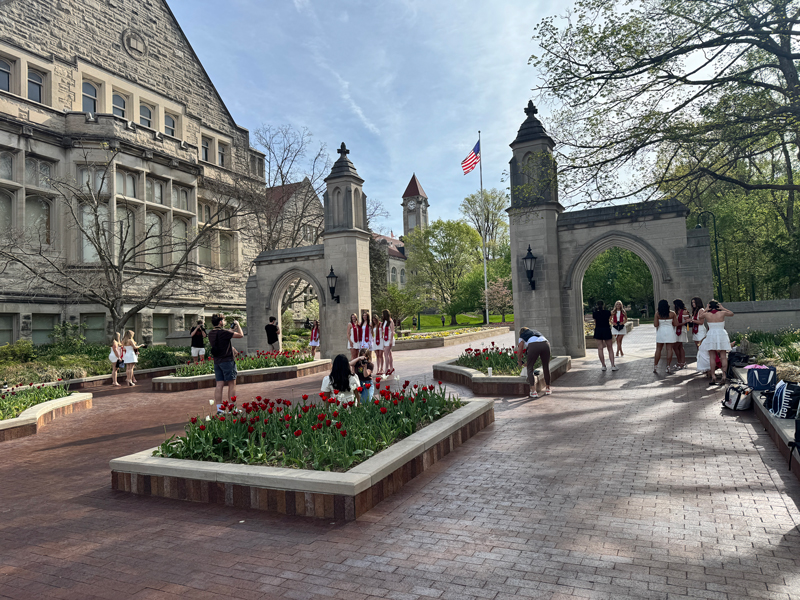
Bloomington, Indiana, may be best known as the home of Indiana University, but the city’s identity stretches far beyond its famous Sample Gates. Tucked among limestone buildings and Midwestern charm is a global community shaped by generations of immigrants, international students, restaurateurs, artists, and cultural institutions. It is here you will find more than 150 locally owned restaurants, including about 100 eateries featuring international cuisine.
During a recent press trip hosted by Visit Bloomington, I discovered a city where Tibetan prayer flags flutter just minutes from Downtown cocktail lounges; where Thai, Burmese, Indian, and Korean restaurants line a single street locals call “International Row;” and where conversations about food center on heritage and nostalgia.
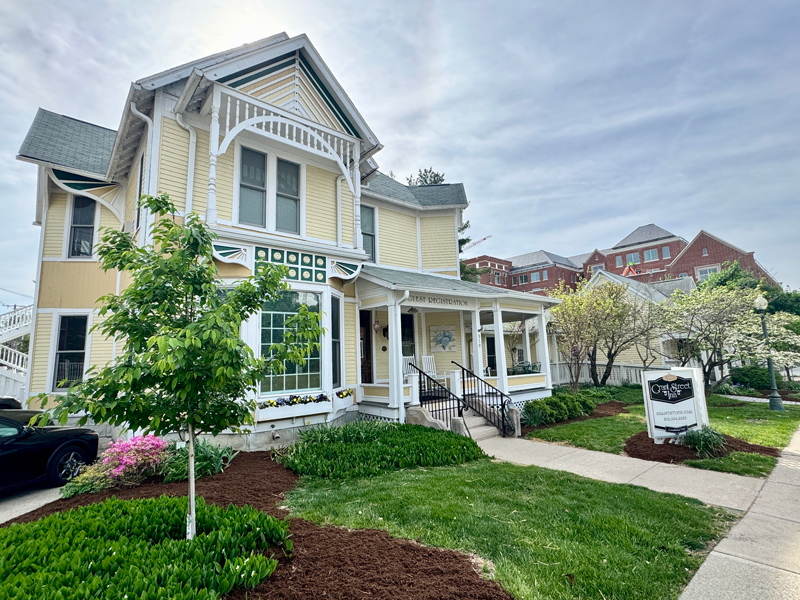
Set just a few blocks from both Downtown Bloomington and the Indiana University campus, the Grant Street Inn offers an ideal base for exploring the city on foot. Just under a two-hour drive from Evansville, the historic boutique property places guests within easy walking distance of Kirkwood Avenue, the Monroe County Courthouse Square, and East Fourth Street’s “International Row.”
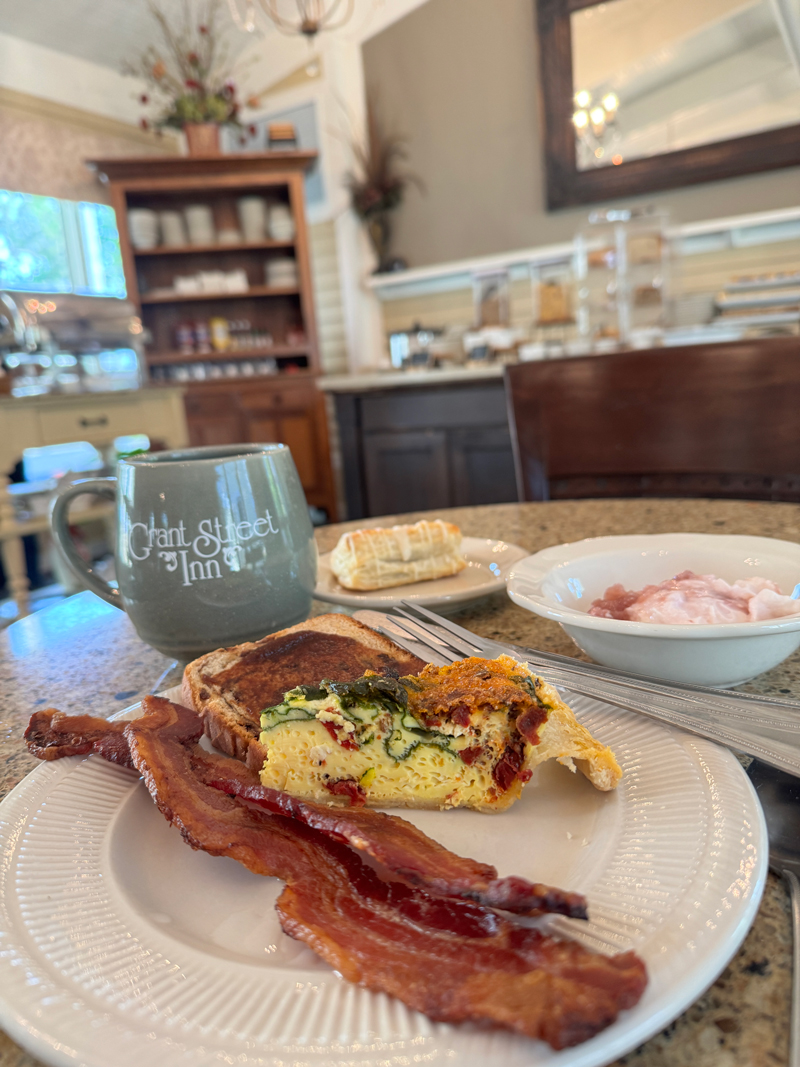
The inn spans five different buildings — all painted a cheerful yellow — and offers 40 uniquely designed, one-of-a-kind rooms. A very good breakfast buffet is included with each reservation. Served in the elegant Ziegler House dining room, the morning spread featured freshly prepared egg dishes, rotating breakfast meats, baked goods, oatmeal, yogurt, granola, and fresh fruit.
A Conversation with A Bloomington Foodie
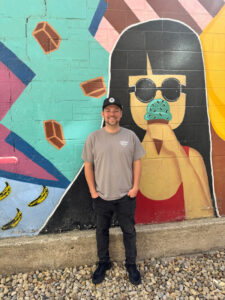
If one person embodies Bloomington’s community-driven food culture, it is Jordan Davis, director of operations at The Chocolate Moose. Since moving to Bloomington from Carmel in 2009, Davis has become one of the city’s most vocal advocates for its eclectic culinary scene, helping preserve beloved traditions while championing the immigrant-owned restaurants that make Bloomington unique. During a conversation at the nearly century-old ice cream institution, Davis described Bloomington as a city that “punches way above its weight” when it comes to international cuisine. He pointed to the remarkable concentration of Tibetan, Burmese, Thai, and other globally inspired eateries packed into a Midwestern college town, crediting both the restaurant owners’ stories and the quality of the food itself for making Bloomington an “embarrassment of riches” for diners, he says.
Beyond his role at The Chocolate Moose, Davis is credited with helping launch Food Truck Friday, which began 13 years ago in The Chocolate Moose’s parking lot. Now it is held in Switchyard Park on Fridays from April through October. Davis also helped revive the Taste of Bloomington — “The last hurrah of townie summer,” Davis says — held on Kirkwood Avenue. Up to 65 food vendors are expected to be visited by around 20,000 festival-goers on Aug. 1.
During the COVID-19 pandemic, Davis launched a podcast called “No Dishes” to spotlight the people behind Bloomington’s restaurants at a time when many in the industry were struggling. The podcast was audio only for just three episodes; today you can find 154 videos on No Dishes’ podcast channel on YouTube.
The Chocolate Moose

A Bloomington institution for more than 90 years, The Chocolate Moose was opened by Cletus and Elmsley May in 1933 as May’s Café after Cletus lost his manufacturing job. In the 1950s, the family downsized the restaurant into a smaller ice cream stand known as “The Penguin,” operating out of the quirky A-frame building that became a beloved local landmark for generations of Indiana University students and Bloomington families. If the building looks familiar to anyone who spent late nights watching MTV in a dorm television lounge, there’s a reason: The iconic structure famously appeared as the Tastee Freez in John Mellencamp’s 1982 music video for his hit song “Jack & Diane,” bringing the song’s small-town Americana imagery to life.
In 1983, the shop was rebranded as The Chocolate Moose. The original A-frame building was demolished in 2016 during redevelopment of the surrounding property, but the business remained on Walnut Street, serving homemade ice cream from the same machine long associated with the brand. The modern location expanded the concept to include coffee service, vegan offerings, and partnerships like Darn Good Soup, while still maintaining staples such as walk-up ordering and the famous “moose horns” – frozen bananas dipped in chocolate.
Today, under owner Justin Loveless and with Davis serving as director of operations, The Chocolate Moose is more than a dessert stop; it is the de facto hub for Bloomington’s food community.
Downtown Bloomington
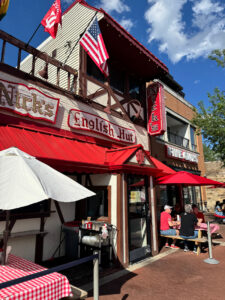
I had a couple of hours before the start of a cooking class I was to attend, so I figured I would wash down the ice cream with a frosty mug of local beer from Upland Brewing Co. at Nick’s English Hut. Sitting at a sidewalk table, I watched the passersby on Kirkwood. It was mid-April, and it appeared a busy weekend was shaping up on campus.
From here, Downtown Bloomington is easily explored on foot. Begin at the historic Monroe County Courthouse anchoring the lively square with its ornate limestone architecture. (Evansville residents will notice it’s designed using the same Beaux-Arts style as the Vanderburgh County Courthouse, which predates Monroe County’s by about 20 years.) Just steps away, Kirkwood Avenue serves as the cultural spine connecting Indiana University to the rest of the city. Kirkwood is home to independent bookstores, coffeehouses, global eateries, music venues, and sidewalk patios. As the walk continues, the multicultural spirit that Davis described becomes impossible to miss, from international restaurants tucked between boutiques to conversations in multiple languages drifting from cafe patios.
Cooking Class at In the Kitchen
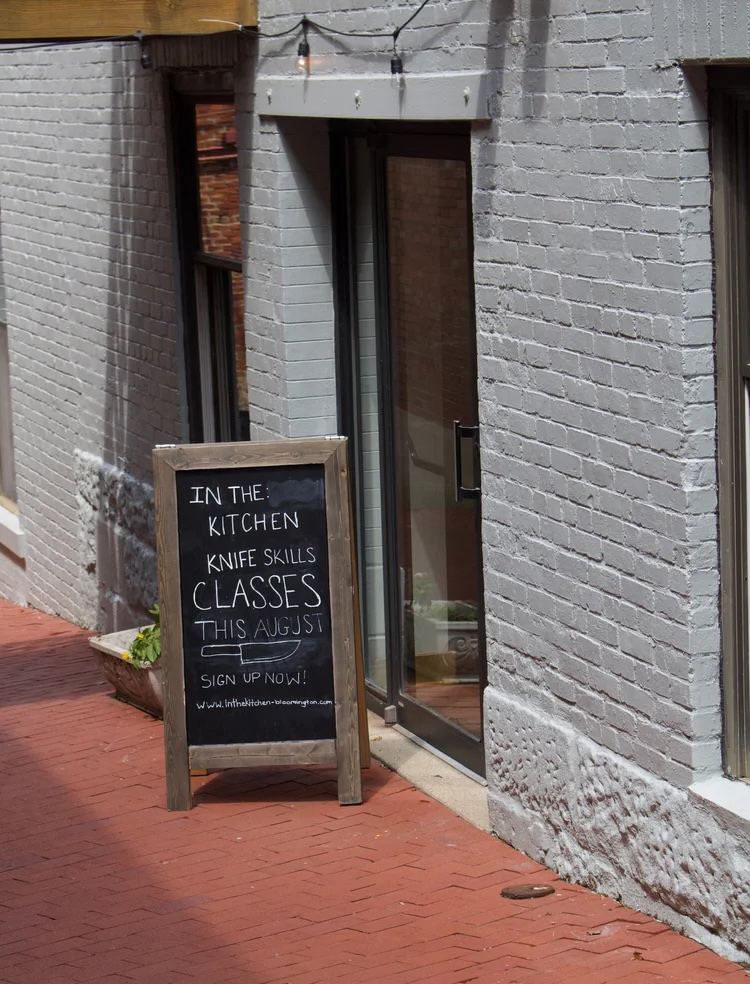
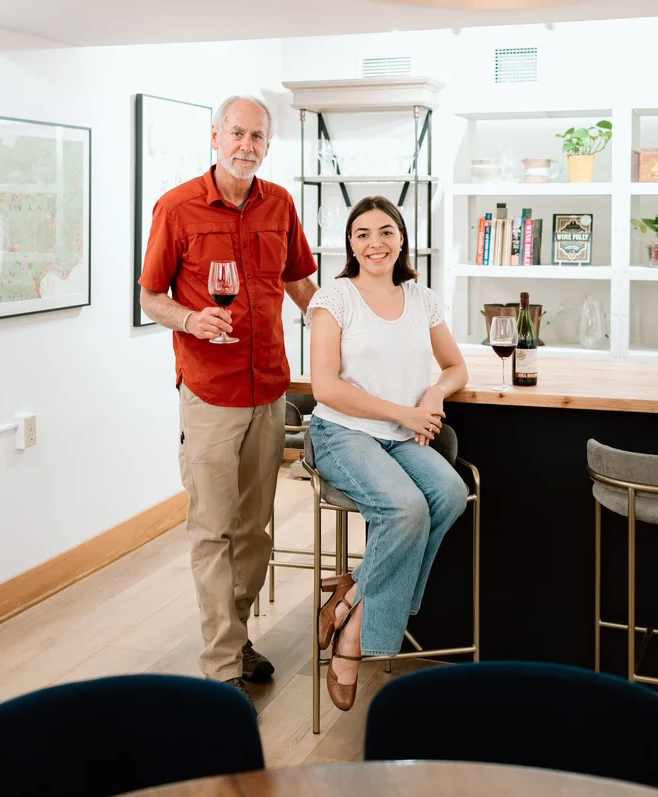
Located on the square, the cooking school In the Kitchen was billed as a highlight of the culinary press trip. Coordinator and co-owner Ava Collins instructed us on the complete process of making risotto. Locals recognize Collins as a longtime staff member of Goods for Cooks, the street-level retail space above the cooking school owned by In the Kitchen co-owner George Huntington and his sister, Samantha Eibling.
Collins explained the risotto class is a great example of In the Kitchen’s Weeknights Inspired series, which highlights quick, wholesome one-pan meals that feel achievable on a busy weeknight and still deliver quality nutrition, flavor, and variety. “In general, but especially in Weeknights Inspired, our goal is to equip students to spend more quality time in their kitchens and dining rooms,” Collins says.
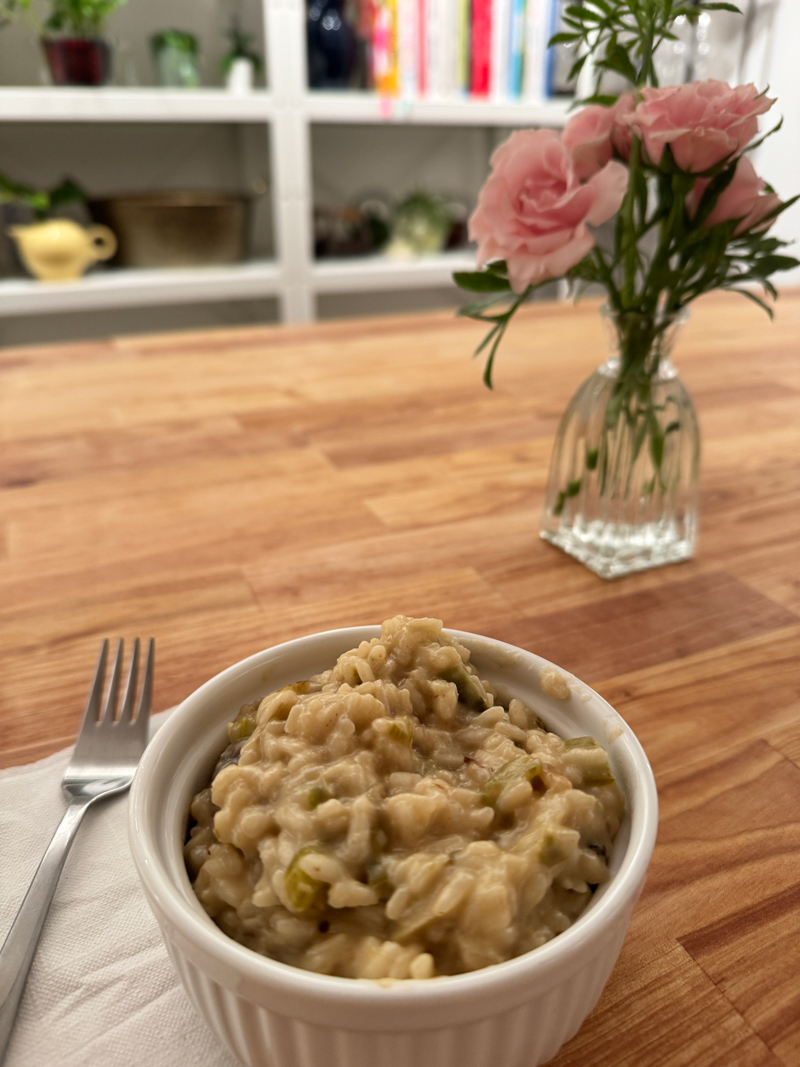
The class began with Collins walking us through the steps to make a bright spring pea risotto inspired by the cover recipe from a recently published cooking magazine. Collins explained that the foundation of the dish was her own stock, a flavorful beef bone broth simmered with vegetables for most of the day. A double-pea method (pureed and whole) locked in color, flavor, and freshness. Collins cited “Marcella’s Italian Kitchen,” a 1986 cookbook text by late Italian cooking writer Marcella Hazan, for her section on risotto. Ready to try the techniques ourselves, the nine students broke into groups of three to improvise our own creations from the ingredients Collins had assembled across the counters. My group gravitated toward earthy mushrooms and tangy artichokes, building a risotto that was savory and creamy. The best part was the collaborative atmosphere: strangers taste testing, debating ingredient combinations, and comparing techniques while Collins moved from station to station offering encouragement and advice.
International Row: Bloomington’s Culinary Passport
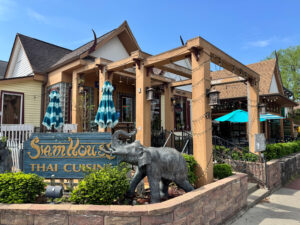
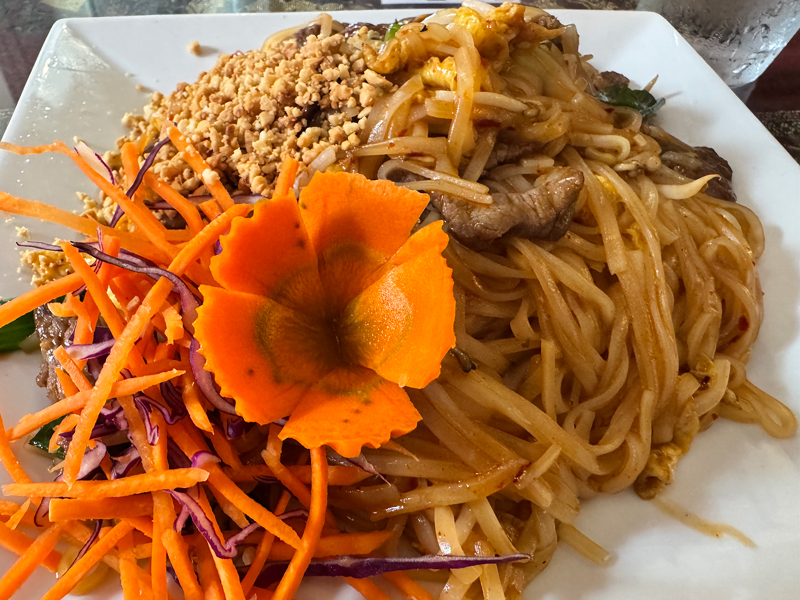
East Fourth Street in Bloomington is known locally as “International Row,” a compact stretch of restaurants that reflects the global character of a university town shaped by generations of international students and scholars. Storefronts on both sides of the street invite diners to sample cuisines that would feel at home in Bangkok, Delhi, Lhasa, or Seoul. I explored the district over lunch with my sister-in-law Nikole, who teaches in Indiana University’s School of Optometry. Among the many tempting options, Siam House caught my eye with its fanciful bronze elephants flanking the entry. Nikole vouched that it was a family favorite. I ordered Pad Thai that was both beautiful and delicious.
What makes International Row remarkable is not only the number of restaurants packed into a few blocks, but the authenticity of their culinary traditions. Anyetsang’s Little Tibet serves Himalayan specialties rarely found in Midwestern towns, while Taste of India, Kimu Asian Restaurant, and Do Asian Fusion Restaurant add their own interpretations to Bloomington’s diverse culinary corridor.
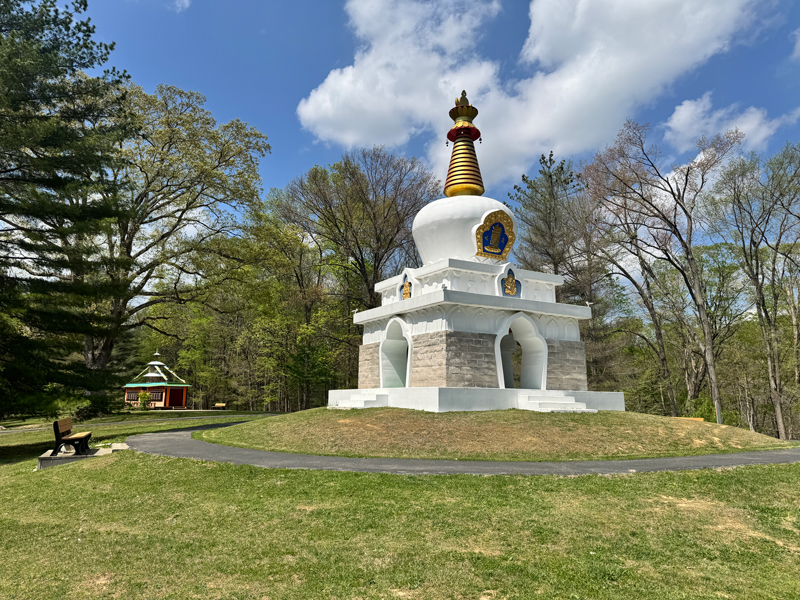
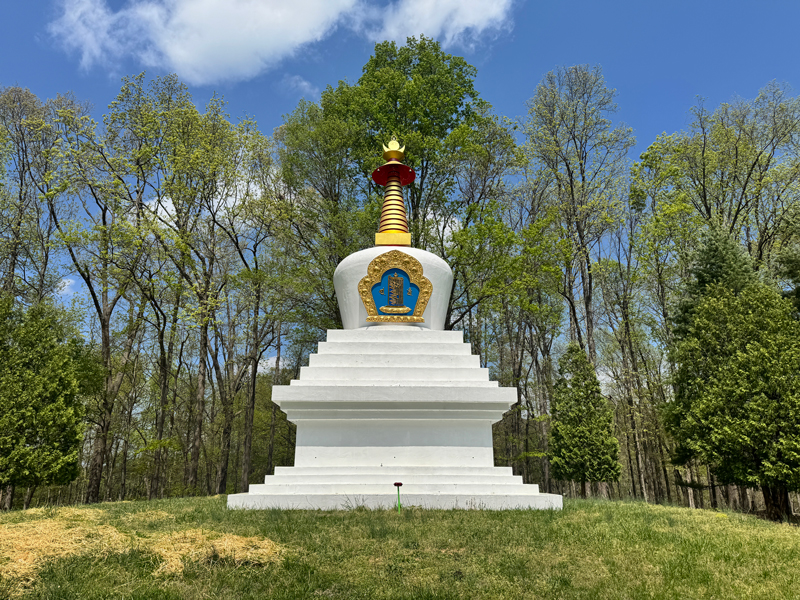
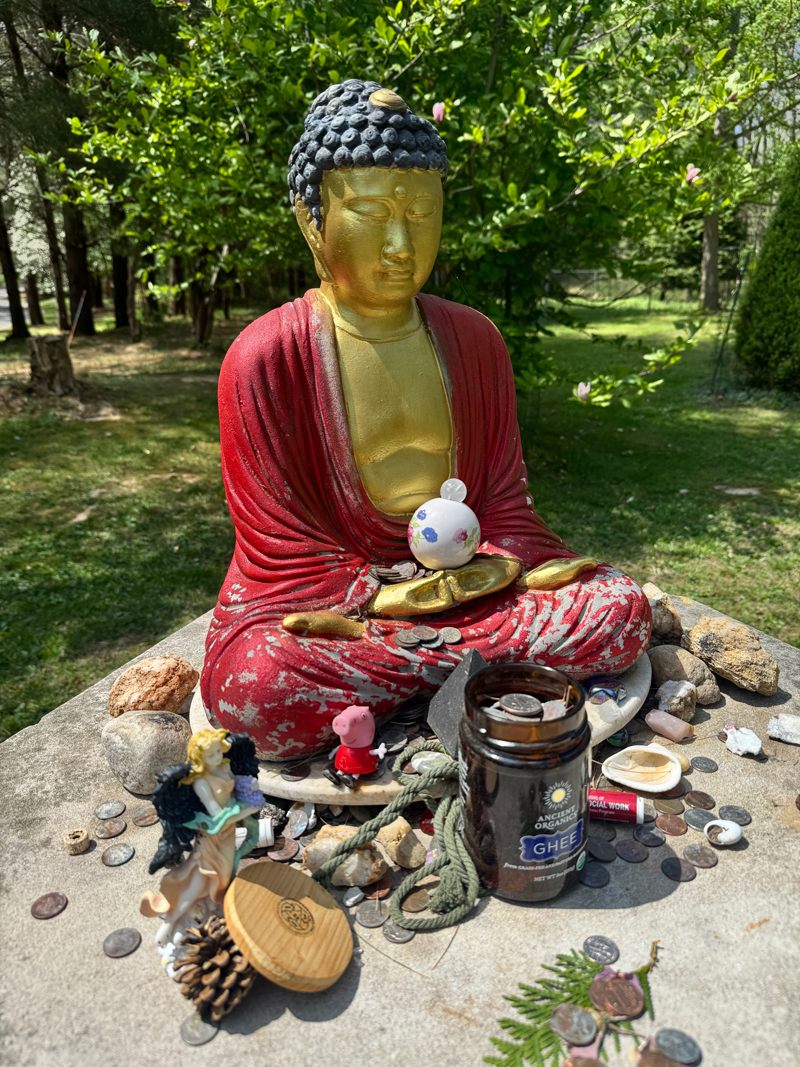
Tibetan Mongolian Buddhist Cultural Center
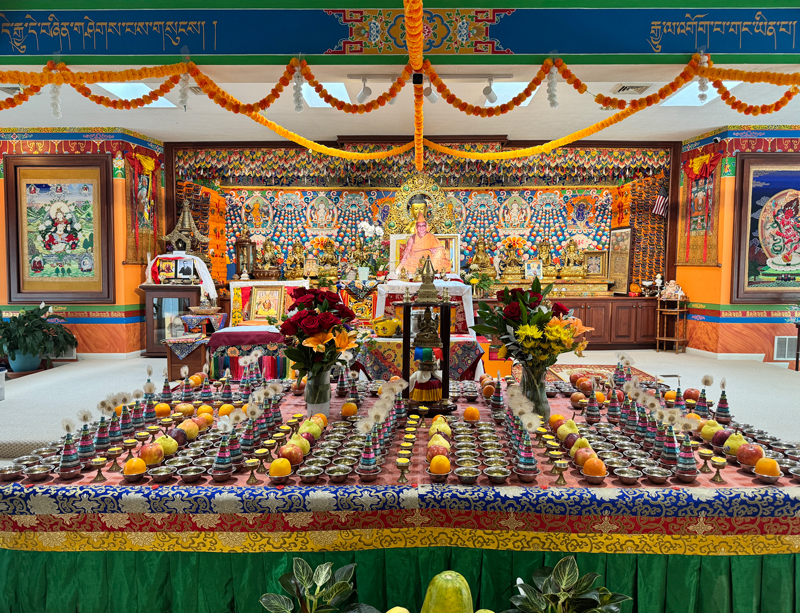
Before dinner at The Uptown Café, I visited the Tibetan Mongolian Buddhist Cultural Center, one of the city’s more unusual institutions and one that says a great deal about Indiana University’s international reach. The center was founded in 1979 by Thubten Jigme Norbu, a Tibetan scholar at Indiana University and the eldest brother of the current Dalai Lama, after he settled in Bloomington following his exile from Tibet. Originally called the Tibetan Cultural Center, it was established to preserve Tibetan religion and culture and to educate Americans about Tibet at a time when many Tibetans were living in diaspora. In 2007, the Dalai Lama expanded the mission to include Mongolian Buddhism as well, and the organization became the Tibetan Mongolian Buddhist Cultural Center.
Today, the center on Bloomington’s south side functions both as a religious institution and a public cultural site. The wooded property includes temples, stupas, prayer wheels, gardens, and spaces used for meditation retreats, tours, classes, and Buddhist teachings. Visitors can walk the grounds, observe Tibetan art and ritual objects, and attend public programs that introduce Buddhist traditions to people with no prior background in them. The center has hosted visits by the Dalai Lama over the years (most recently in 2019, 11 years after his brother’s death), reinforcing Bloomington’s connection to Tibetan culture.
Dinner at The Uptown Café
Open since the mid-1970s and long considered one of the city’s landmark restaurants, The Uptown Café — popular with students, faculty, and locals, alike — has built its reputation on New Orleans–influenced cooking that is ambitious and approachable: Jambalaya, étouffée, crawfish dishes, and blackened fish bring the flavors of Louisiana into the middle of Southern Indiana. The restaurant features the vibrant paintings of New Orleans outsider artist Wayne Manns, who resided in Bloomington for a time. The Uptown is known for its unique cocktails and sommelier-crafted wine list.
I dined by myself with an early reservation, as I planned to drive home to Evansville after my meal. I started with the smoked salmon pâté and overheard a server explain to a neighboring table that her first suggestion will always be Louisiana-forward entrees. Following that lead, I ordered shrimp and grits. The good food was matched with good service.
I had noticed The Uptown Café for years on trips to Bloomington that took us to the square, but I had never dined there. My family tends to be Trojan Horse loyalists — and it remains a good choice. See you next time, Trojan Horse.
By gaining an hour moving from the Eastern to Central Time Zone, I was home by 7 p.m. By the time I reached Evansville, Bloomington felt a little farther away than the miles suggested. No doubt many people in Southwestern Indiana have strong IU connections and will already have experienced some of what this article suggests — and perhaps that is a good thing, because so many of these institutions are standing the test of time. For those without a connection to the university, worry not. Summertime, when townies move about their town just a bit more leisurely, is a great time to visit Bloomington.