


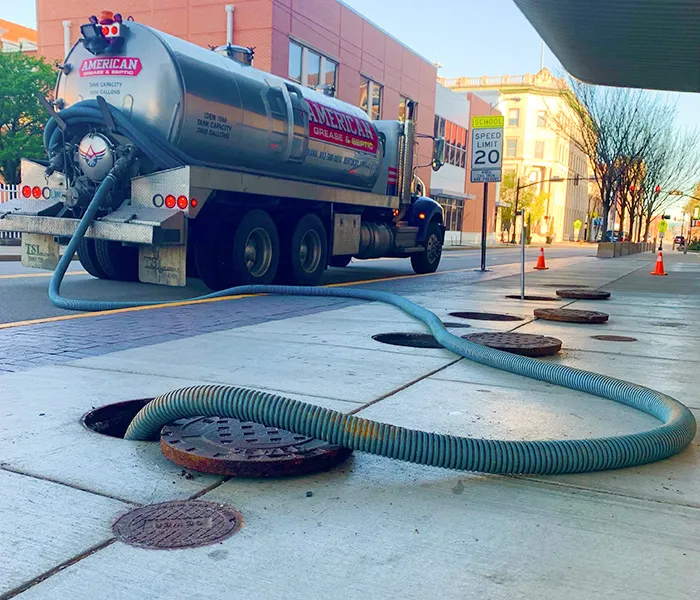
Evansville Water and Sewer Utility’s drop-off point for septic waste and fats, oils, and grease closes July 1, leading at least one private company to open its own receiving station.
Utility officials say rising costs drove the decision to end their drop-off service at the East Wastewater Treatment Plant on Waterworks Road. The closure had been scheduled for Jan. 1; the utility delayed it six months to allow users more time to find alternative disposal options.
American Grease and Septic, a Hydromax company, is one business that has stepped up, preparing to receive both kinds of waste at its property at 2501 S. Kentucky Ave. Chris Musack, President of American Grease and Septic, says the company was already pursuing a drop-off station, but EWSU’s action accelerated the timeline.
Musack says American Grease and Septic initially planned a facility that could collect 20,000 gallons of waste per day; its goal now is to at least double that capacity. The company has been in communication with EWSU and other haulers — there are 5-7 locally — about its plans and capability to receive waste.
“We’re testing now, and still waiting on an official permit from the city,” Musack says. “They are monitoring our progress. It’s just a matter of checking a box.”
Financial considerations drove the city utility’s exit from the drop-off business. “It’s always lost money and been subsidized by the ratepayers,” says EWSU Executive Director Vic Kelson. “We are always trying really hard to make sure that our ratepayers are paying as little as possible. So $1 million a year that we won’t be spending on this station is a million that we can be using to work on the Integrated Overflow Control Plan” — a government-ordered reduction of combined sewer overflows — other projects we need to do, or our electric bill, which went up $1.5 million last year.”
Kelson adds that residents already paying high sewer rates were covering the costs of managing waste that in some cases was arriving from outside Vanderburgh County. He says EWSU has charged “embarrassingly low” prices for disposal, and “if we structure rates to cover our costs, we won’t be cost-competitive in the market for these haulers to bring it to us. So we don’t want to invest the money to do that because we know we won’t recover the cost.”
In late 2025, haulers expressed dismay over the closure and the lack of time to prepare for it before Jan. 1. Kelson says extending the shutdown by six months has allowed all parties to plan next steps; he points out that, given the current high costs of diesel fuel, a hauler from Posey County would save money by using a drop-off point on Evansville’s West Side instead of coming all the way to the East Wastewater Treatment Plant.
“We’re hoping everybody is ready by July 1,” Kelson says. “We’ve given everybody plenty of warning, plenty of notice. We’ve offered all the help we can offer and published a design spec for these transfer stations. … (Haulers) just need to find a site.”
EWSU cited numerous discussions to help haulers find new protocols. Other entities of local government have also intervened: The Area Plan Commission and then the Vanderburgh County Commission signed off on an ordinance change allowing septic waste receiving stations on certain industrially zoned properties outside of city limits.
County Commissioner Justin Elpers says he appreciated the city’s decision to delay the shutdown until July 1 because it allowed time for haulers to find other solutions. He notes that many county residents rely on septic systems. The commission’s action to allow privately run stations in more industrially zoned areas “allows more opportunities to find property suited for this purpose,” he says.