

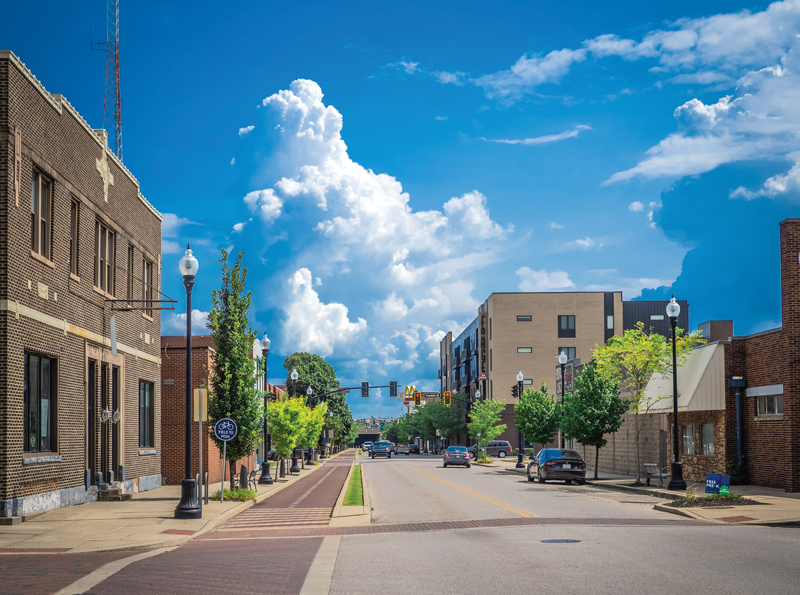
Full of history as well as longstanding economic challenges, a neighborhood just north of Downtown is working to write new chapters.
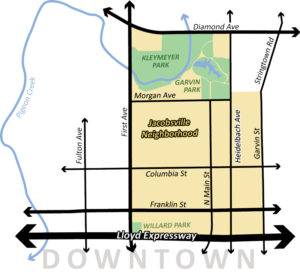
Improving Jacobsville — bordered by Diamond Avenue to the north, Garvin Street to the east, First Avenue to the west, and Division Street to the south — has been a priority of city officials for many years. Evidence of that is in the $15 million revitalization of the North Main streetscape nearly a decade ago, followed by the opening of the Deaconess Aquatic Center in October 2021, The Forge apartment complex in December 2022, and a street-level Dollar General Market grocery in March 2023.
Knowing the world-class swimming facility and other neighborhood assets are surrounded by some of the area’s highest poverty rates, officials have pushed for progress on goals such as affordable housing, improved safety, and business growth. Obstacles are substantial. The 2025 Jacobsville Redevelopment Area Master Plan found that within Jacobsville’s 442 acres, 25.5 percent of residents receive Supplemental Nutrition Assistance Program benefits, compared to 14 percent of residents citywide.
The master plan reports that only 9.8 percent of Jacobsville dwellers have retirement income, 30.3 percent lack a vehicle, and 25.7 percent don’t have internet access. According to the 2025 Jacobsville Neighborhood Revitalization Strategy Area Plan released by the city’s Department of Metropolitan Development, Census Tract 20 bordered by Maryland, Oakley, Division, and North Main streets is the city’s poorest, with a median income of about $20,025 and 40 percent of residents below the 125% poverty level.
More than four square miles of Jacobsville are also included in a larger Environmental Protection Agency-designated Superfund Site — the area’s manufacturing and foundry roots dating from the 1880s to 1950s left soil contamination that’s still being addressed today. Since 2007, soil sampling has been conducted at more than 7,500 properties within the Site’s borders, and as of December 2024, arsenic- contaminated soil had been removed from nearly 4,500 properties.
Leading the Charge
Faced with such substantial challenges, in July 2023 the DMD partnered with the Jacobsville Area Community Corporation to boost resident engagement and raise quality of life. Self-described “cross-functional problem solver” Ted O’Connell was hired as Development Consultant to run a 30-month pilot project addressing community and economic development. JACC is backed by a diverse board of directors and numerous community partners, including the Jacobsville Neighborhood Improvement Association.
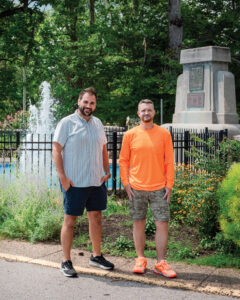
“We have residents, business owners, faith-based organizations, and nonprofits on our board,” O’Connell says. “It’s set up that way to make sure that all the entities are moving in the same direction toward similar goals.”
Although the city’s initial outlay for O’Connell’s position concluded on Dec. 31, 2025, his work isn’t done yet. JACC has been busy on multiple fronts, taking on pilot projects that O’Connell says could be replicated citywide. He cites the additions of covered bus stations in front of homeless nonprofits Aurora at 1001 Mary St. and Ozanam Family Shelter at 1100 Read St.; both stations were built with donated supplies. A grant-funded crime analysis initiative led to the acquisition of five new security cameras, connected to existing cameras in the neighborhood. Call volume data provided by Officer Ben Hallmark, Jacobsville’s crime prevention officer with the Evansville Police Department, shows declines from 2020 to 2025 in both reported property crimes (1,029 to 854) and violent crimes (458 to 393).
Ninety-seven blocks of Jacobsville sidewalks have been “audited” in a project that works alongside AARP and the city engineer’s office and has been integrated with the neighborhood’s weekly walking club, one of O’Connell’s first initiatives.
Another successful endeavor targeted trash and rodents. “I saw a neighbor’s security camera video of a property management company dumping a sofa on an empty Habitat (for Humanity) lot across his alleyway,” O’Connell says. Other neighbors have complained to him of mattresses and couches abandoned in public areas.
Conversations followed with city government departments about heavy trash dumps and the pests they attract. An Evansville Urban Enterprise Association grant funded 300 bluetooth-enabled bait stations across Jacobsville so pest control professionals can monitor rodent activity. The grant also funded the six-month placement of two 40-yard trash bins at Hope City Church on North Main Street.
“We got rid of 158 tons of bulk trash, which is 58 percent of what the whole city does in that same time span, and we represent six percent of the population,” O’Connell says. “By putting in these baiting systems, we reduced the rodent population by 93 percent in six months, killing about 14,000 rodents.”
Progress From Within

These efforts are involving more neighbors, says Melissa Wright, a lifelong resident. For years, Wright didn’t just lead the Jacobsville Neighborhood Improvement Association — “I was the neighborhood association,” she explains. Balancing that role with her own life obligations was a struggle. “People would show up on my doorstep, knock, and ask me questions about the neighborhood. I was having a hard time keeping it going. And so when Ted got hired for JACC, he started helping us to find a new demographic of people. They were coming in and showing interest in different things outside of what I was interested in as a single mom. It was beautiful diversity. … Now, we have good attendance and a good presence in the community again.”
Besides the aquatic center and historic Bosse Field, Jacobsville also is the home to major employers such as Deaconess Midtown Hospital, Amcor, and CenterPoint Energy. Curbing generational poverty has proved more difficult than building bicycle paths, planning events, or even rat extermination, but it’s a mission that neighborhood stakeholders continue to tackle.
Dream Center, a Christian-based nonprofit serving youth in Jacobsville, cites in-house data showing that only one in 10 young people within the neighborhood’s borders is likely to experience upward mobility. Soberingly, Jacobsville youth are 70 percent more likely to drop out of high school than complete a post-secondary degree. “That is a startling revelation for us who are called to help the vulnerable experience dignity and a type of justice,” Executive Director John Benton says. “It’s why we exist — to come alongside a neighborhood and understand what’s happening economically, socially, and spiritually, and ask how we can partner with it.”
Founded in 1998, the Dream Center takes a cradle-to-career approach. Classes are offered for new parents, with emphasis on early brain development. A free preschool program called Eaglets and collaborations with Delaware Elementary School, North Junior High School, and North High School provide academic and family support systems. In all, about 175 children are involved in Dream Center programs. Benton points to successes such as a 100-percent pass rate among its third graders on the state’s I-READ exam.
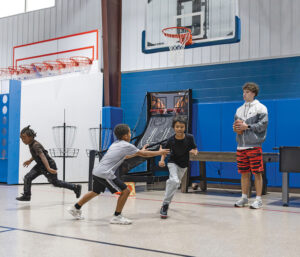
A national initiative called Harlem Children’s Zone influences what the Dream Center does. “They have found a way to disrupt those cycles of poverty through finding a kid as early as possible and sticking with them,” Benton says of the New York organization. “We actually make a promise with every single kid and parent that we work with: We’ll walk with you, and nothing will get in the way of us continuing on with you.”
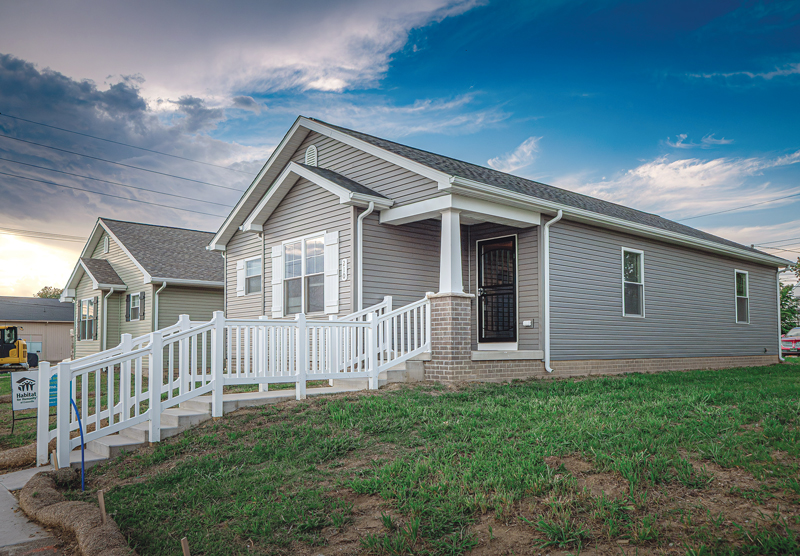
Affordable housing of all types is an ongoing need in Jacobsville. Underscoring the neighborhood’s industrial roots, half of its homes were built before 1940, compared to less than a fourth citywide. Nonprofits with a mission to freshen up Jacobsville’s housing stock include HOPE of Evansville, which has developed for-sale properties since 2007. Habitat for Humanity’s work in Jacobsville accelerated in 2014 when it received a donation of Garfield Street lots from Deaconess Health System.
“In 2015-16, Habitat put 12 to 15 homes within a condensed, four-block area. We have found that when we build in concentration, we have a bigger impact on the neighborhood,” Habitat for Humanity of Evansville Executive Director Beth Folz says. “We now have over 80 Habitat homes in Jacobsville,” representing about $12 million in investment. Habitat purchases most of its land from the city’s Land Bank which acquires properties that are delinquent on property taxes and did not move at a tax sale. Habitat obtains the lots for $500, builds a home, and the property returns to city tax rolls.
Permanent supportive housing is helping residents find stable ground. In July 2024 on Read Street, ECHO Housing Community Development opened the Promise Home, which provides 27 one-bedroom units for chronically homeless people with verified disabilities. As reported in February/March 2025 Evansville Business, the Indiana Housing & Community Development Authority Housing Trust Fund and the City of Evansville were major sources of financing, and a capital campaign filled funding gaps as costs swelled to more than $3 million.
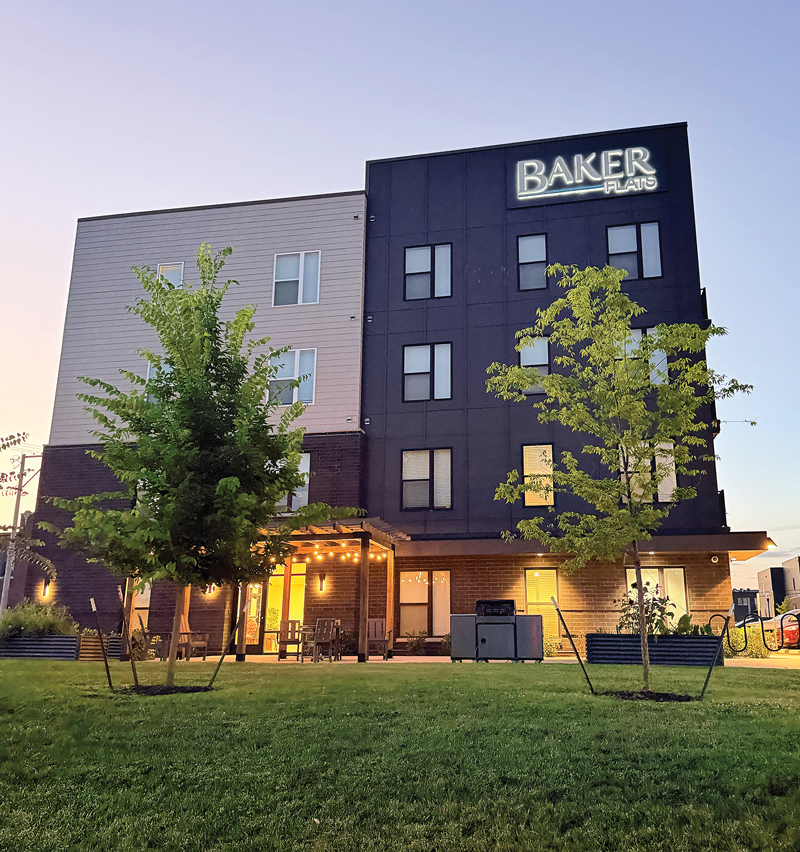
In January 2019, then-Mayor Lloyd Winnecke announced that Vectren (the company now known as CenterPoint Energy) made a five-year, $5.5 million investment in workforce housing in Jacobsville, with partners including the city, HOPE of Evansville, and Habitat. More recently, Baker Flats, a 52-unit affordable housing community for seniors, opened in May 2024 on Baker Avenue between Illinois and Indiana streets.
A proposal for new rental housing is on the drawing board, as well. According to the Evansville Regional Economic Partnership, the 88,000-plus-square-foot Crawford Door building on Heidelbach Avenue behind Bosse Field’s outfield wall is targeted for 139 “affordable and workforce” housing units, plus 10,000 square feet of commercial space. The project has received $2.7 million from Indiana’s Regional Economic Acceleration and Development Initiative (READI); no start date has been announced. Another available source used for neighborhood projects is the Jacobsville Tax Increment Finance District, a slice of which was used to build the Deaconess Aquatic Center.
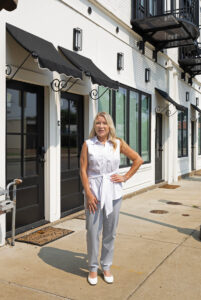
Yvonne Woodburn sees progress on the housing front. Her four-unit apartment complex in the 700 block of North Main — called Dewey’s Boutique Apartments after her late father — is occupied, and she’s building four more units. Jacob’s Pub and other North Main businesses have become active neighborhood participants, the Catanese Real Estate agent says, and she’s hopeful for more startups — “maybe an ice cream shop like what West Franklin has,” she says.
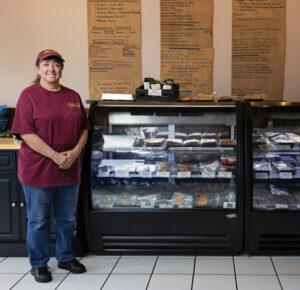
North Main Annex Gourmet Catering & Deli owner Narda Feather cites increased outside interest in available properties for use as businesses, apartments, or Airbnbs. “The downside is we still have some building owners who are reluctant to improve their their buildings or do anything with them. It would be nice to get them to move on something, or sell,” she says.
Another eatery is coming soon: Oma’s Cafe at SWIRCA & More, 16 W. Virginia St. will serve homestyle meals as well as trendy entrees designed to attract young professionals living and working in Jacobsville. (Read about SWIRCA & More on page 18.)
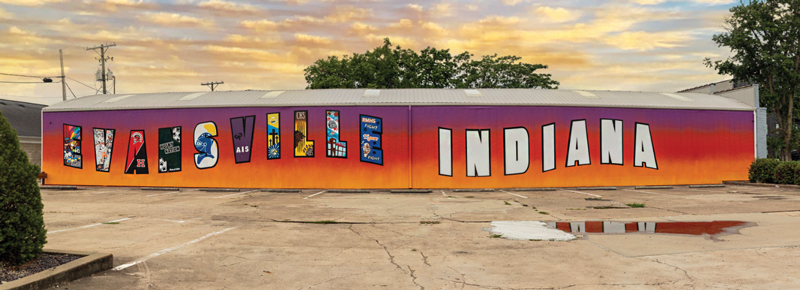
Besides complex goals like more housing, poverty reduction, and improved safety, Jacobsville stakeholders say building neighborhood pride is paramount. O’Connell cites a revamped mural on a Schalco Garage Doors warehouse near North Main and Division streets that sports “Evansville, Indiana” spelled out with letters decorated by local schools. On the opposite end of North Main, Benton and other Dream Center staff work near a wall-sized painting that states, “Be the I in KIND.”
Watch for more public art: O’Connell says there will be “a community graffiti wall” at North Main’s Paint & Carpet Depot, and “I also have seven signed agreements from building owners to allow us to put a mural on their building for five years.” The North Main corridor remains home to the city’s Christmas parade, plus annual Halloween and Easter events.
What Lies Ahead?
O’Connell believes Jacobsville’s trends are positive and measurable but is uncertain of the Jacobsville Area Community Corporation’s future. Asked by Evansville Business for comment, Mayor Stephanie Terry’s office shared a statement saying that the city “continues to value JACC as an important community partner and remains committed to investing in the Jacobsville neighborhood,” but didn’t address the initiative’s future funding.
Terry’s statement said the city has hosted two Block by Block neighborhood cleanup events in Jacobsville since 2024. At May’s cleanup, volunteers and city officials cleaned 18 properties and cut weeds and overgrown grass at 17 others.
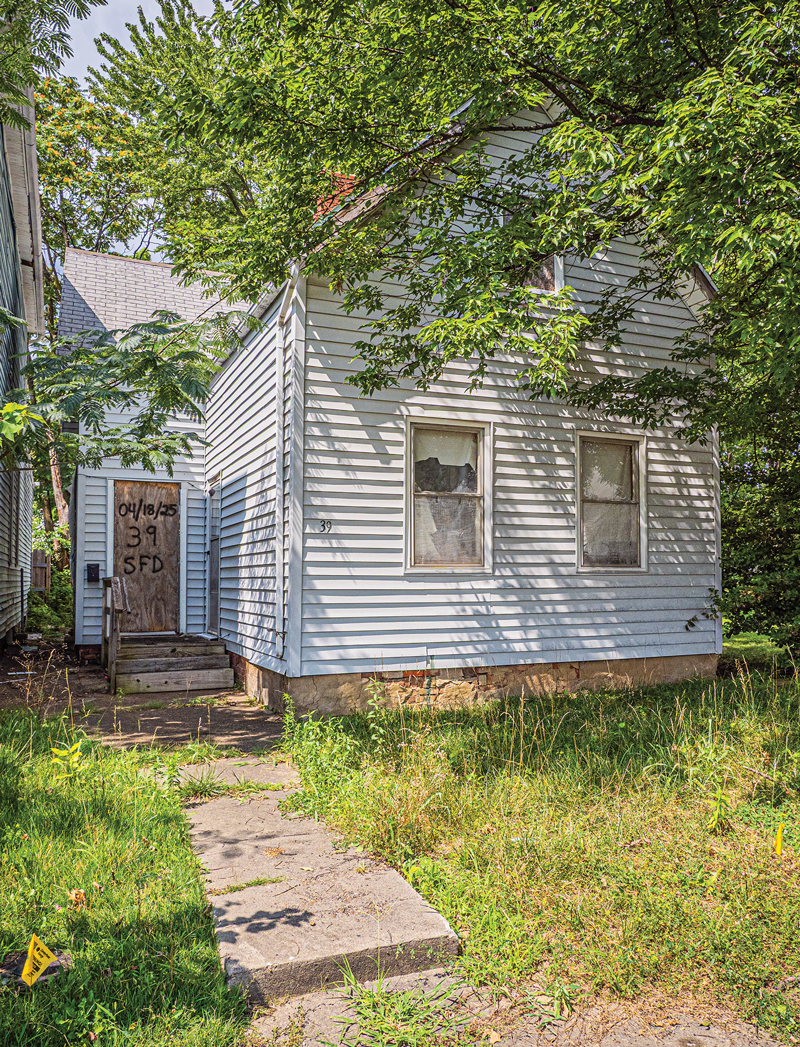
City government has razed 25 Jacobsville structures since announcing its Fight Blight initiative in late 2024, and 13 more are slated for demolition. Terry’s statement noted the empty lots can be transferred to the Land Bank, which then can deed them to nonprofit housing developers.
Some trace Jacobsville’s poverty patterns to the late 1960s — that’s when the Civic Center was constructed, cutting off Jacobsville and the north end of Main Street from the rest of Downtown. The North Main Street streetscape’s revitalization nearly a decade ago was viewed by city officials as a major step. It was projected by architect Rundell Ernstberger Associates to generate $11 million in new commercial investments and economic activity during its first seven years; The Forge apartment complex and the aquatic center each cost about $28 million to build.
Jacobsville’s name is a nod to early resident Hannah Jacobs, who was widowed in 1828 with six children. Along the way, she acquired land for a town bounded by Columbia, Oakley, Harriett, and Missouri streets. The neighboring municipalities of Evansville and Lamasco prevented this, and “Jacobsville” in 1868 became part of Evansville. Wright calls for the neighborhood to honor such history — she likes the idea of a Founder’s Day observance — while also embracing what it can become.
“We do have a core value of a working-class neighborhood that is something we can always celebrate,” Wright says. “But we can acclimate to the changes of our environment. We do have new people moving into the neighborhood, and our young people are going to be taking over. … We can get an education out there about why our neighborhood’s important, what we have pride in, and also open our ears to listen to what that next generation brings to the table.”
Wright has turned the neighborhood association’s presidency over to Sam Rueger, who says community engagement is improving, but more can be done. The group has about 25 active members, but that’s a fraction of the neighborhood’s 2,200-plus residents. “Getting more people involved will bring more consensus of what the neighborhood wants and needs,” he says.
Rueger has lived in Jacobsville for the last 17 years, as well as during some of his formative years. “It’s my stomping grounds,” he says, and its comeback story is worth fighting for. “I grew up playing Little League baseball in Garvin Park and going up and down North Main Street. There’s lots to do, a little mix of everything, and it’s super convenient. We have our fair share of problems, but there are some really incredible people in the neighborhood.”
Jacobsville at a Glance
2024 Neighborhood Population: 2,210
• Asian: 0%
• Black: 9.8%
• Hispanic: 6.7%
• White: 72.3%
2025 Evansville Population: 116,176
• Asian: 1.0%
• Black: 11.8%
• Hispanic: 4%
• White: 76.8%
Population change since 2010: -34.9%
Median resident age: 48.3
Total households: 1,028
Average household size: 1.92 people
Homeownership of occupied units: 27%
Median monthly rent: $902
Unemployment: 15%
Unemployed with no diploma: 4.9%
Unemployed with a high school diploma only: 14.4%
Unemployed with an associate’s degree: 20.4%
Unemployed with a bachelor’s degree or higher: 31.4%
Median household income: $30,025
Total poverty rate: 32%
Child poverty rate: 52.3%
Population below 125% poverty: 40%
Population below 185% poverty: 56%
Bachelor’s degree holders living in poverty: 30.1%
Residents with no high school diploma: 20.8% (compared to 9.6% in Indiana, 7.5% in city, and 8.5% in Vanderburgh County)
Residents with only a high school diploma: 45%
Households on public assistance: 29.7%
Households earning less than $25,000: 811
Source: U.S. Census Bureau; SAVI via Indiana University-Indianapolis’ Polis Center, made available through Welborn Baptist Foundation