


Read more about Evansville’s chapter in the American story in the July/August 2026 feature story.
The River City takes its patriotism seriously, with justification. U.S. Census figures show that nearly 6,000 military veterans lived within city limits in the past six years. Through service both home and abroad, Evansvillians have made significant contributions to the daily freedoms enjoyed by generations of people both in America and abroad.
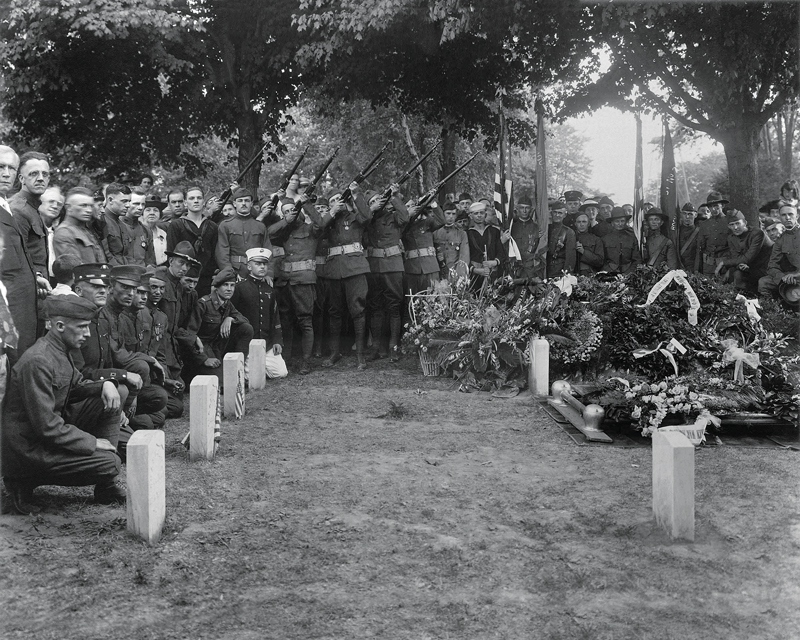
Evansville resident James Bethel Gresham, 24, was one of the first three Americans killed in action in World War I on Nov. 3, 1917. His memorial house at Garvin Park is used now by ECHO Housing & Community Development as the home base of the agency’s Homeless Veterans’ Reintegration Program.
Strolling the Riverfront Esplanade Downtown, you’ll notice memorials to veterans of wars in Vietnam and Korea near the stoic Four Freedoms Monument dedicated in 1976. A monument to those who served in Operations Desert Shield and Desert Storm is at Main Street and Martin Luther King Jr. Boulevard. Earlier this year, the graves of around 20 Civil War veterans were moved off a site near Mater Dei High School and relocated to Saint Joseph Catholic Cemetery.
When the future of freedom around the world hung in the balance in the early 1940s, Evansville — still reeling from the Great Depression — secured nearly $600 million in government defense contracts and switched from manufacturing commercial products to military equipment.
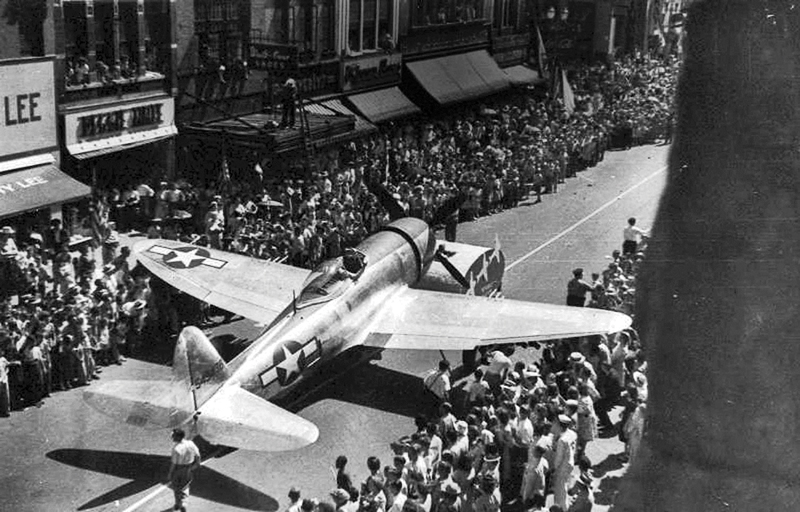
The Evansville U.S. Navy Auxiliary Shipyard, around where Mead Johnson Nutrition stands today at the bend in the Ohio River, churned out Landing Ship-Tanks that ferried servicemen, vehicles, and heavy equipment into hostile zones. Republic Aviation assembled P-47 Thunderbolt aircraft. Not to be outdone, Red Spot Paint & Varnish Co. whipped up olive paint for the U.S. Army, Hoosier Cardinal Corporation manufactured parts for B-29 Superfortress planes, and the Chrysler Corporation (renamed Evansville Ordinance Plant during the war) led the way in steel bullets production.
Today, the Evansville Wartime Museum — near the site of the former Republic Aviation plant — explores the roles local men and women played in preserving global freedom. “Every year, we add more and more exhibits to explain what happened on the homefront,” says Dona Bone, a museum docent and lecturer. The museum has several special events throughout the year, including warbird weekends and monthly lunch-and-learn presentations. The USS LST-325, itself a memorial moored on the riverfront since 2005, also hosts guided tours and makes an annual voyage to Midwestern communities.
The city’s history as a war production capital has become part of its identity and branding. In December 2022, the U.S. National Park Service designated it a World War II Heritage City; only one community per state may receive the distinction.
The region’s contributions to freedom are documented in books, on signs, and in expanding digital archives, but Bone says the wartime museum takes seriously its mission to keep promoting that message: “We’ll tell anyone who walks through.”
By The Numbers
1942
Year the USS LST-325 was launched in Philadelphia, Pennsylvania
167
Landing Ship-Tanks produced at the Evansville Shipyard
6,242
P-47 Thunderbolts assembled by Republic Aviation
3.5 billion
Rounds of .45-caliber ammunition produced by the Evansville Ordinance Plant; it was 96 percent of the nation’s World War II supply
9,467
U.S. military veterans living in Vanderburgh County in 2020-24
Sources: U.S. Naval History and Heritage Command, U.S. National Park Service, P-47 Foundation, Indiana Landmarks, U.S. Census Bureau