


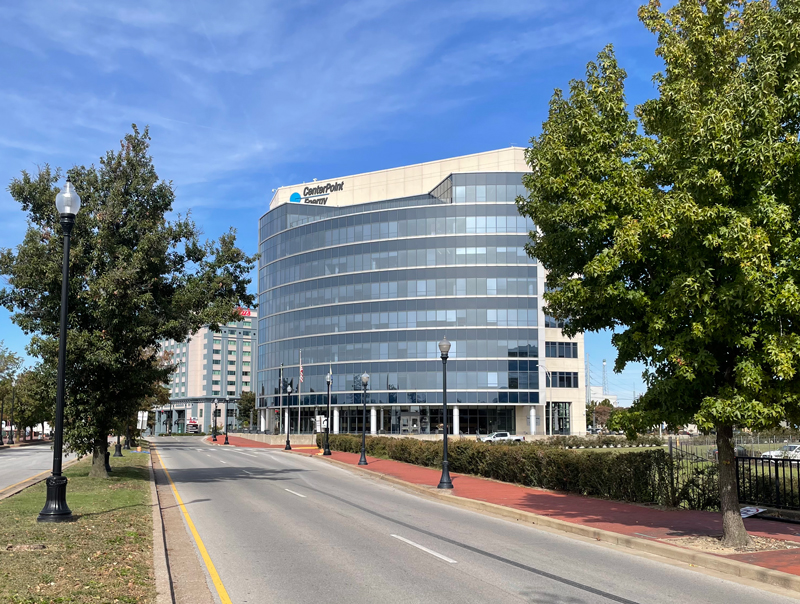
With rising fuel prices expected to drive up utility bills this winter, and nearly nine months after having a base rate increase approved for its Indiana territories, CenterPoint Energy officials have rolled out steps the utility is taking to rein in other costs that impact the amount shown on customer bills.
The effort, announced in an Oct. 23 CenterPoint news release, “will target keeping rates near or below the rate of inflation for the next two years, excluding expenses like fuel costs that CenterPoint does not directly control or profit from.” Bill adjustments and credits taking effect in November will result in an average net decrease of nearly $3 a month for residential customers by the end of 2025, officials say, adding that these actions will offset increases that took effect in October.
The news came eight days after the utility warned its 775,000-plus natural gas customers in the Hoosier State of spiking natural gas prices, citing data from the U.S. Energy Information Administration’s annual Winter Heating Outlook. Houston, Texas-based CenterPoint stated the average Southern Indiana residential household can expect to pay $141 per month from November 2025 to March 2026, compared to $127 per month in 2024. Some customers see far higher bills.
According to the Winter Heating Outlook, natural gas prices in the Midwest’s East-North-Central region (of which Indiana is part) are projected to increase 4.7 percent this winter. CenterPoint also provides electricity to more than 150,000 Hoosier customers. The Winter Heating Outlook projects regional electricity expenditures to increase 5.4 percent.
Mike Roeder — an Evansville native who earlier this month was promoted to president of CenterPoint’s Indiana Electric and Gas Business after serving as senior vice president for external affairs — says actions the utility is taking — including shelving three renewable energy projects altogether costing nearly $1 billion — are aimed at offsetting some of the increasing fuel expense. Projects that CenterPoint has called off are solar fields in Warrick and Vermillion counties in Indiana and a wind power endeavor in Illinois. The utility soon plans to release its latest Integrated Resource Plan, a formal statement explaining how power generation needs will be met in future years.
“Had we gone forward with those projects, bills could have increased $18 (through 2027),” Roeder tells Evansville Business. “What we’ve said is, those projects are no longer economical. We’ve heard customers (say) they can’t take any more bill increases of that magnitude, and so we’ve canceled those projects.”
Roeder says CenterPoint has no plans to file another base rate increase request with the Indiana Utility Regulatory Commission in the next 2-3 years. The IURC on Feb. 3 approved CenterPoint’s request for a base rate increase — it will net the utility $80 million, which is $38.7 million less than it asked for — over the opposition of local elected officials, businesses, and residents, many of whom have taken to social media to share anger over increasing bill amounts. CenterPoint officials have pointed to payment assistance options and energy-savings programs aimed at helping residents manage their winter bills.
“What I want folks to hear from us is that we know you’re frustrated,” Roeder says. “We are listening, and we are doing what we can to balance what we need to do for (power) reliability with what customers are paying.”
The utility also announced Oct. 21 that it has sold its Ohio natural gas business to New York-based National Fuel Gas Company for $2.62 billion. Because CenterPoint’s Midwest headquarters in Evansville oversees operations in Indiana and Ohio, Roeder says the sale affects less than 50 Indiana-based employees.