


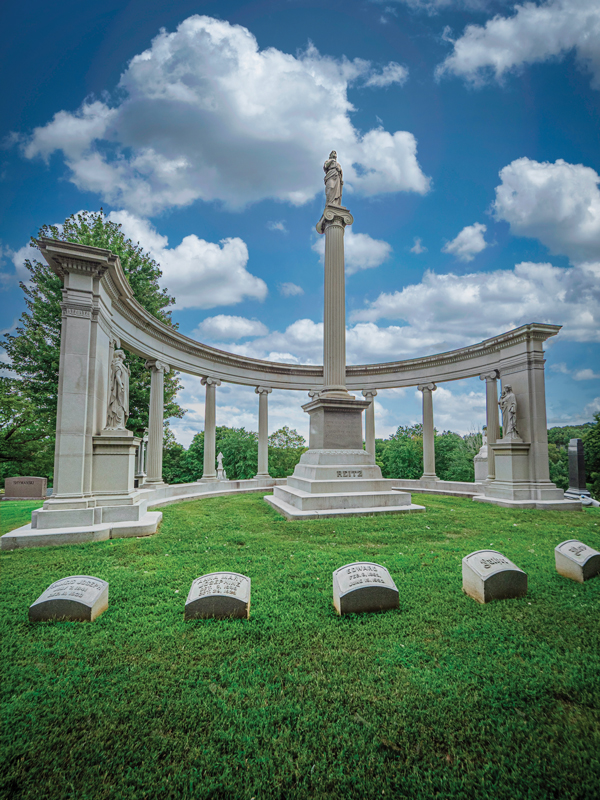
Walking into a funeral home, you may expect a somber atmosphere — pictures of the deceased on display and murmured conversations throughout the facility. But today’s grieving rituals don’t always follow the patterns of the past.
“COVID’s taken out the traditional four walls that you have to do a funeral within,” says Jordan Duncan, owner of Boone Funeral Home. “People want to bring in their Harley-Davidson motorcycles or have a tiki bar or have more of a party than a funeral.”
As a higher number of aging Americans is prompting the culture around dying to evolve, changes also are rippling across the professions guiding people through that process. When Carol Havens entered the caregiving field four decades ago, “We didn’t mention anything about dying. That just wasn’t talked about,” she says. “Now, we can get online and find counseling services and support networks.”
More people are taking proactive steps to protect family asset details. “We live in a time where there are a lot of bad actors out there that look to prey upon people, particularly at vulnerable times,” says Andy Nestrick, a trust and estate lawyer at Stoll Keenon Ogden, PLLC. “If you can stay out of probate and therefore keep your information private and not have it more publicized, the better off you are.”
Additionally, the value of assets, property, and possessions has flipped, with traditionally coveted items dropping in price — or vice versa. “It’s almost unbelievable what that market has done,” says Andrew Wilson, President and Principal Auctioneer at William Wilson Auction & Realty. “Where we used to sell a farmland tract for $5,000 per acre, now the same tract is bringing $30,000 per acre.”
For businesses providing ornamental services, adapting to the rising popularity of cremation has proven successful. “Whether somebody gets cremated or not, they would possibly want to bury the cremated remains, or they want to purchase something that holds the cremated remains,” says Brandy Woods, co-owner of Rakestraw Monuments. Since death remains a significant part of life, consumer behavior is transforming how industries handle the business side. “There’s always going to be change, so you always have to work with change, because that’s just the way of the world,” she says.
Estate Evolution
Professionals in many industries handle assets and possessions left behind after a death. Because the process can take at least six months, experts encourage pre-planning so a person’s final wishes — and desires for their end-of-life care — are clearly defined, easy to follow, and available for updates.
Andy Nestrick, a trust and estate lawyer at Stoll Keenon Ogden, says that while probate cases have always been public, digital records have made estate information easier to access.
“All of those files that used to be contained within the walls of the courthouse, they’re all now scanned in and uploaded to the cloud,” he says. “Anyone who has access to the internet via laptop, cell phone, or whatever now has the ability privately to pull up information about decedents’ estates.”
At German American Bank, Alvin Basham has noticed families becoming more interested in working with someone knowledgeable about estate tax laws and who can remain an unbiased third party.
“Death is emotional,” the Senior Vice President and Director of Wealth Advisory Group says. “A trust agreement is meant to be a roadmap. Especially when you have a family dynamic — that’s a trend we’re seeing — they’re looking for someone who’s going to be neutral.”
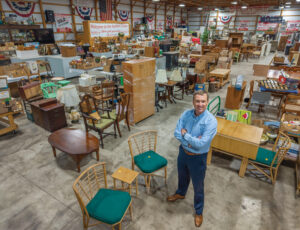
Estate liquidation businesses remain busy, even as the inventory has changed. Andrew Wilson, President and Principal Auctioneer with William Wilson Auction & Realty, says that because baby boomers are downsizing, the industry is navigating the largest transfer of wealth in history, with market oversaturation inverting traditional asset values. While consumers covet precious metals, firearms, and farmland, fine china and antique furniture are less valuable.
“We have to tell a family member, ‘You have a silver flatware set that used to be worth $500. Now, it’s worth $5,000. On the other hand, you have a nice walnut corner hutch that used to be worth $5,000 that is now worth $500,’” Wilson says. “We walk through those expectations with them so they understand what they have and make a decision accordingly.”
Tradition in Transition
As American adherence to religious traditions loosens and green options and celebrations of life gain popularity, some families are bypassing the traditional funeral experience for their loved ones’ services. Andrew Wilson’s father, Bill, loved his hometown of New Harmony, Indiana, and built his auction and realty business there. When Bill passed away in July, it felt fitting for Boone Funeral Home to hold his celebration of life at the historic Rapp-Owen Granary.
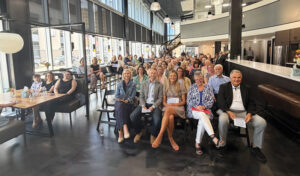
After Ten Adams founder Jack Headlee passed away in January, his son Jon Headlee worked with Ziemer Funeral Home & Crematory to arrange an event at the company’s office. The 45-minute service featured live music and food from Be Happy Pie Company, a business Jack had mentored.
“Years ago, there was this organ music playing beforehand, and it was somber and depressing. Everybody’s quiet, waiting to walk up and pass by the casket,” Headlee says. “My buddy was a worship leader, so he played his guitar. The objective was to be upbeat and celebratory.”
That lighthearted trend led Browning Funeral Home, in business since 1954, to remodel its facility. “You can’t have a celebration of life in an old, 1960s style, dark funeral home,” says Funeral Director Jake Browning Hester, grandson of founder Charles Browning and son of owner Jean Browning Hester. “More like a high-end hotel or event space is the direction we’re catering more to.”
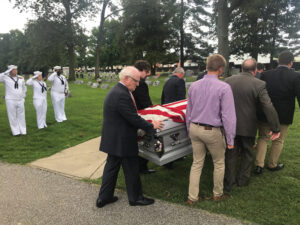
Attention to detail is important when mourners say goodbye to loved ones, and personalization is key. Browning offers to cremate veterans with an American flag, while Alexander Funeral Home’s Memorial Park on Mesker Park Drive offers a section for veterans. Alexander also uses memory tables to display personal belongings at funeral services.
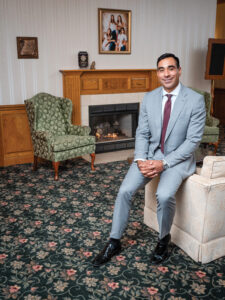
“Sometimes the family will say, ‘I don’t know if this has ever been done before, but can we?’” says Jordan Duncan, owner of Boone Funeral Home, which dates back to the late 1800s. “It’s best to say yes because they’re here, and it’s our job to make their wishes come true.”
Daniel Ziemer, President of Ziemer Funeral Home & Crematory, notes 60 percent of the business’s funeral ceremonies are prearranged. While guaranteed contracts lock in current prices, non-guaranteed contracts set aside funds without protecting against inflation. Cost is one of the factors pushing people toward cremation, along with environmental concerns and simplicity. A cremation and burial report released just over a year ago by the National Funeral Directors Association revealed the U.S. cremation rate was projected to rise to 63.4 percent in 2025 and 82.3 percent by 2045. Conversely, the rate of burials was expected to drop to 13 percent in the next 20 years.

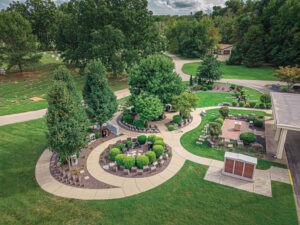
Browning, Alexander, Ziemer, and Boone funeral homes confirm their cremation rates top 40 percent. The shift has prompted business model changes such as expanding offerings and educating families. For example, Sunset Funeral Home, Cremation Center & Cemetery makes placements for ashes available in its Community Garden.
“Designing an outdoor cremation garden and having indoor cremation permanent placement options has been something we’ve done to address that growth,” says Andrew Alexander, Manager of Alexander Funeral Homes’ West Chapel. (In a city of mostly locally owned funeral homes, the 146-year-old fifth-generation business with four sites and a Memorial Park is part of the Dignity Memorial nationwide network of 2,000 providers after being acquired in 1997 by Service Corporation International.)
What’s not growing? Employment. NFDA’s report projects funeral industry employment to grow only four percent between 2023 and 2033. In fact, to compensate for the movement toward cremation, Ziemer says his family’s 99-year-old business has reduced staff, relying more on part-time personnel than full-time employees at its three locations. It’s also added keepsake merchandise. “Cremation jewelry, where some of the remains can be placed, has become popular. There are some ancillary items that we’re able to sell that help make up for the loss in margins,” he says.
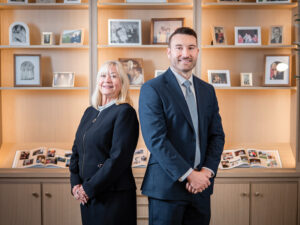
Browning Hester by Zach Straw
Visitations also are getting shorter, with some families opting for a one-day service compared to a two-day event. Post-service meals are still requested — “People like to do that,” Browning Hester says — and Browning, Alexander, and Boone funeral homes provide spaces for bereavement meals, with Alexander offering catered receptions. “The menus are pre-designed, and we have several options so people don’t have to think through that,” Alexander says.
Many families used to choose funeral homes based on religion, ethnicity, and race — especially during segregation, when Mason Brothers Funeral Services and Osborne Funeral Home served the Black community. But the NFDA report shows the number of Americans identifying as nonreligious grew 12 points between 2007 and 2023 to 28 percent. “Over the years, I have seen those lines become much less defined, with a steady increase in the diversity of religious backgrounds among the families we serve,” Duncan says. Browning Hester adds, “People predominantly choose us because we have served their family or friend in the past, and they were pleased with how we handled their services. Also, word of mouth is a big factor.”
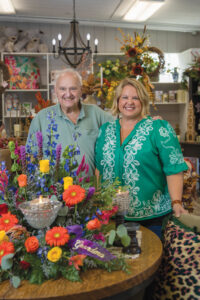
As funeral homes adapt to a new normal, the demand for floral arrangements remains steadfast. “People still just love a fresh flower,” says Heidi Griese, owner of Flowers and More on West Franklin Street. “When there’s beauty in the funeral home, it brings a light to what’s going on that day.”
Griese estimates funeral and sympathy services make up more than half of her business. She consults with families to design customized displays, such as casket sprays, lid corsages, and urn arrangements, and color-coordinates flowers with the container and clothing. The cremation shift motivated Griese to create more arrangements that wrap around urns. She has noticed customers ordering more permanent sympathy gifts, such as stones, benches, wind chimes, and lanterns. Personalization has also become significant when expressing condolences. “I had a lady come in, and we knew that the deceased gentleman was a hunter, so we added antlers to a beautiful lantern that was decorated,” Griese says. “We had a gentleman who was a farmer, so we incorporated potatoes and corn mixed in with the flowers and with cattails and different vegetables. That was a nice tribute to him.”
Modern Memorials
Creating a gravesite marker requires craftsmanship, says Ryan Scherer, owner of 94-year-old West Side business Scherer Monument Works. “These stones, you want to keep them up forever,” he says. “We are motivated to pour a good foundation.”
While families are choosing a design and layout from options like granite headstones, bronze memorials, and customized benches, Brandy Woods at Rakestraw Monuments is checking that their choice doesn’t run afoul of the intended cemetery. “If they’re in a certain area of the cemetery, that area could strictly be bronze plaques,” says Woods, who owns Rakestraw with her husband, Brian. “Or there could be some areas that are strictly grass markers, flat to the ground, or you can have an upright monument, but it can only be up to a certain size.”
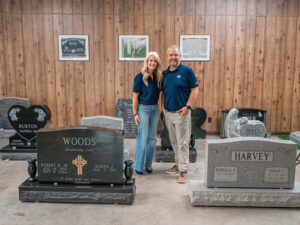
Though the U.S. cremation rate is now double the burial rate, the National Funeral Directors Association states approximately 38 percent of cremated remains are still interred at cemeteries. Woods attests cremation has not affected her 16-year-old business because families continue to seek meaningful ways to memorialize their loved ones. “There are monuments and benches and plaques and different types of things to hold cremated remains,” she says. Scherer reports that demand for community columbaria (above-ground structures for urns) at cemeteries has driven a steady increase in his cremation monument unit sales over the past five years.
To keep up with the personalization trend, Rakestraw invested in a laser-etching machine to engrave detailed designs, like pictures, onto monuments and urns. Woods has also observed people becoming more proactive in pre-need planning. “[They are] coming in and designing their monument, choosing what they want, having everything done so their family doesn’t have to deal with that when that time arises,” she says.
Technology is changing the industry in other ways. The NFDA’s report in 2025 found that 65 percent of U.S. funeral providers offer virtual services through themselves or a third party. Scherer adds that QR codes placed on markers may be the next big thing. “Everybody’s got iPhones now. They can [scan and] sit and view videos of their loved ones instead of just putting flowers on the stone,” he says.
Life’s Final Chapter
In a four-decade career as a registered nurse, health advocate, court-appointed adult guardian, and more, Carol Havens has seen cultural changes open the door to discussion about death, and she encourages people to organize their medical, legal, financial, and personal wishes sooner rather than later.
“We never know when something’s going to happen,” says Havens, who authored “When the Time Comes,” a guide to navigating estate planning and end-of-life care. “A lot of times, people think that getting your affairs in order means just getting your will, power of attorney, and health care representative. In my experience, that’s less than a fourth of what needs to be done to help make that preparation.”
Death-related services are not just for people. According to the World Organization of Funeral Operatives, global spending on pet death care and commemorations is expected to reach $3.9 billion by 2033, and funeral homes are adding those services.
Ziemer Funeral Home & Crematory President Daniel Ziemer contends the desire to memorialize companion animals has become more popular. “A lot of people prefer to bring their pets to us. They want to take them that last mile,” he says.
Titzer Family Funeral Homes provides private cremations, casket options, memorials, monuments, and pre-planning for terminally ill animals. Ziemer Pet Memorial Center offers an eco-friendly cremation process using an alkaline water bath, engraved wooden urns, and even online pet obituaries.
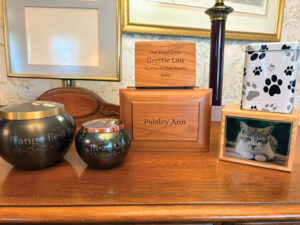
Dogs and cats aren’t the only pets Ziemer has observed at his funeral business. He has provided care for chickens, raccoons, goats, snakes, geckos, hamsters, and guinea pigs. “We’ve had one pet funeral where people came and talked. They put together a video of pictures. It was sweet,” he says. “Pets are part of your family.”
As much as the culture around death has changed, grief has not. “Grief has no cycle,” Havens says.
THE COST OF DYING
The National Institutes of Health reports that Vanderburgh County averaged 2,265 deaths annually between 2020 and 2024. Families saying goodbye could face these costs for their loved one’s funeral arrangements.
$1,495: Basic services by Simple Cremation
$2,295: Signature service that includes an American flag, keepsake urn, or jewelry by Simple Cremation
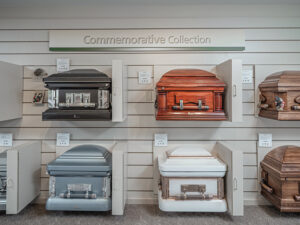
$2,000-$2,860: Basic cremation services at Boone, Browning, and Ziemer funeral homes
$4,000: Cremation with funeral service at Boone Funeral Home
$7,000: Cremation with viewing and funeral service at Boone Funeral Home
$10,000-$15,000: Full-service funerals at Boone, Browning, and Ziemer funeral homes
$795-$1,095: Starting prices for catered receptions at Alexander Funeral Homes
$295: Starting price for urns at Alexander Funeral Homes
$2,495: Starting price for caskets at Alexander Funeral Homes
$250-$650: Casket sprays from Flowers & More
$500-$5,000: Grave markers from Scherer Monument Works
$230-$420: Animal cremation and urn by Ziemer Pet Memorial Center
DID YOU KNOW?
After opening Browning Funeral Home, founder Charles Browning quickly spotted a demand and need for historical preservation and genealogical records. The result is a digital database of thousands of records documenting marriages, births, deaths, immigration, military service, and cemetery plot locations in and around Southwestern Indiana since the 1800s.