

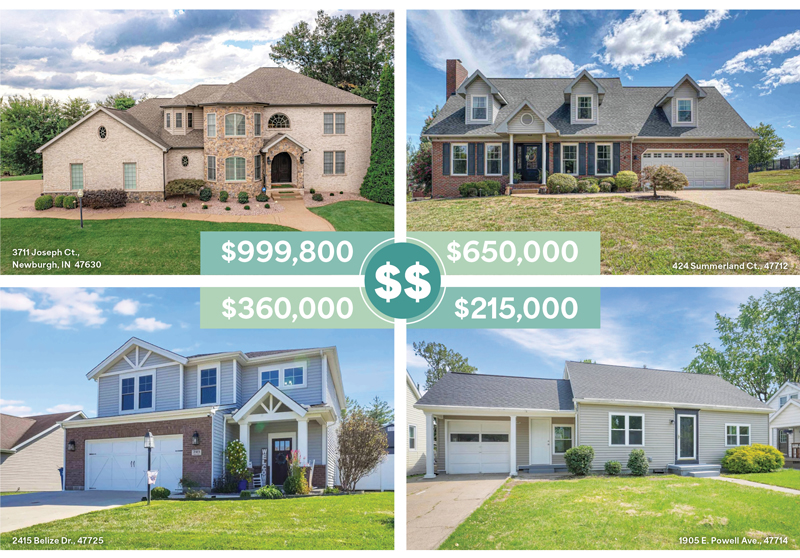
When it comes to the local residential housing market, slow and steady is winning the race. According to those who broker deals here, homes are affordable compared to other regional communities. And buying in the River City remains a solid long-term investment thanks to its pattern of slight, but dependable, year-to-year upticks in property values, even as the number of local home sales has declined in recent years.
These trends enable Evansville to hold its own in the face of nationwide headwinds, local agents say. Across the U.S., the recent real estate picture has tilted toward buyers, aided by rising inventory and easing mortgage rates. That’s true in Evansville as well, but agents are reporting more balance and say sellers still can walk away from a closing satisfied, especially when unloading a property in higher-demand neighborhoods.
The combination of factors “continues to draw new residents and investors to our market, fueling long-term stability and growth,” says Nikki Davis, an agent with F.C. Tucker Emge.
Evansville typically does not see extreme highs or lows, adds Cyndi Byrley, an agent with ERA First Advantage Realty who’s worked in the industry for more than 30 years. Byrley describes the area as “Steady Eddie” when it comes to real estate. “There’s always going to be good housing here,” she says.
What sets Southwestern Indiana apart from coastal areas and larger cities? Agents say X-factors include lower prices, slow and steady appreciation (typically 2-4 percent a year), and balanced supply and demand. Simply put: A home in this region can be had for a much lower price than a comparable house in a market like, say, Fort Wayne, Indiana. Zillow reports that October’s median home price in the state’s second-largest city was $236,164; it was about $216,974 in Evansville as of data shared Nov. 12 by the Indiana Association of Realtors. Zillow reports Evansville’s median home price also bests Bowling Green, Kentucky, whose growing population offered a median home price for $282,222 in October, further confirming this region’s cost-friendly status. And in a national landscape still finding balance, “steady” may be Southwestern Indiana’s most powerful selling point.
Inventory to Satisfy Buyers
There are homes to be found in Evansville, which claims each zip code — no matter if it’s inside or outside city limits — in Vanderburgh County. According to data from the Southwest Indiana Association of Realtors, September saw 485 home sales (up 9.73 percent) and 657 homes listed (up a whopping 19.89 percent), reflecting a growing year-over-year inventory. Nationally, available homes have risen 14 percent; the Evansville market has seen a spike of 7.28 percent. Conversely, Vanderburgh County’s population grew 2 percent between 2020 and 2024, so buyers are more likely to already be living here than moving into the area.
Given the higher inventory, houses for sale are staying listed for longer periods, creating some anxiety in sellers. Agents say the availability of houses has increased since COVID-19 arrived, when pickings were slim. “I wouldn’t necessarily call it a buyers’ market. It’s simply not the robust sellers’ market we experienced during COVID,” Byrley says. “Inventory has been building, and in certain price ranges and pockets of town, we’re seeing more supply than others — but when a home is priced correctly, it will still sell. I’d describe it more as a market that’s normalizing and finding balance, rather than shifting strongly to either buyers or sellers.”
Patience is a virtue when selling in the current environment, agents say, but some are seeing it pay off: Marc Hoeppner, an owner and managing partner of the local affiliate of @properties, recently closed on a house near the Evansville State Hospital on the East Side that moved for $6,000 above its ask. “Our premium homes in great condition in quality neighborhoods, with prices within reason, are still selling really well,” Hoeppner says.
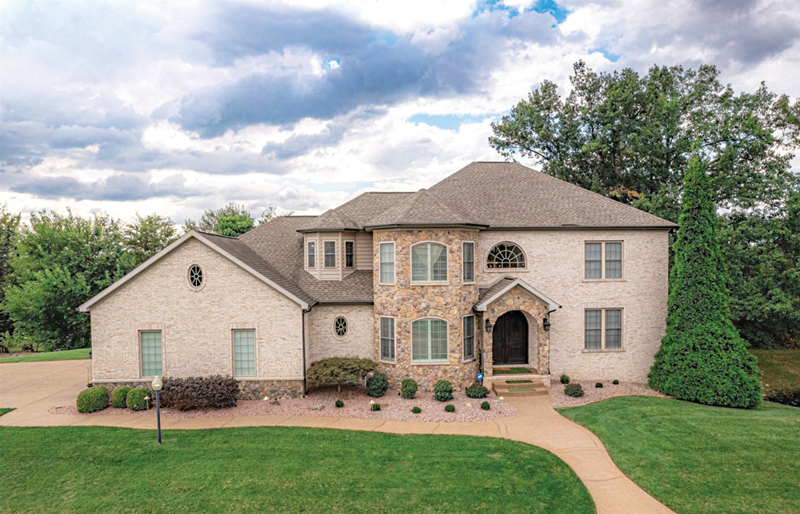
Agents say the region has healthy overall inventory, but it falls short of a surplus. While there are plenty of choices, some neighborhoods and zip codes have more availability than others, and it helps to pack some buying power. Hoeppner says Newburgh, Indiana, for example, has plenty of four- and five-bedroom homes, but few listings for those seeking smaller properties.
Newburgh’s 47630 zip code has consistently been the hottest local zone for home sales, according to data provided to Evansville Business by the Indiana Association of Realtors. Through October, Newburgh had seen 516 total sales for the year to date, slightly down from 562 in 2024 and 602 in 2023. Many of those deals were lucrative, too: The median sale price on Newburgh house sales in 2025 and 2024 was $325,000; it was about $310,000 the year prior.
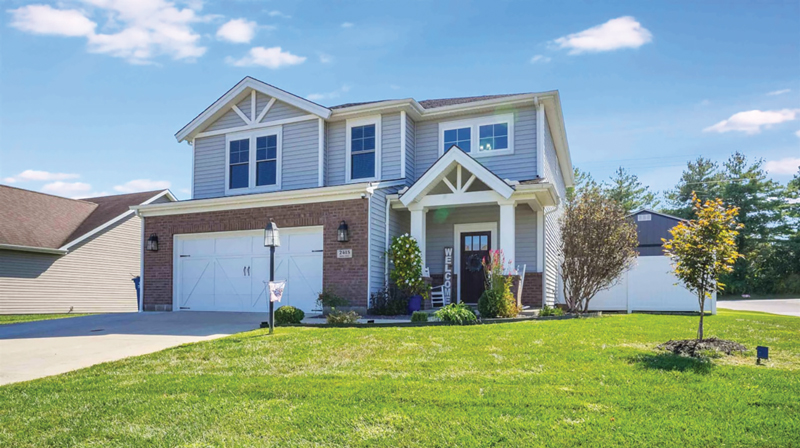
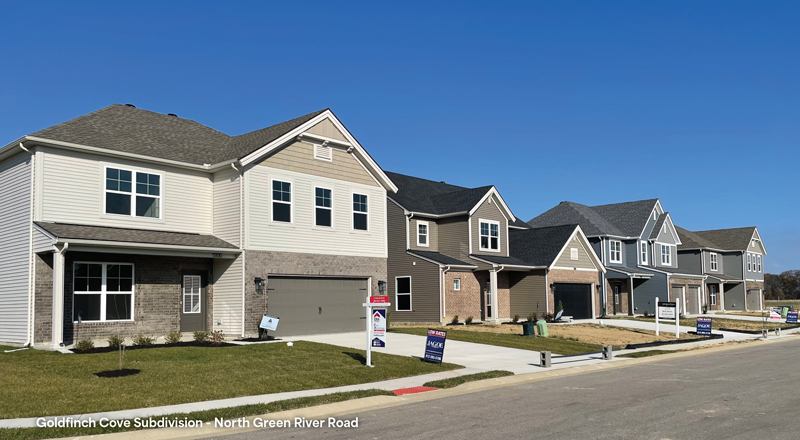
The only local area with sale prices comparable to Newburgh is the 47725 zip code, which covers the McCutchanville and Darmstadt communities in northern Vanderburgh County. That area’s total sales have trailed Newburgh, but its 2025 median sale price through October reached $340,450, and it was just shy of $315,000 in 2024 and 2023. Agents note that ample new home construction continues in northern Vanderburgh County, particularly along North Green River Road and U.S. 41.
Davis says Newburgh and Evansville’s North Side are seeing “a bit more activity and slightly longer days on market” — 24 and 47 median days, respectively, in October — “while the West Side of Evansville and Posey County still have tighter inventory and faster sales.”
The overall housing market’s biggest squeeze is on the three-bedroom, two-bath market in areas such as Newburgh and northern Vanderburgh County, Hoeppner says: “Those are tough finds, and there is a lot of demand.”
Although sale prices are increasing, agents say first-time homebuyers need not be discouraged, especially since rate changes now are favoring borrowers of all types. According to the Federal Reserve Bank of Saint Louis, Missouri, the average 30-year fixed rate had dropped to 6.24 percent on Nov. 13; a year ago, it was closer to 7 percent. Both numbers have fallen from a recent high of 7.57 percent on Oct. 12, 2023. On a 15-year loan, home-buyers on Nov. 13 could lock in a rate around 5.49 percent. Those rates were 5.99 percent at this time last year and topped 7.03 percent at their most recent peak on Nov. 2, 2023. Byrley adds there are affordable local listings for new buyers, plus financial programs available to assist them with the sale.
It also helps if first-time homebuyers aren’t beholden to a specific neighborhood. The Indiana Association of Realtors’ data show, for example, that in the 47714 zip code covering Evansville’s South and East Sides, a 2025 median sale through October brought in $155,000, up from $145,000 and $140,000 the previous two years. As Evansville’s second-highest zip code for 2025 sales, it saw 372 homes sold as of October.
“There is inventory, but they need to make sure it’s in good shape, or they need to be handy,” Byrley says. “Newer homes might be more costly up front, but they also are more energy efficient.”
Agents describe the local real estate market as active and reliable, although while average sale prices have grown, the total number of homes sold annually since the pandemic has dropped. Indiana Association of Realtors data showed 3,703 homes in Evansville were sold in 2021, falling to 3,342, 2,880, and 2,861 the following three years. Through October, 2,585 had been sold in 2025.
That reflects the region’s stagnant population trends: Evansville recorded 117,298 residents in the 2020 U.S. Census, and the most recent estimates place the city’s population at 115,395. Vanderburgh County’s total population has held steady around 180,000, while Warrick County (the home of Newburgh) similarly is up 2 percent since 2020 from its 63,898 population then to current estimates topping 66,000.
Agents say the region remains a place to get a quality home for a competitive price. If current trends hold, the real estate outlook remains grounded but optimistic — affordability endures, while new construction responds to demand and value grows at a dependable clip. As inventory resets and interest rates ease, the region appears poised to keep doing what it does best — offering a solid foundation for those who plant roots here.