


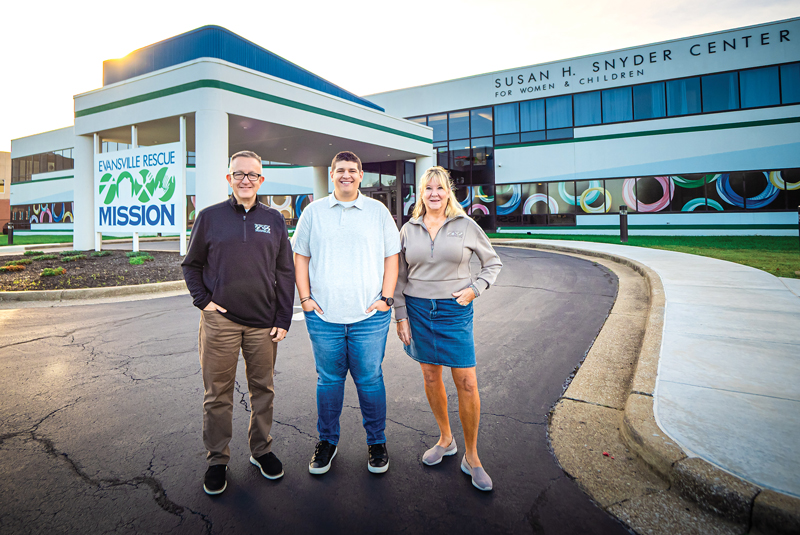
While Tracy Gorman drove to work early one morning in 2015, he saw a mother and her child pulling their suitcases along the street. He knew they were homeless, and the image stuck with him. “I remember thinking to myself, ‘No mom and her child should be living outside,’” the Evansville Rescue Mission president and CEO recalls. A decade later, tears well in his eyes every afternoon when the school bus pulls up to ERM’s Susan H. Snyder Center for Women and Children.
“In my 18 years (at ERM), nothing has been more rewarding for me than to see those kids get off the school buses knowing that they’re coming into a place of safety where they’re loved, cared for, and that’s home for them,” he says.
There is plenty of need: According to data from the Evansville & Vanderburgh County Commission on Homelessness’ annual Point-In-Time Count, more than 200 women and children in the Evansville area are homeless on any given night. The solution started with a $9 million fundraising effort three years ago: ERM considered building new or purchasing a Downtown structure. Instead, it decided on a former heart clinic on Professional Boulevard and purchased it in 2023 for $1.9 million.
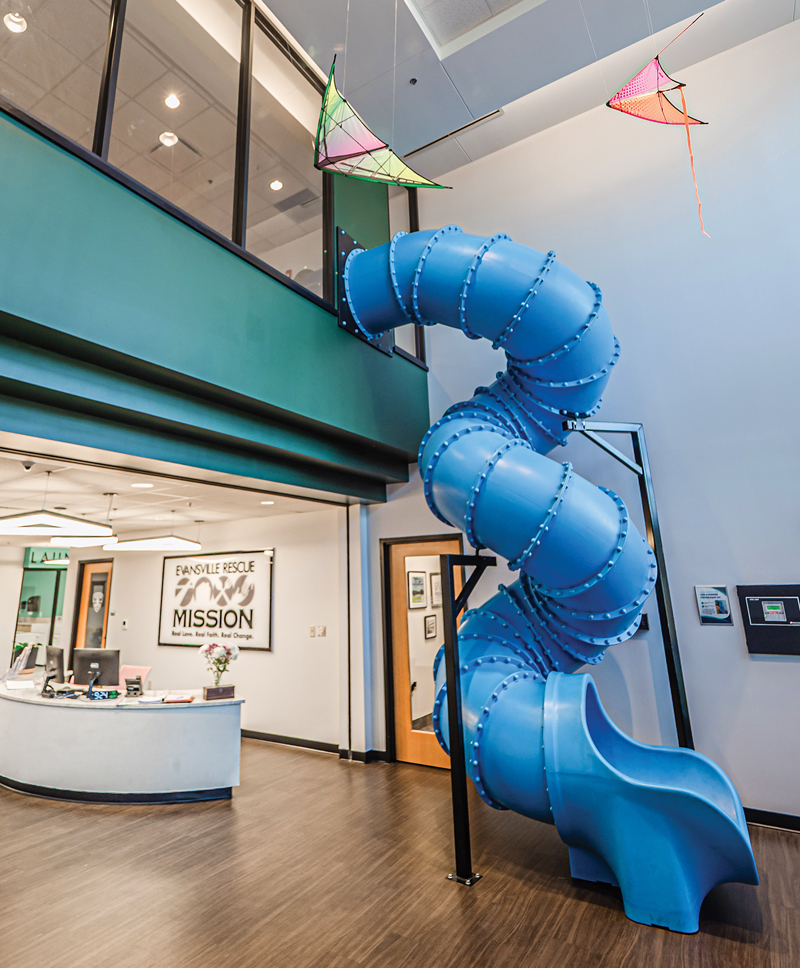
“We knew that there was going to be a tremendous amount of rehab,” Gorman says. “We needed to turn it into a hotel, restaurant, office building, and daycare center … but there’s a feeling that you get when you know you’ve got the right space. I knew it as soon as we walked in.”
It cost $4.6 million to prepare the 42,600-square-foot space for 120 residents, as well as programming and an executive suite. LA+D produced the initial designs, and after a groundbreaking ceremony on Oct. 19, 2023, ARC Construction began the remodel. After 18 months of construction, the result is a warm, playful, and colorful space featuring 34 bedrooms for single women and mothers with children, plus 32 bathrooms and laundry rooms. Residents have access to a teaching kitchen, daycare, fitness center, beauty center, and staff offices, including that of CWC Director Nancy Miller. Upstairs are communal living rooms, meeting rooms, and storage. The executive suite upstairs is home to Gorman’s office and his staff, which includes his son, Kyle, who serves as executive director of advancement.
Named after Susan Synder, the late wife of former ERM board vice-chair Norman Snyder who was passionate about women’s causes, CWC’s grand opening March 13 — 12 years to the day from when ERM’s Men’s Residence Center opened on Walnut Street — exceeded every expectation. When planning the groundbreaking event, Kyle Gorman prepared for 300 people but feared only 100 would show up. Instead, around 700 arrived, filling parking lots and lining the street. “It was incredible to see the community’s support behind us,” Kyle recalls. “The support just felt so good, and it continues,” Miller says.
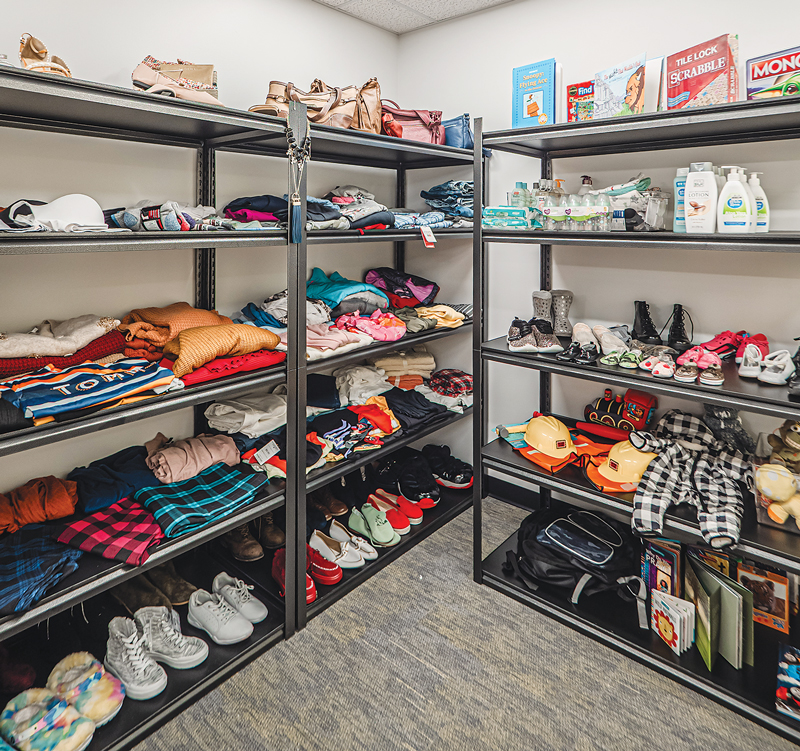
J.T. and Julie McCarty, former owners of Colonial Classics, first heard of the project through Randee Bugher, whose husband, Dan, was on ERM’s board of directors. J.T.’s family has deep connections to ERM: His grandfather, Jacob McCarty, was good friends with Pastor Ernest Reveal, who co-founded ERM in 1917 with his wife, Edna. The McCartys donated, hosted two fundraisers at Igleheart Gardens, and assisted with landscaping by cleaning up outdoor spaces and donating 100 trees.
“We jumped in with both feet and said we were ready to help,” J.T. says. “It’s not just how good it looks, but for all the things they are doing.” Julie adds, “It really pulled at our heartstrings.”
Miller often conducts facility tours for donors and says community members frequently call about how they can help. She developed the programming after being hired in 2023, visiting seven sister facilities within the Citygate Network, which equips organizations with resources to combat homelessness. Miller’s own experience growing up in poverty in Detroit, Michigan, and obtaining undergraduate and graduate degrees in Chicago, Illinois, including her Doctor of Education from National Louis University, also informs her perspective as director.
“I was a poor struggling student … so I cleaned houses and waitressed, still didn’t have ends meet, so that meant taking food out of dumpsters and just trying to survive the best I could,” she says. “So I put energy into myself, my education, to move beyond. These women, it’s very important to me that they understand education is a path.”

Women undergo an initial interview before becoming residents and participating in a 77-week program that includes classes on faith, self-care, harm reduction, and life skills. A technology lab, Bible studies, and group counseling round out the curriculum. “ERM taught me how to balance a checkbook, write a check, pay bills online,” says Jaynia Spencer, one of the CWC’s first residents. After moving from Springfield, Illinois, to Evansville for a job and a safer environment in December 2023, she struggled to find permanent housing for herself, her mother, and her two daughters. After a period of uncertainty, she now is one of the first people to greet new residents.
“I’m usually part of the welcoming committee,” Spencer, 28, says. “It’s different every day. I’m always helping somebody do something around this building.” She aspires to be an oncologist and is on track to become a nurse through Ivy Tech Community College Evansville’s health care specialist program.
“It’s been a lot and a long journey to get here. Sometimes there’s good days and there’s bad days, but at the end of the day, it’s a sisterhood,” says Taylor Dillard, 22, who’s been in and out of homelessness since she was 18. She arrived in Evansville from Missouri with her two sons to live with a friend, then her aunt in Fort Branch, Indiana, before becoming homeless again. “Now I’m focusing on getting my GED, and when I get that, I want to go to Ivy Tech to be a nurse,” she says.
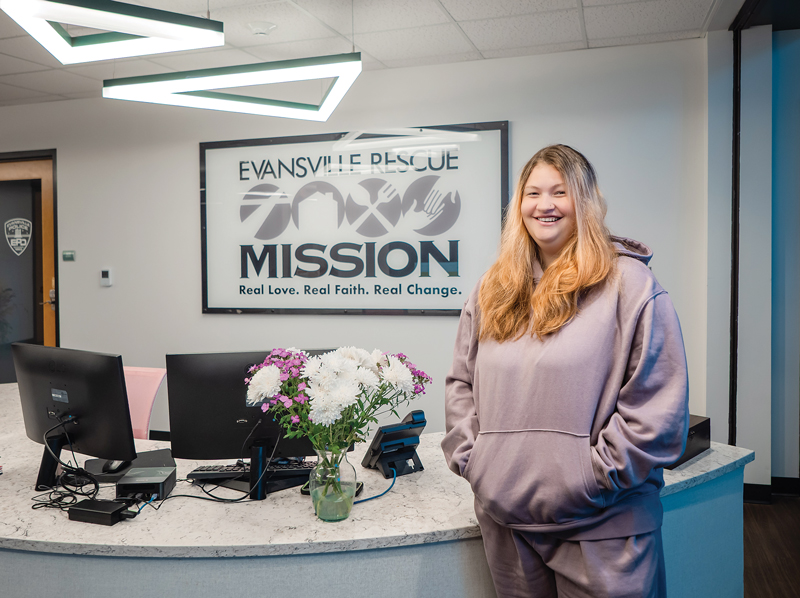
Spencer, Dillard, and their children were among the first 80 residents of the CWC, part of a phased opening process designed to identify and address any problems before the CWC reaches capacity. Kyle Gorman expects the facility to be at 100 percent capacity by spring 2026.
Tracy Gorman says accepting residents in phases was “the best decision, probably, that we’ve made … because it’s given us a chance to learn how to do this. We’re a 108-year-old organization, but we’ve never had female or child residents. We’ve had challenges, but every single one of them we’ve learned from.”
It’s worth the effort, Miller says, “when you see the growth of somebody. We are impacting these ladies’ lives. They know that they are getting support. To me, the most rewarding (thing) is to see a child figure out that we care and that they are being supported.”