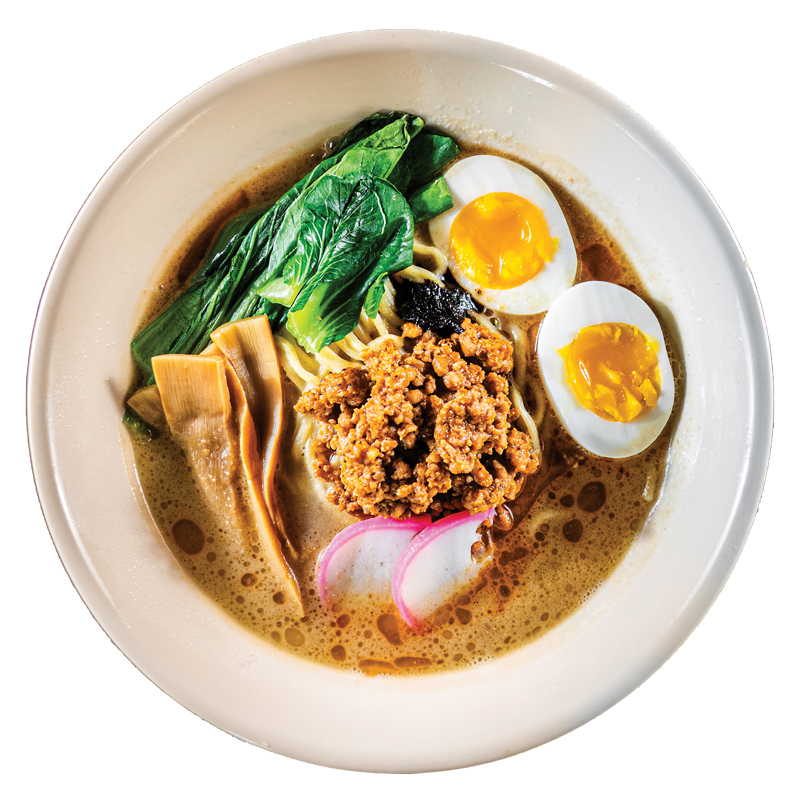


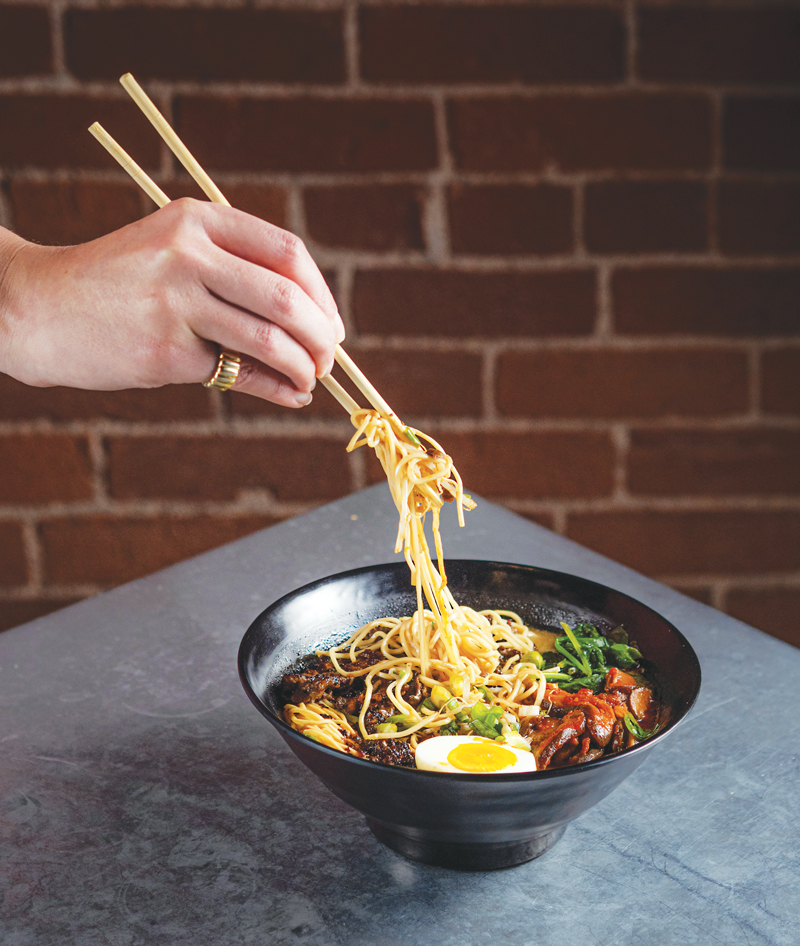
When it comes to winter comfort foods, ramen fits the bill. “Hot soup on a cold day — it sells itself on that point,” says 2nd Language line chef Clint Pollack. More diners are discovering the goodness of a steaming mix of broth, meat, noodles, vegetables, and spices. Call it a hug in a bowl.
No longer is ramen a stereotypical dorm room food. It’s a global phenomenon catching fire locally thanks to ambitious, skilled chefs and customers who are expanding their palates.
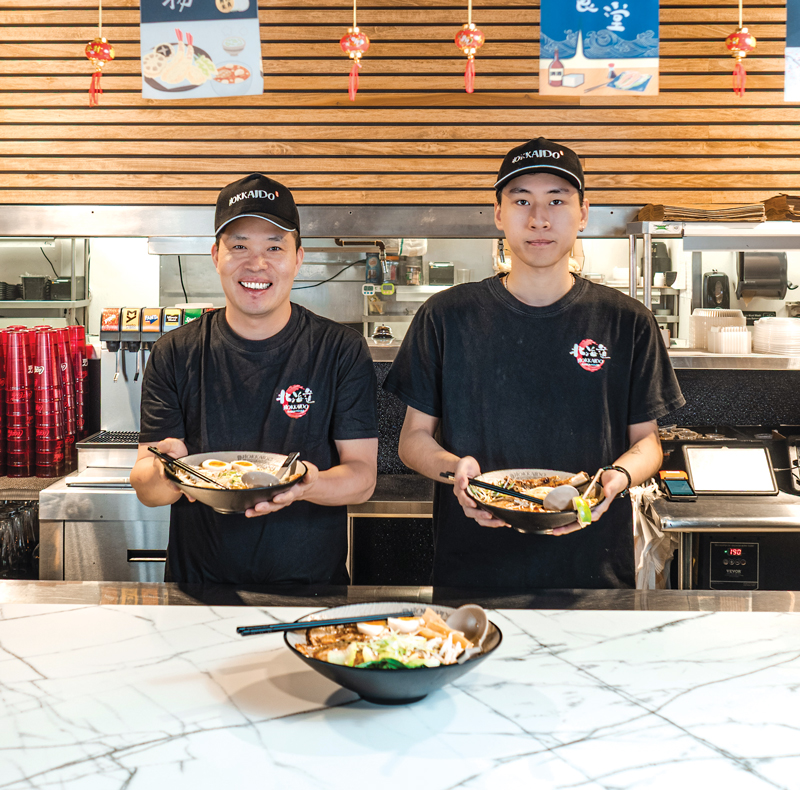
Ramen’s roots are in China, but its popularity grew in Japan. An appetizing quality for diners is the many available choices, plus how any can be seasoned to taste. American-born diners, for example, tend to want more salt than those who are native to other countries, says Selena Ye, manager of Hokkaido Ramen House on North Burkhardt Road.
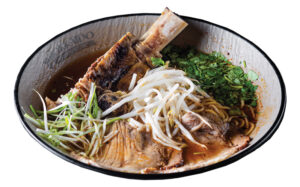
“Every bowl has a soul,” Ye says. “We offer more than 10 types of ramen, each crafted with hours of simmering and a lot of heart — from our deeply aromatic garlic tonkotsu to the bold heat of spicy beef and spicy miso. We have pork, chicken, beef, vegetarian, and even gluten-free options because we want every guest to find a bowl that feels like it was made for them.”
The national chain restaurant’s Evansville location opened in December 2024. “People here have adventurous taste buds,” Ye says. “We love seeing guests’ eyes light up after that first sip of broth.”
“Even though our recipes come from traditional Japanese roots, we believe ramen is also about community,” Ye adds. “When we first opened, some guests told us that certain broths or our chashu tasted lighter than they expected. So we listened, adjusted, and improved … while keeping the original spirit of the recipe.”
Domo Japanese Hibachi Grill, Sushi and Ramen sees diners of different nationalities, but American-born customers are becoming more familiar with ramen, Executive Chef Marvin Abadicio says. The restaurant, which moved out of China Bistro and into its own storefront on North Green River Road in 2021, has about a dozen ramen choices. Some are paitan style, with a creamy white broth and thick noodles, and “we serve it with seafood, like shrimp. We also have chicken, beef, and spicy pork,” Abadicio says.
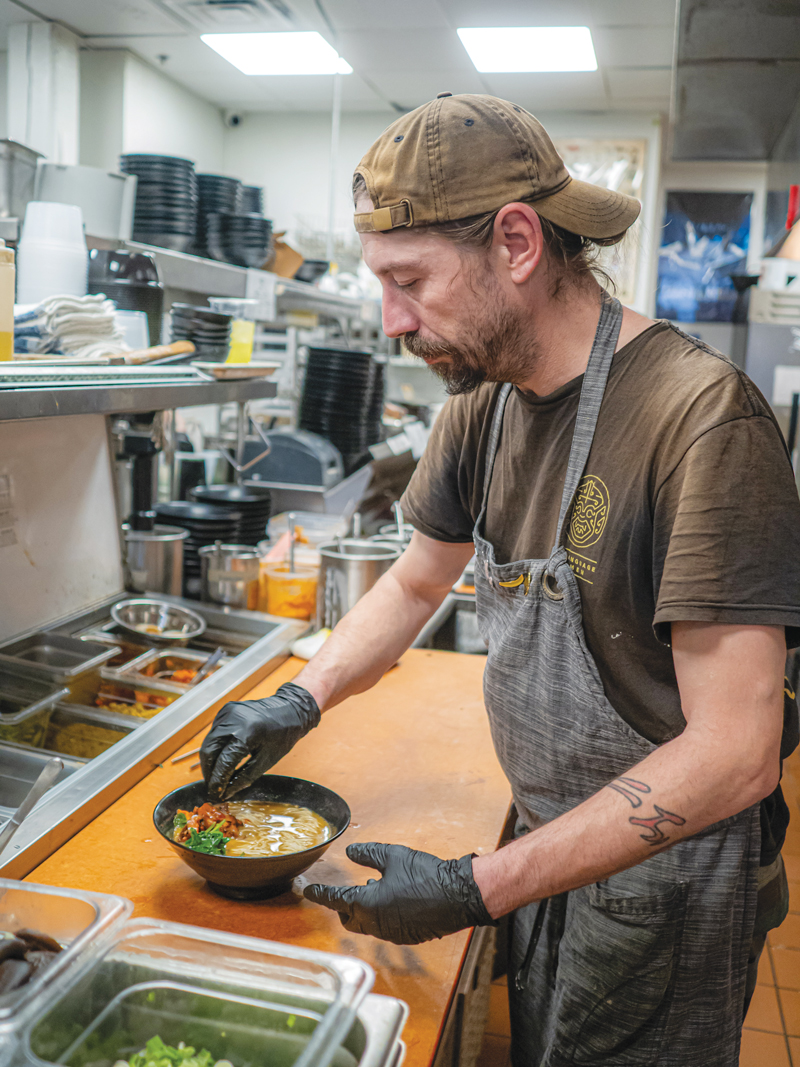
Though the dish is a simple mix of ingredients, there are endless varieties, and preparing a ramen recipe — especially authentically — takes hours. At Downtown’s 2nd Language, owner Randy Hobson invested in a pressure cooking system from Japan that reduces the broth’s cook time while improving its consistency and flavor. Since 2021 (a year after opening), ramen has been a popular item on the seasonally updated menu at the Southeast Asian-inspired restaurant, which serves up to eight rotating variations. This season, the spicy tiger kimchi, cold-smoked pork belly tonkotsu, and savory Lanzhou beef are the most popular orders.
Hobson samples the latest trends by traveling extensively (as is evidenced by the global flavors on the menus at his restaurants, including Pangea Kitchen, Sazón y Fuego, and Pangea Pizzeria). “Ramen consumption on a per capita basis in the U.S. is well behind other parts of the world, especially Southeast Asia. In Japan, you find a ramen spot on every corner,” he says. Hobson’s staff benchmarks their offerings against industry leaders and leverages the knowledge of staff at all four restaurants to develop unique offerings.
Hobson attended a class in Los Angeles, California, to learn from Kenichi Ota, a Japanese ramen expert. Ota, who in 2023 opened KC Craft Ramen in Overland Park, Kansas, then visited Evansville at Hobson’s request to teach 2nd Language kitchen staff the art of ramen. “If you have a well-trained staff and proper prep, you can make ramen servings pretty quickly,” says General Manager Austin Cole.
Pollack, 2nd Language’s line chef, fell in love with ramen while serving with the U.S. Air Force in Japan. He credits anime with driving ramen’s rise into the mainstream as well as its comfort food quality. Head chef Jeremy Gunn’s favorite ramens on 2nd Language’s menu are the tiger kimchi and umami-rich spicy miso, a secret ninth menu item. Gunn also praises ramen’s accessibility. “Going out to eat is becoming harder for people,” he says. “We work very hard to control our costs while keeping the product made in-house and authentically, so everyone can enjoy our products.”