

Sandy Ford’s life has bustled with activity. The retired nurse has enjoyed a 37-year career caring for patients at Evansville State Hospital, raised her son, R.J., and, today, plays with her grandchildren. Such an active life may have seemed impossible for someone diagnosed as a child with cerebral palsy and, later in life, spina bifida and breast cancer. Those obstacles haven’t slowed Ford down, and she credits Easterseals Rehabilitation Center.
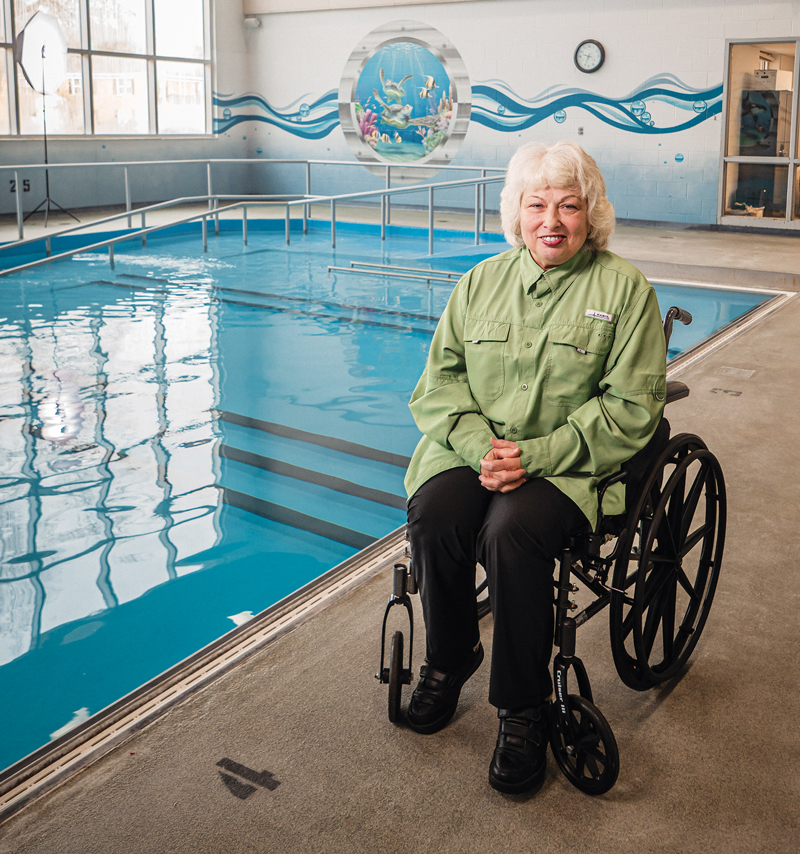
“This place kept me going,” says Ford, who still receives weekly physical therapy and swims in the pool independently forexercise four times a week. “The therapists have listened to me laugh, held me when I’ve cried … emotionally supported me.”
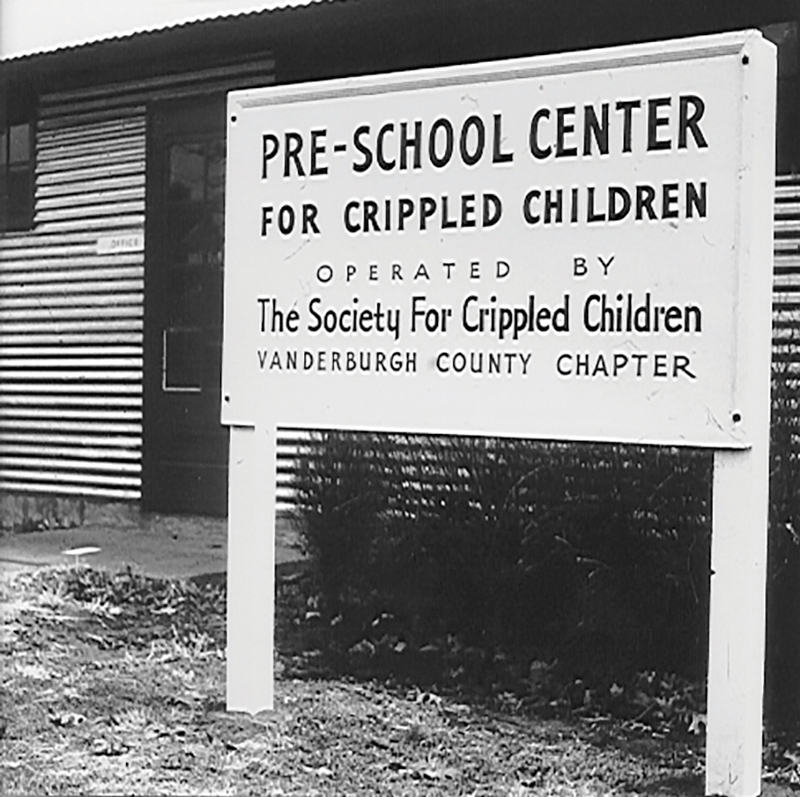
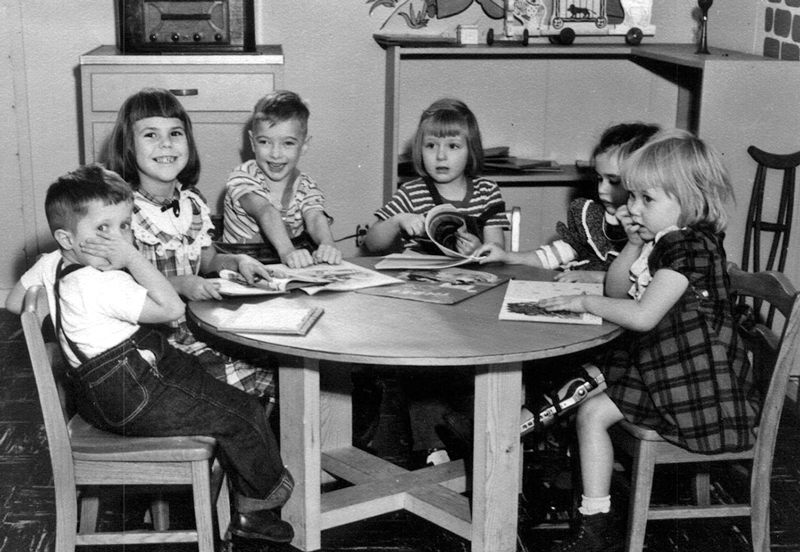
Through her decades-long relationship with Easterseals, Ford, 67, has seen the organization hit new heights. What began in 1946 as Vanderburgh County’s chapter of the National Society for Crippled Children has evolved into a multi-faceted operation offering speech, physical and occupational therapy, group homes, and more services to nearly 5,000 individuals from 30 Tri-State counties. “They’re not behind the times,” Ford says.
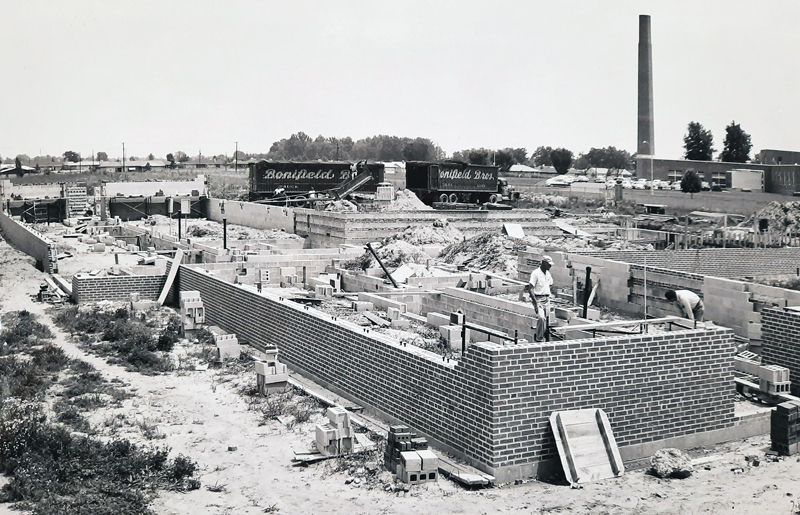
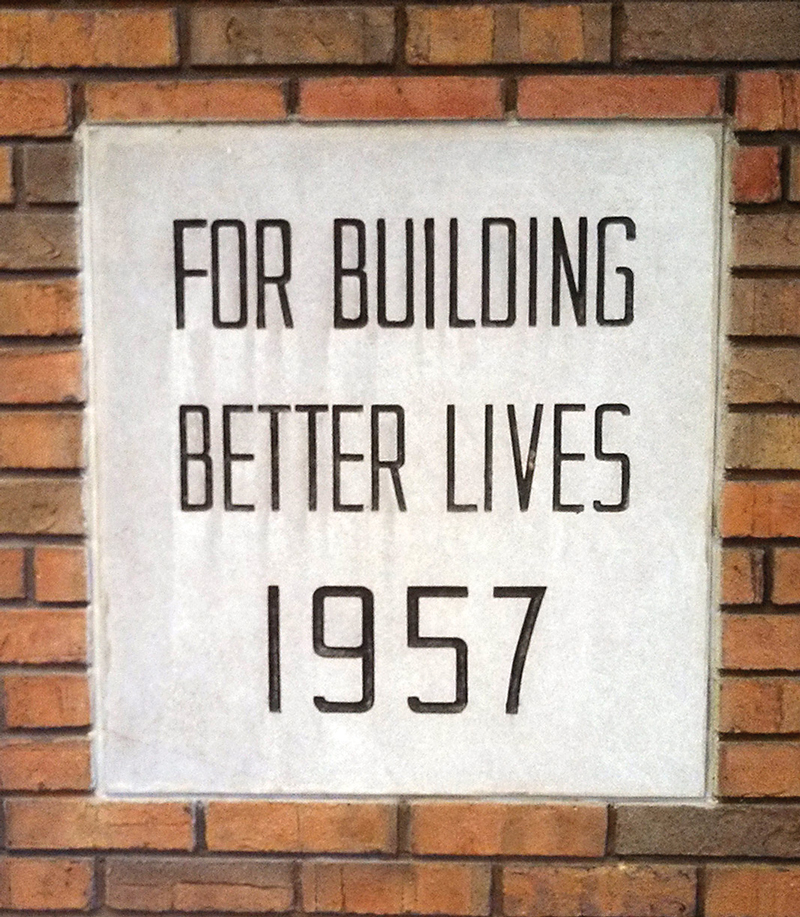
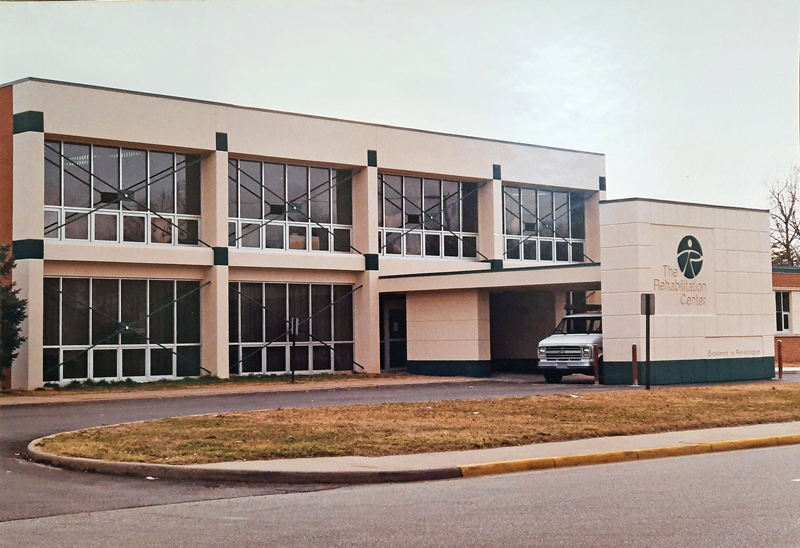
With a cornerstone reading “For Building Better Lives,” the organization’s rehabilitation center on Bellemeade Avenue in 1957 became the first freestanding facility in the U.S. designed specifically for outpatient rehab services. After rebranding nationally as Easterseals in 1967, the local affiliate twice majorly expanded its building as the nonprofit’s services broadened to include early childhood programs, mental health outreach and education, medical rehabilitation, assistive technology, psychology services, aquatic therapy and exercise, augmentative and alternative communication, recreation and fitness, and residential services.
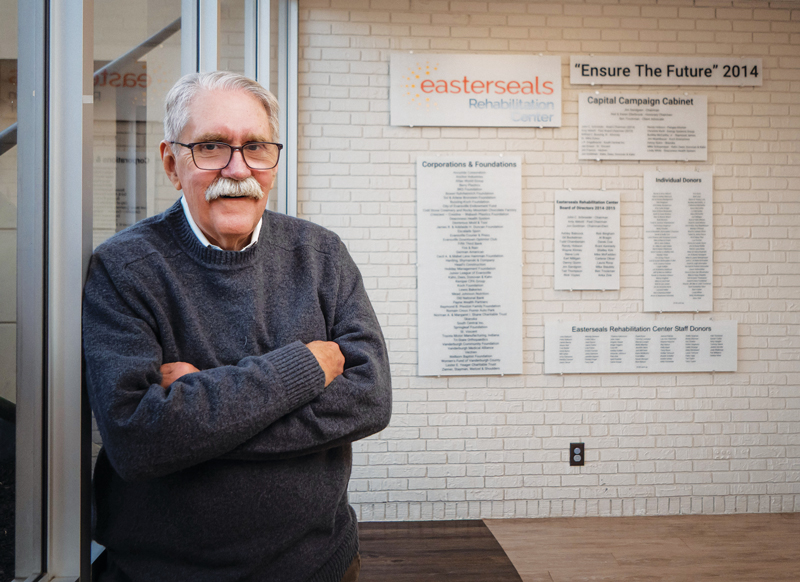
Initially, the Society for Crippled Children (and eventually also adults) helped fund wheelchairs, walkers, hearing aids, special equipment, and travel to larger cities for treatment not yet available here. “When Easterseals started, they were not service providers, but more facilitators,” says Ray Raisor, president and CEO of the local affiliate from 1982 to 2015. When he began, Easterseals served approximately 2,000 people. During his nearly 34-year tenure, Easterseals launched its group home program, added a warm-water therapeutic pool, and increased staffing from 33 employees to 375. “When I came, it was a time when medical science was making tremendous improvements in identifying and treating disease. So, children were surviving birth problems, and we were able to keep people alive with devastating injuries. They were going to need some kind of therapy intervention for the rest of their lives,” Raisor says.
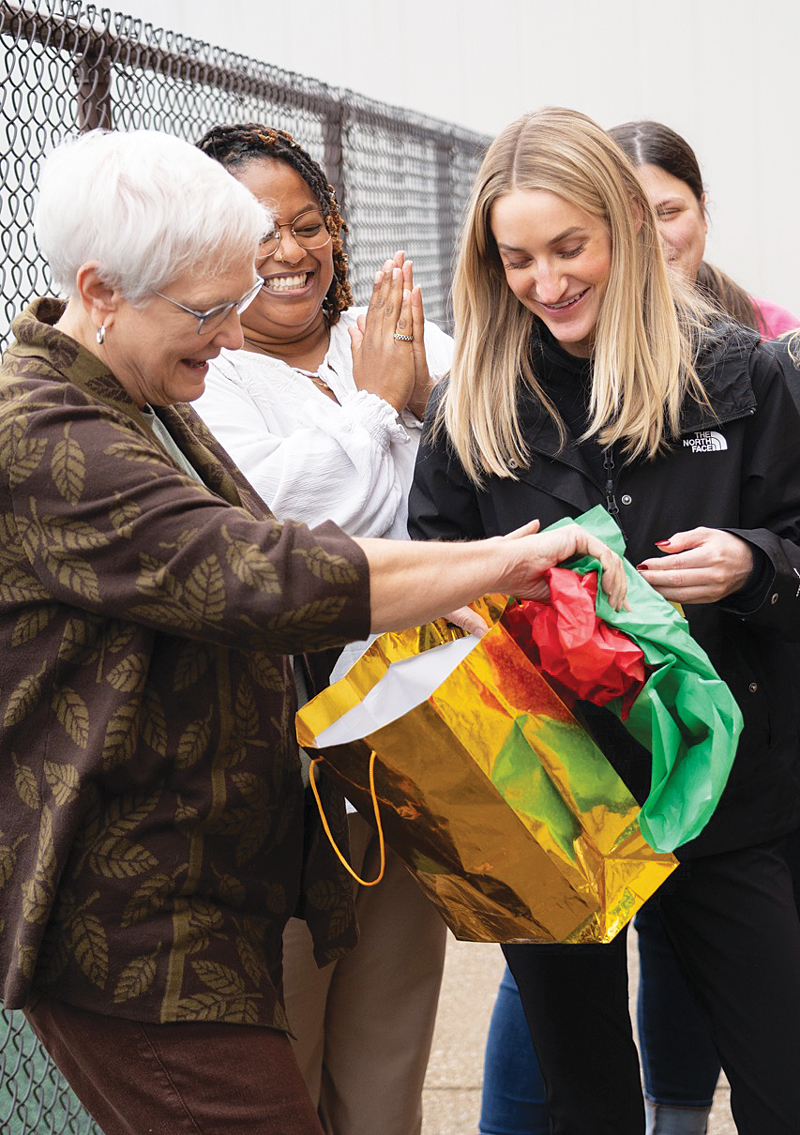
A large part of Easterseals’ appeal is that essential core services are provided for all ages regardless of the client’s ability to pay. The organization does not receive federal funding, and state funding comes only through Medicaid. To underwrite its services, Easterseals turns to private donations from individuals, businesses, and foundations, plus events. Ritzy’s Fantasy of Lights, a longtime drive-thru holiday display in Garvin Park, has raised $4.9 million since 1993. More than 11,500 therapy sessions also were underwritten by $907,797 raised at last year’s telethon. Launched in 1978 and aired on WEHT-TV, the annual event has raised a total of $29,722,096. Raisor clearly recalls the day in 2012 when it hit $1 million for the first time: “When the digital counter showed a million dollars, the crowd went nuts,” he says.
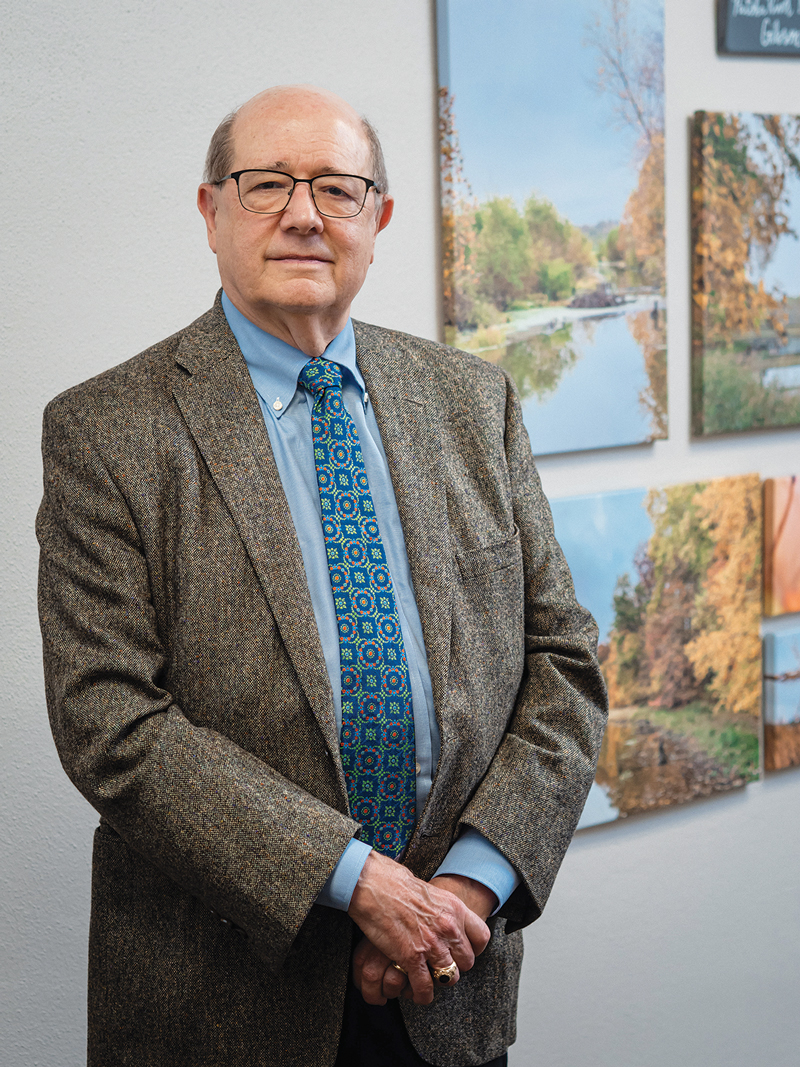
To sustain operations, Easterseals mostly relies on individual donations, a responsibility the public has fulfilled for decades. Some make sure to call into the annual telethon. Others always mark the spring day that the LemonAid Stand is set up on Bellemeade. And then there’s Pete. No one knows who he is — his 44 donations have remained anonymous since 1990 — and his donations are hidden on the Easterseals campus. Pete leaves a note with instructions for staff to find his gifts, which now total $108,000. His sign-offs have become his trademark: “You will hear from me again. Pete.” “In 2025, Pete and all the ‘elves’ who followed his lead made Christmas brighter for over 190 people,” says Easterseals President and CEO Kelly Schneider. “It’s so much fun to see that outreach multiply and it all started with Pete’s generosity.”
Longtime donor John C. Schroeder saw inside Easterseals’ operations in 2025, when his wife, Diane, was diagnosed with Parkinson’s disease. “Diane feels that Easterseals has been very beneficial to her as she moves along the line,” says Schroeder, the president and CEO of Crescent and Wabash Plastics. “The staff here do it because of their love for wanting to help others. You can see it in everything they do and all the work that they put in. They see the good that comes out of it.”
A Healing Atmosphere
Doctors at Louisville, Kentucky’s Norton Children’s Hospital told Ethan Hills and his family that he would never walk. The 13-year-old Castle North Middle School student suffered a traumatic brain injury in April 2024 after a tree fell on him during a camping trip. Since starting physical and speech therapy that November, his mobility has improved exponentially. “Easterseals has impacted me and my family by helping me get out of a walker and walking all by myself,” says Ethan, who served as Easterseals’ Youth Ambassador in 2025. “Getting back to normal as much as we can is the big benefit,” adds his father, Aaron. “Seeing the amount of growth since he came home with Easterseals has been incredible.”
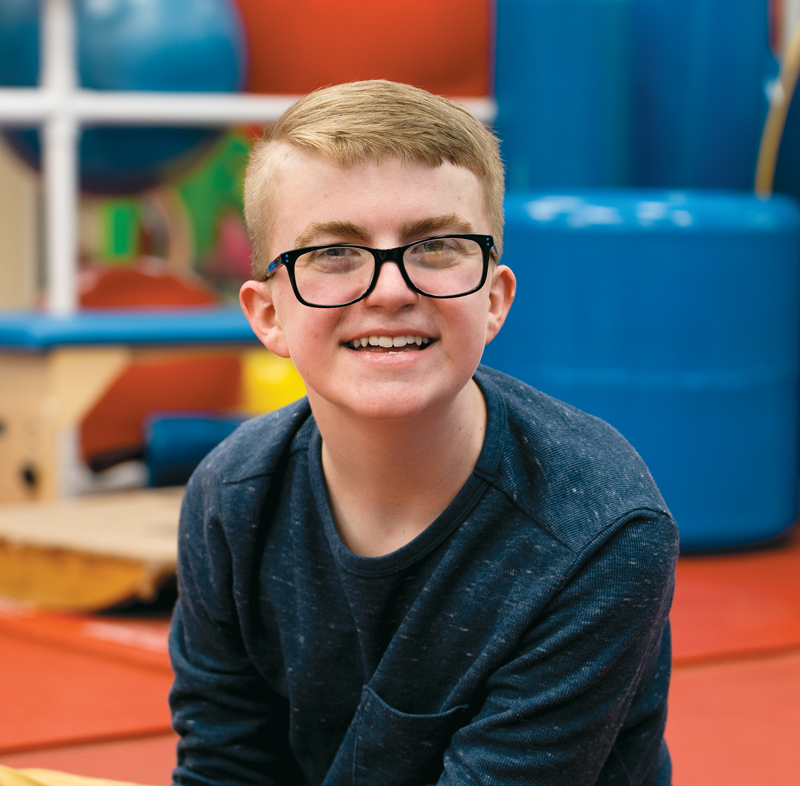
Ethan’s progress has been staggering. He could not speak until October 2024; now, speech therapist Christi Watkins has him telling stories, stopping in problem areas to fine-tune his projection and pronunciation. Occupational therapist Lisa Ingler works on his hand strength and fine motor skills. Physical therapist Rachael McCullough incorporates sports Ethan loves into their twice-weekly sessions. “Easterseals has made me part of their family,” Ethan says, pointing to the resulting friendship between his sister, Emilia, and 2024 Youth Ambassador Eleanor Daywalt. “They care about me, help me, and give me a lot of encouragement.”
Eville Iron Street Rods member Maurice Berendes was somewhat familiar with Easterseals; the nonprofit benefits from proceeds of the club’s annual Frog Follies festival. But his connection to Easterseals changed dramatically after a February 2014 fall off a scaffold lodged a piece of backbone in his spinal cord, an injury that left the retired Indiana Bell Telephone Company mechanic in a wheelchair. A social worker at the Shepherd Center in Atlanta, Georgia, advised him to seek rehab at Easterseals.
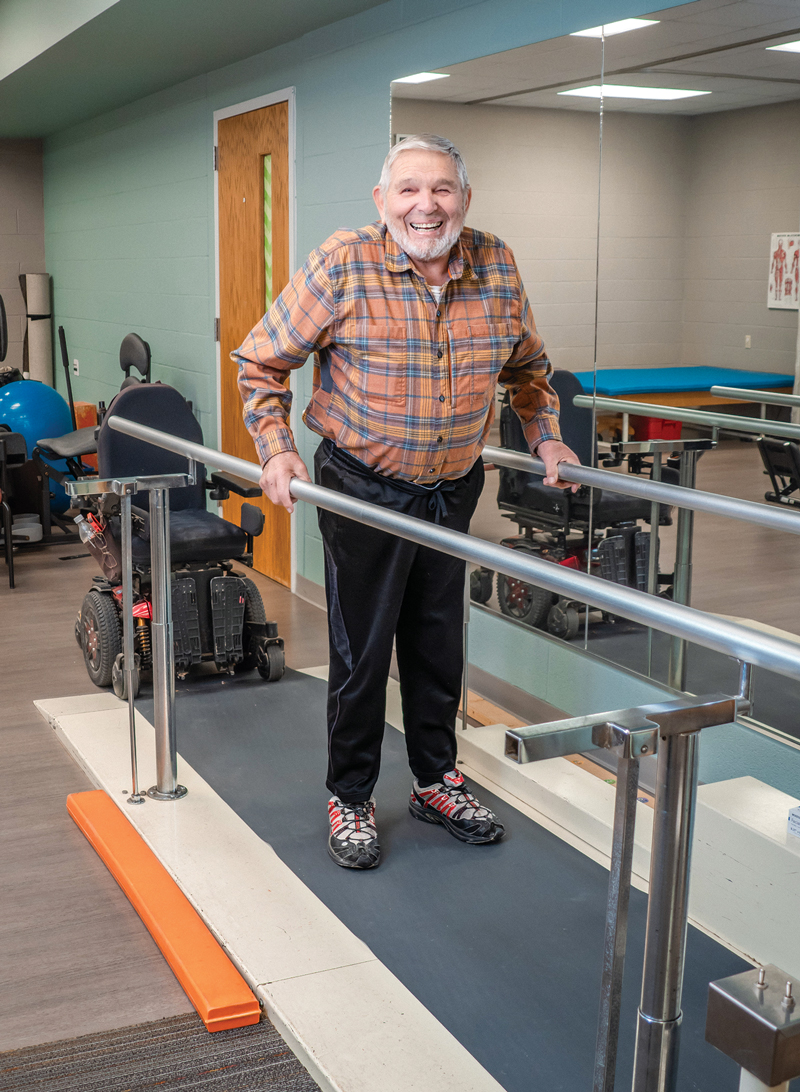
Berendes returned to his hometown and began twice-weekly sessions two months after his accident. “I was probably hard to get along with at first, but the people here, they were just wonderful,” says Berendes, now 85, who attends weekly therapy with physical therapist Patty Balbach. “I can’t imagine getting rehab at any place else that could have given me the strength and the confidence to do what I do. I basically do everything I’ve done before I got hurt. … I just do it (in) my wheelchair.”
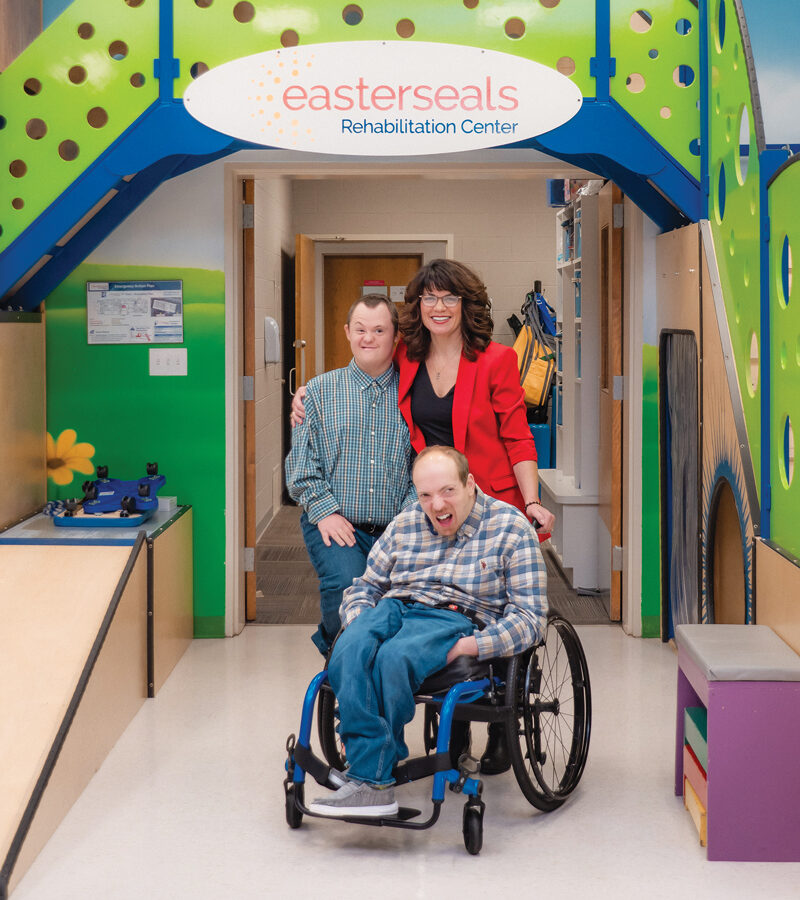
Named Easterseals’ Adult Ambassador for 2016, Berendes was paired with then-6-year-old Youth Ambassador Gracie Tucker. As a one-year honor and commitment, each annual pair of ambassadors assists Easterseals with community outreach and publicity, fundraising, and even meetings with state and national legislators. The ambassador program also helps Easterseals clients broaden their own perspective of the organization. “The most gratifying thing is how they help the children here. To see that the kids make so much progress, you know? That’s more gratifying than anything for me,” Berendes says.
A Compassionate Presence
As robust as Easterseals’ services are, clients and executives frequently attribute its strength to dedicated employees, many of whom have spent their entire careers with the organization. Balbach, a 46-year physical therapist, insists that the impact clients have on her is greater than her impact on them. She applied for a job at Easterseals in 1980 because “I knew this place had what I wanted,” she recalls. After holding leadership positions, including supervisor of physical restoration and director of rehab services, she stepped back when she had children and refocused on her true passion for working directly with clients. “I’ve met some of the most resilient, amazing people. I never would’ve had that opportunity anywhere else,” she says, recalling a client with a spinal cord injury who doctors said would never walk again. A longtime pipe fitter, he worked with Balbach until he could walk with braces, and although he could never go back to his old position, he still could work with the same employer. “He could be employed again, and at a job he truly loved,” she says.
Early Learning Center teacher Monich Carter needed Easterseals after her daughter, Diamond, was born in 1991 with profound hearing loss. Now, as lead teacher in Easterseals’ pre-K classroom, she educates and cares for 18 children of all abilities, helping them prepare for kindergarten while also adjusting their glasses and leg braces, helping nonverbal students communicate with switchboards, and assisting kids with G-tubes and who use wheelchairs or walkers. All three of her grandchildren also have needed Easterseals services for profound hearing loss. “I wouldn’t send them anywhere else,” she says.
Not just a rehab or education center, Easterseals expanded with residential programs by opening its first group home in 1987. “That was a huge addition because it’s the first time we were offering a 24-hour-a-day service. That really changed the way we operated, but it also gave us an opportunity to really make an impact in people’s lives,” Raisor says. Christy Gogel can attest to that impact. As residential services administrator, she oversees the eight group homes — six in Vanderburgh County and two in Warrick County — accommodating 64 residents. “We serve people throughout the longevity of their life,” she says. “We have clients who’ve been here for over 35 years. Their group home genuinely is their home.” Her passion stems from watching her adopted twin brothers grow up with disabilities, facing both the challenges of everyday life and how they were treated by society. When she joined Easterseals in 2000 as a group home coordinator, Gogel oversaw group home teams and enjoyed a game of UNO or an afternoon of crafts with clients. Just as in other departments at Easterseals, staff and residents grow close, she says: “Genuinely, the clients we serve become family.”
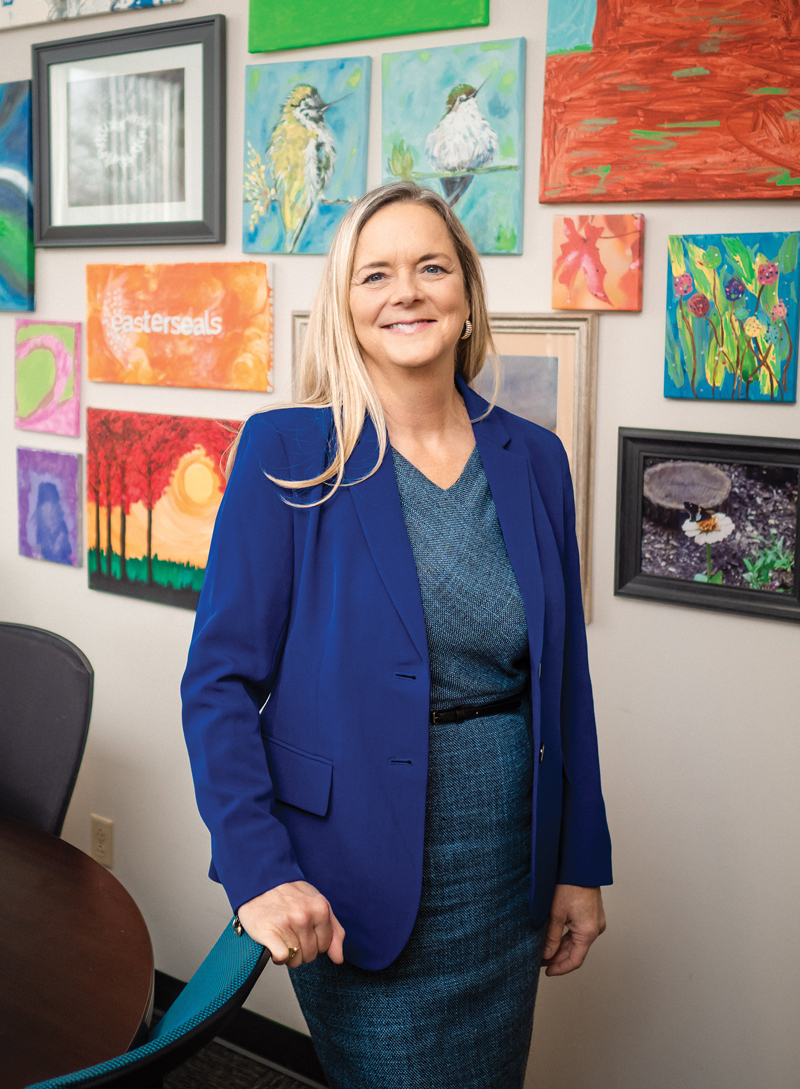
Gogel says she has worked alongside many of the same employees for 15-20 years, a recurring theme at Easterseals. “I used to say that if you haven’t been here 10 years, you’re still kind of new,” says Schneider, who began her Easterseals career in 1988 as a manager in the group home program, then moved into leadership positions before succeeding Raisor as president and CEO in 2015. She says that in the last 38 years, she’s never imagined working anywhere else. Despite different departments that typically do not overlap, all Easterseals employees are committed to banding together, including with regional partners, to integrate services. “We always look for opportunities to partner with other providers in the community so we can make sure we’re meeting the needs of people to the best of our ability,” Schneider says, pointing to the culture she inherited from Raisor. “We say it all the time, but it really is true: It’s a real teamwork atmosphere.”
What’s next for the 80-year-old Easterseals? More space is needed, which could mean leaving its longtime location on Bellemeade. “We’re completely maxed out here. So, for us to continue to meet the community need, we definitely need another alternative, with more space. And we’re currently looking at those options,” Schneider says. Leaving that facility will be bittersweet, but Easterseals’ future “always needs to be about the mission,” she adds. “The most fulfilling thing is seeing that lived out with clients, staff, our culture, our relationship in the community, and our volunteers.”
A Timeline of Easterseals