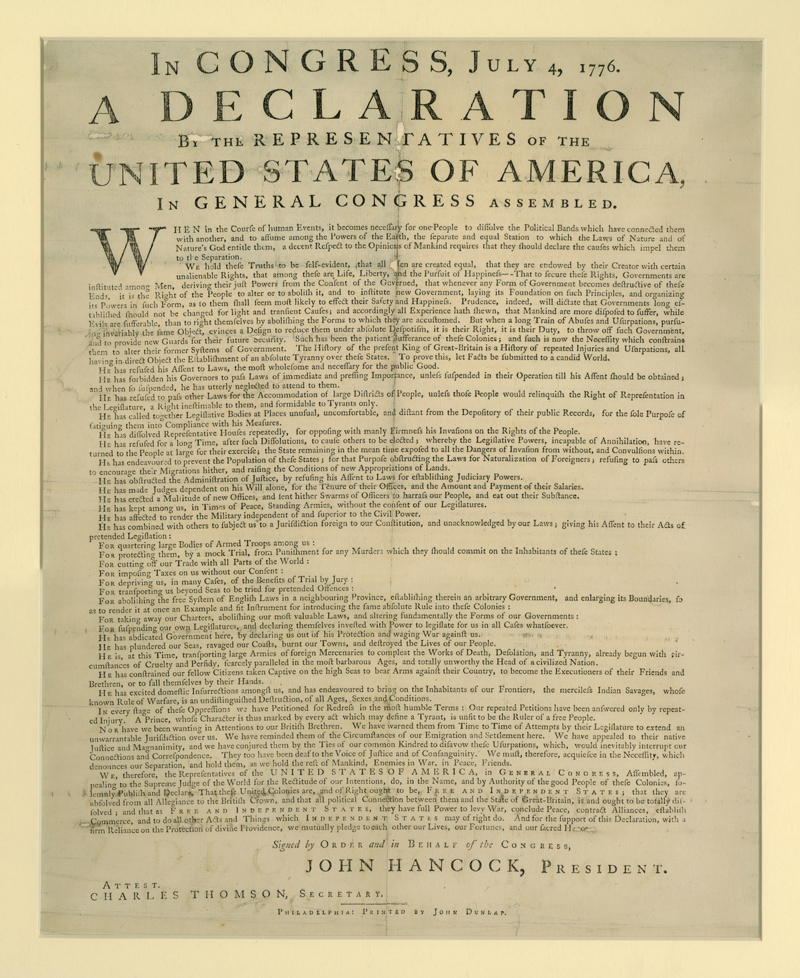

On the night of July 4, 1776, just after members of the Continental Congress signed a letter declaring the American colonies’ independence from the British Empire, John Dunlap got to work. Copies were needed to notify colonial leaders and governors, newspapers, military commanders, and Parliament and King George III. Dunlap, then a 29-year-old Irish immigrant, owned a printing business in Philadelphia, where the Continental Congress met. That evening, the process of printing paper on his hand press was standard, but the aftermath left its mark on history.
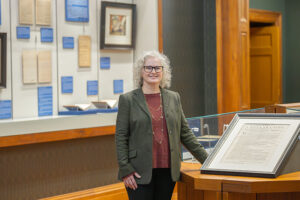
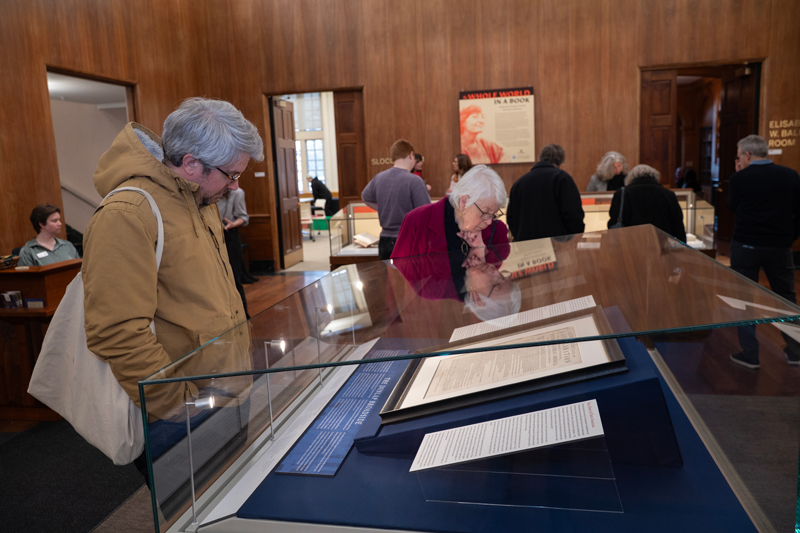
Of the hundreds of copies — known as Dunlap Broadsides — likely printed that night, only 26 are known to still exist. Many are housed in the former colonial states, but one has made its way to the Hoosier State. Through Dec. 18, Evansville-area residents can view one on display at Indiana University’s Lilly Library in Bloomington.
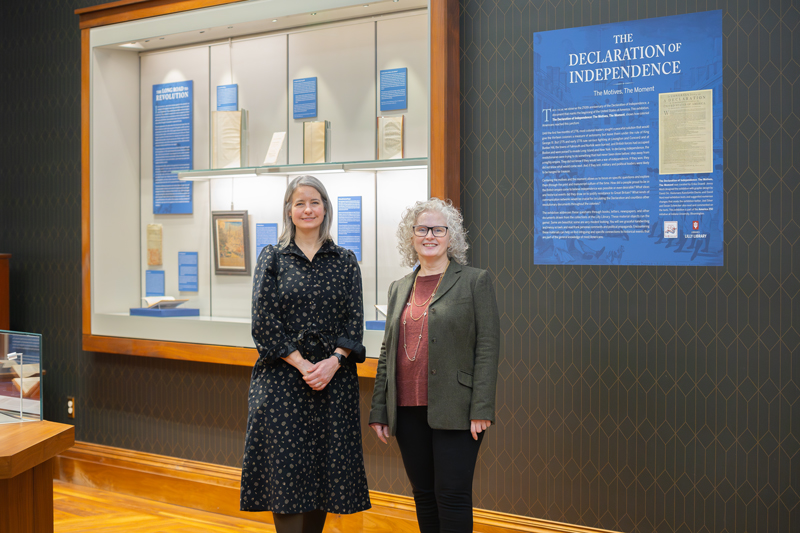
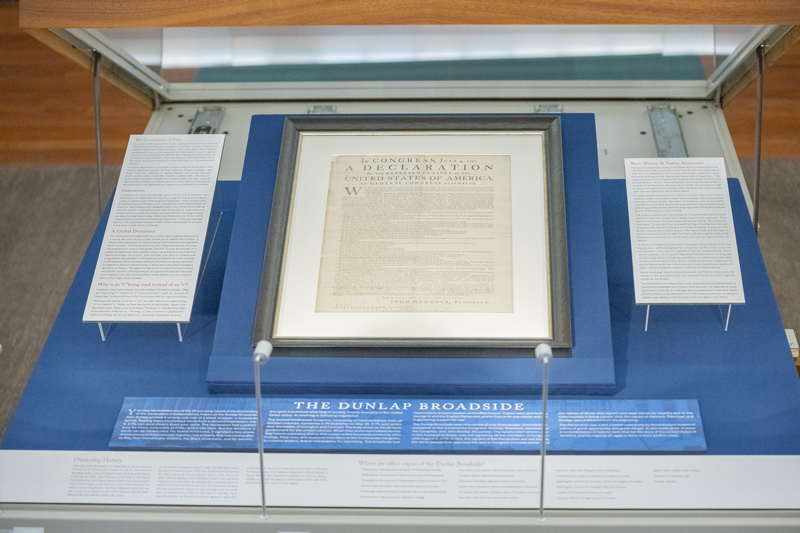
“It does give me chills to stop and read the words, because it is a piece of paper there at the beginning” of America, says Erika Dowell, Lilly Library’s Executive Associate Director and Curator of Modern Manuscripts since August 2016. “To know the risk that all those people were taking … it is a very important, rare thing, but it’s also this connection to that time, and it’s special when you stop and think about it.”
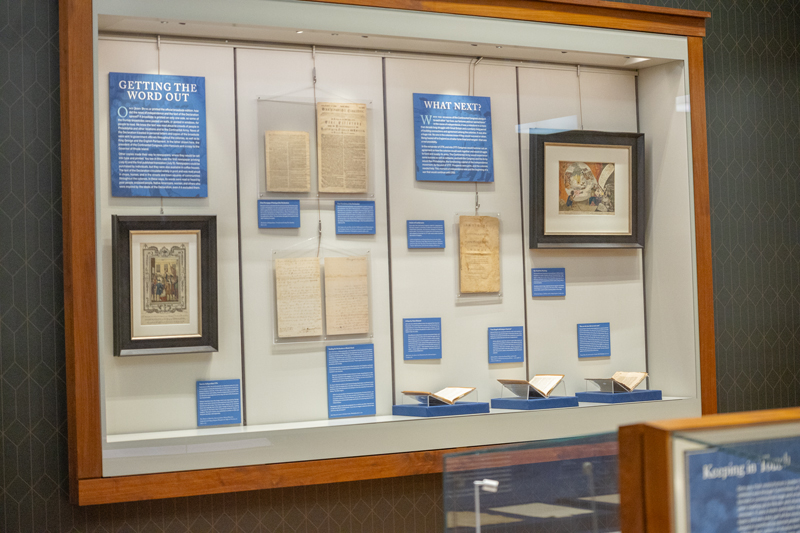
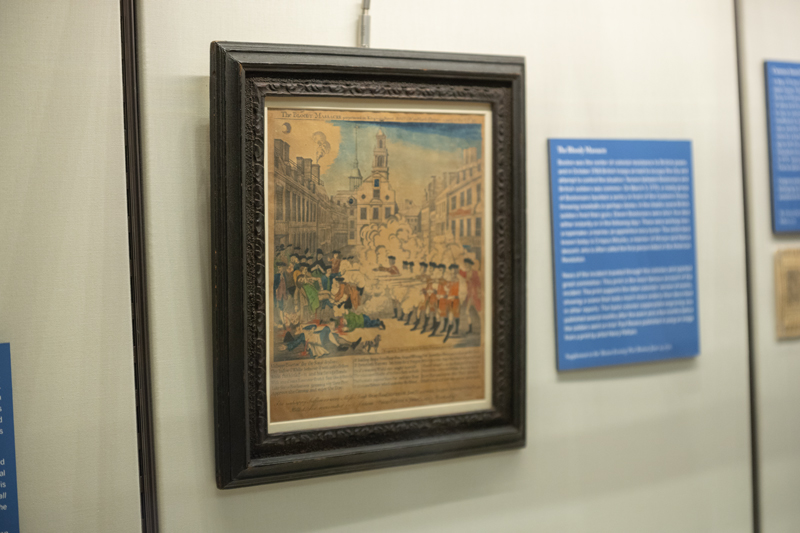
Dowell curated and Jenny Mack, an IU museum exhibition specialist, designed the exhibit “The Declaration of Independence: The Motives, The Moment,” which examines the events leading up to American colonists breaking free from England, an unprecedented move against the British Empire.
“Our specialty is connecting people with things from the past,” Dowell says. “I wanted to hone in on the Declaration as an inflection point in history. How did the colonists, part of the largest empire known, decide that this was something advisable or possible? How did they get to this point? No one had done it before. What was it like just after the Declaration? How was the language disseminated in 1776? What were individual experiences at this moment when no one knew what was going to happen? That was a compelling and prescribed chunk of time to look at.”
The Dunlap Broadside has been part of the library’s permanent collection since the 1950s, when Josiah K. Lilly Jr. donated a vast set of materials to Indiana University. Lilly had purchased the Declaration in 1951 from New York book dealer David Randall. He paid $13,500 for his copy of the Declaration, but it likely would fetch over seven figures today: Another original Dunlap Broadside sold for $8.14 million in 2000.
Although the Lilly Library’s Dunlap has been exhibited only a few times since 2000, it has been readily available for viewing by smaller groups, students, and hands-on weekly tours at 2 p.m. ET Fridays.
Lilly’s Dunlap Broadside came to the library in good condition. “For a long time, it has been matted and encased in plexiglass. This year, we got rid of the enclosure and got a different matte and frame that work with the exhibition design,” Dowell says. Visitors can connect with the curator herself at monthly talks on Saturdays through October, the next is June 13.
“This moment in time, it was 10-12 years of developing sentiment that ended up in a relative consensus,” Dowell says. “Untangling that (for the exhibition) was a real leap of imagination.”
When You Go
“The Declaration of Independence: The Motives, The Moment”
On display through Dec. 18; check library’s website for open hours
Curator talks: noon-2 p.m. EDT June 13 and July 18
Lilly Library at Indiana University
1200 E. Seventh St., Bloomington, Indiana
Free admission