

Read more about Evansville’s chapter in the American story in the July/August 2026 feature story.
A city’s landmarks act like chapters in a book. Evansville’s story is interwoven with four dignified properties that have stood watch over the city since the 1800s. “Homes are ways to learn about the beauty of our history and architectural treasures,” says Reitz Home Museum Executive Director Joseph Lutz.
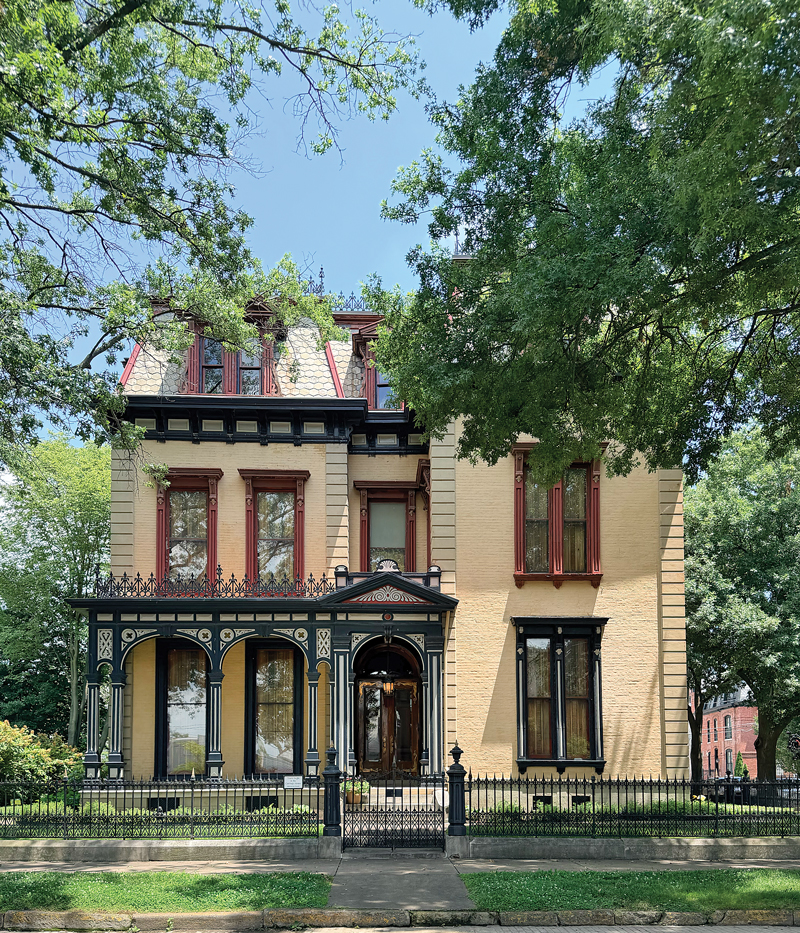
Reitz Home
“There are few families in town with as prominent a name as Reitz,” Lutz says, and lumber baron John Augustus Reitz’s French Second Empire-style family home at 112 Chestnut St. is one of the region’s best glimpses of daily life in a turn-of-the-century prominent family. “Our goal is to make you feel like the family just stepped out,” Lutz says. Second-floor bathrooms are evidence of indoor plumbing that was relatively new in 1871. The chandeliers switched fuel sources because electricity wasn’t available 24 hours a day. The family entertained guests among handcrafted furniture and hand-painted china. The home-turned-museum is an anchor for the Riverside Historic District as well as one of the city’s most recognizable landmarks and tourist attractions. In 2025, 2,500 visitors and nearly 500 students walked through the museum, many drawn by connections to their own American stories. The Reitzes, Lutz says, “are a quintessential American family: The parents both emigrated from Prussia, found each other in Evansville, married and had 10 children, built businesses and invested. … It’s a good, civic-minded family” — with direct descendants living here today — “who made a lot of money but gave it back to the people who got you there.”
Carpenter House
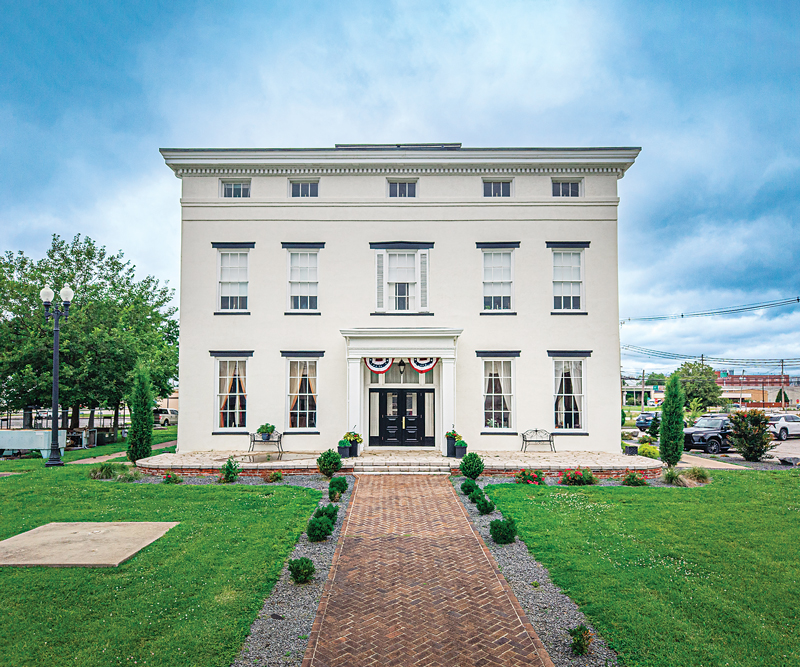
Vermont native Willard Carpenter went West to find new opportunities and ended up creating them for generations of Evansvillians. Joining his dry goods wholesaler brother here in 1837, Carpenter’s business success and civic leadership connected Evansville to the Wabash and Erie Canal and a regional railroad system. His family relaxed on the 1848 Greek Revival home’s large piazzas and porches, and its position at 413 Carpenter St., close to the river’s bend, allowed it to be a stop on the Underground Railroad. It hasn’t been a residence since the Great Depression, but its turns hosting the American Legion Funkhauser Post 8, WTVW, Medco, and WNIN have kept it connected to community endeavors. Now, Catanese Real Estate uses Carpenter’s old residence to help others find their new homes, and the old TV studio behind the main house serves as overflow space for Willard Public Library. Speaking of …
Willard Library
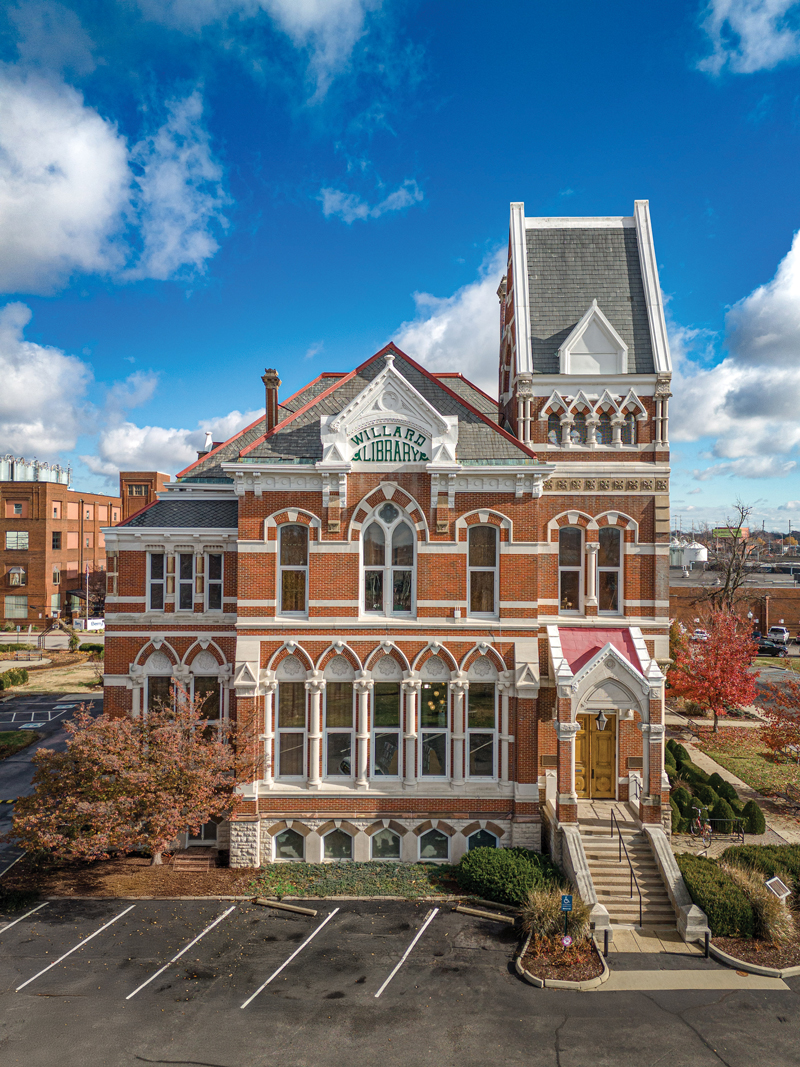
Known locally as a “pioneer of public charity,” Carpenter’s namesake library at 21 N. First Ave. testifies to his benevolence and love of knowledge. Featuring steep roofs, turrets, and arcades, it’s also a gorgeous piece of Gothic Revival architecture built in 1881 by James W. Reid, who designed San Diego, California’s grand Hotel Del Coronado. Established for, as Carpenter stated, “the improvement of the moral and intellectual culture of the inhabitants of Evansville,” Willard Library now also is an acclaimed regional hub for genealogical materials that help us trace our roots.
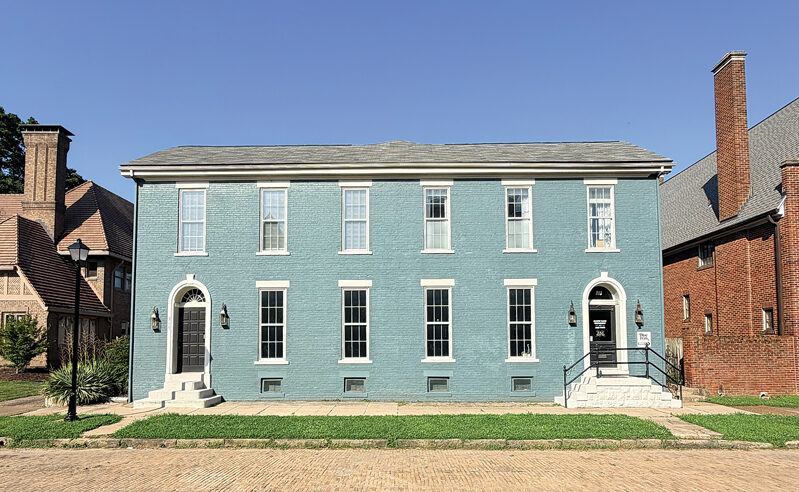
Thomas Stockwell Home
Arguably the oldest existing structure in Downtown Evansville, this Federal-style duplex at 313-315 S.E. First St. dates to 1839 and was first occupied by Thomas Stockwell and the Rev. Joseph Wheeler. Unlike most of its structural neighbors from that era, the Stockwell Home remained a residence through the 1980s, when it became the office of Roy Cobb, CPA and Associates, which merged with Riney Hancock in 1989. Investors Jeff McGowan and Jonathan Lee bought the building in 2022 and renovated the second floor into an apartment and rental units for a photography studio and an esthetician. First-floor spaces are rented to Clean Suite commercial cleaning company and Blue Fern, a salon, esthetician, and cosmetic tattoo shop. Still sporting the original symmetrical facade, the slate blue former home’s round-arched corner entrances with sunbeam windows are framed with molding accented by a wooden keystone, paying tribute to its builders’ vision.