


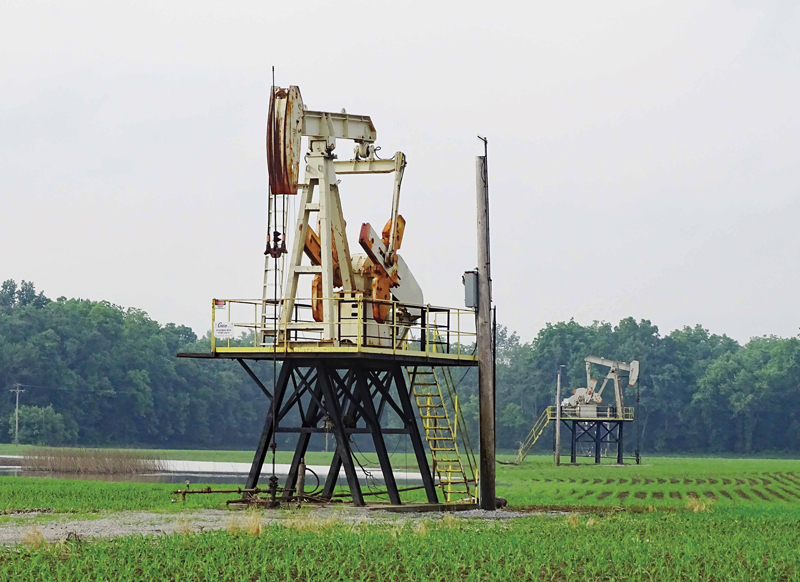
Nearly 90 years ago, Southwestern Indiana experienced its own oil rush. A “gusher” made itself known Dec. 14, 1938, when a newly tapped well shot oil 25 feet above the top of a 90-foot derrick just 4.5 miles north of Griffin, near the Old Red Covered Bridge in Southwestern Gibson County.
Thus began a regional oil boom, and surrounding towns reaped the economic benefits. The gusher produced an estimated 1,000 barrels per day, so storage tanks were installed to hold it until it could be transported. By 1942, 120 area oil wells were in production.
Oil field workers were paid 80 cents an hour, almost twice what workers in other industries made. For laborers, that was a good reason to rush to the new Indiana oil field. One worker in the Griffin area brought home almost $2,000 in a year, slightly more than the national average.
The lucrative nature of the industry brought workers from as far as Oklahoma. They settled in towns like Princeton and New Harmony, but the area’s largely rural nature made finding housing difficult, so some rented apartments in Princeton, while others had to live in old barns or even chicken coops.
By 2003, the Griffin Oil Field — comprising 25 square miles in Gibson and Posey counties — produced 84,412,739 barrels of oil a year. Many of those wells are still active. As for the site that started it all, the Griffin Gusher well was capped in 2018. All that remains is an open field.