


If you have not yet heard of “Dry January” — well, maybe you’ve been hanging out in bars too much. It’s a thing, and it has been for a few years. It officially was launched in the United Kingdom in 2013 by the nonprofit Alcohol Change UK, though the practice has roots dating back to 1942 Finland, where “Sober January” was employed to help win the war against the Soviet Union.
Liverpool, New York-based market research firm Drive Research reported Dec. 10, 2025, that 33 percent of U.S. adults participated in Dry January earlier that year. Participation in “Damp January” — the practice of consuming less alcohol — increased from 11 to 15 percent.

So, what’s a bar to do? Surely, this means declining revenues for restaurants and bars, even if consumer behavior in December (including increased alcohol consumption) is what drives some of us to observe Dry January.
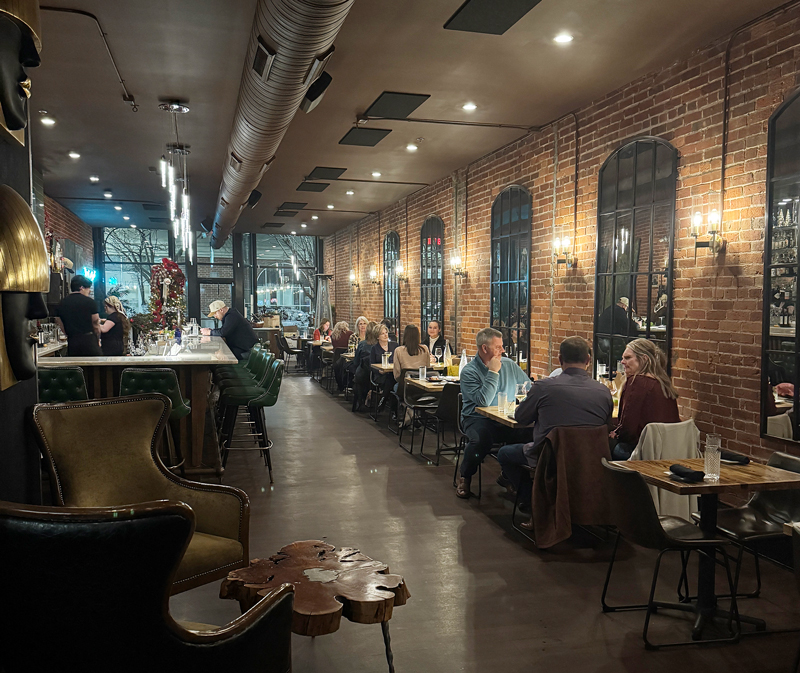
Some restaurants and bars are leveraging this opportunity, of course, by promoting mocktails. Earlier this week, I treated myself and a friend to a five-course gourmet dinner and mocktail pairing at Entwined Wine & Cocktail Bar on Main Street in Downtown Evansville.
After spending the holidays with my sons in their 20s, plus watching way too much football, I decided I could benefit from Dry January. My friend, whose birthday we celebrated at the pairing dinner, had committed to the “Damp January” model, as travel and a few celebratory commitments might call for wine. Entwined did offer traditional wine pairings at the dinner. I observed most of the guests trying the mocktail pairings.
Chef Michael Hite (profiled in the January/February issue) created the menu; mocktails were designed by bar manager Kevin Gomez. Chef Hite welcomed guests by explaining the genesis of the event, saying, “We were inspired by the movement of Dry January and wanted to offer those participating an elevated dinner with creative mocktails to pair.”
Each course was explained by Hite and Gomez. Here’s what we enjoyed!

The starter course was a generous spoonful of caviar and crème fraîche on a fried basil leaf (two leaves per guest), a combination I never would have imagined but was sublime. The salty fish eggs atop the slightly sweet cream on the peppery basil leaf — wow; just wow. Our pairing was 0.0% ABV Mionetto, an alcohol-removed sparkling wine that at first was a bit bright on the palate but settled into a nice minerally complement to the basil leaf.
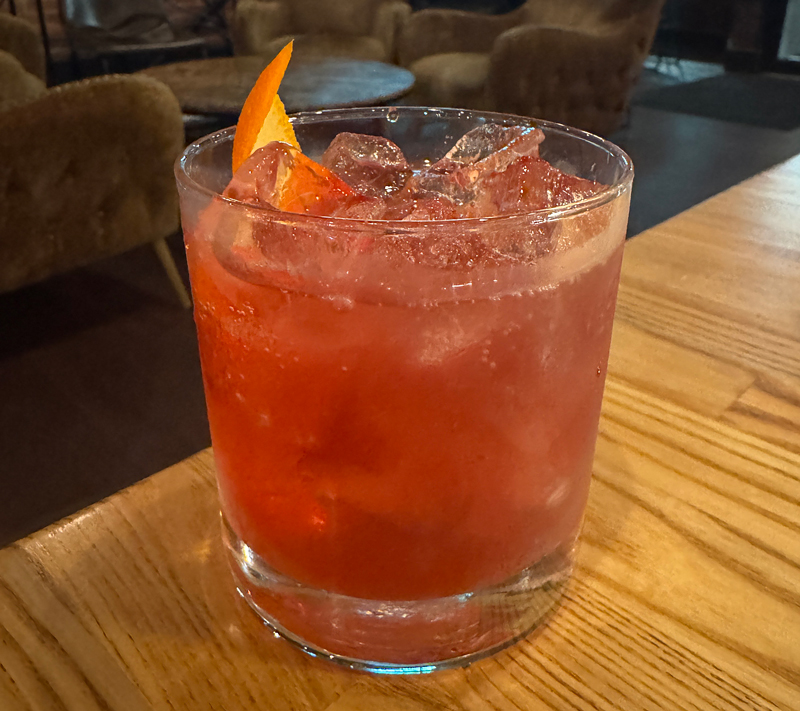
Next came a high-end treat: crispy pork belly with sweet chili hot sauce paired with a zero-alcohol “smokey phony negroni” served with the signature orange peel. This was my friend’s favorite cocktail.
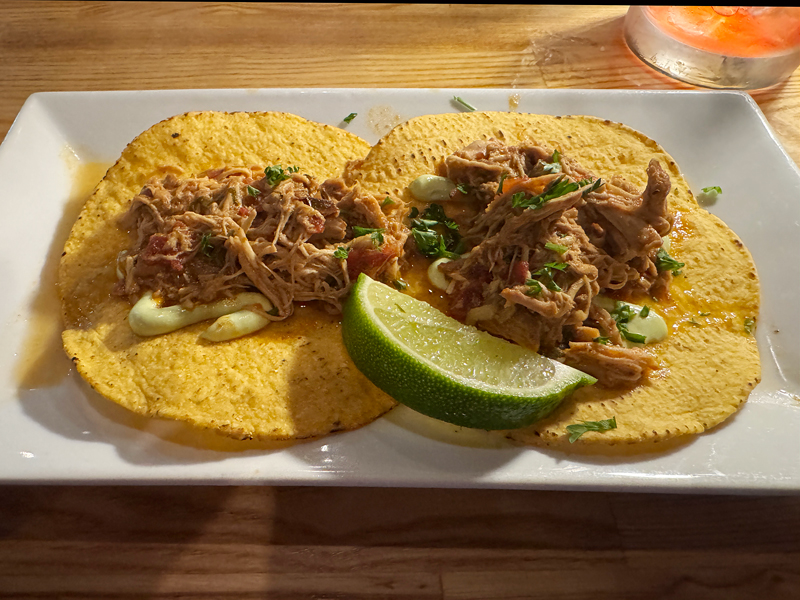
The third course was Chicken Tinga tacos paired with an Almave 0.0% ABV coconut margarita. The alcohol-free Almave tequila, distilled from blue agave, could have fooled many. I’m a coconut fan, and I loved that addition. The Tinga tacos featured shredded chicken that had been simmered in a smoky, spicy, tomato-based sauce served on crispy tostados. Chef Hite explained the intensive process as we savored every bit.
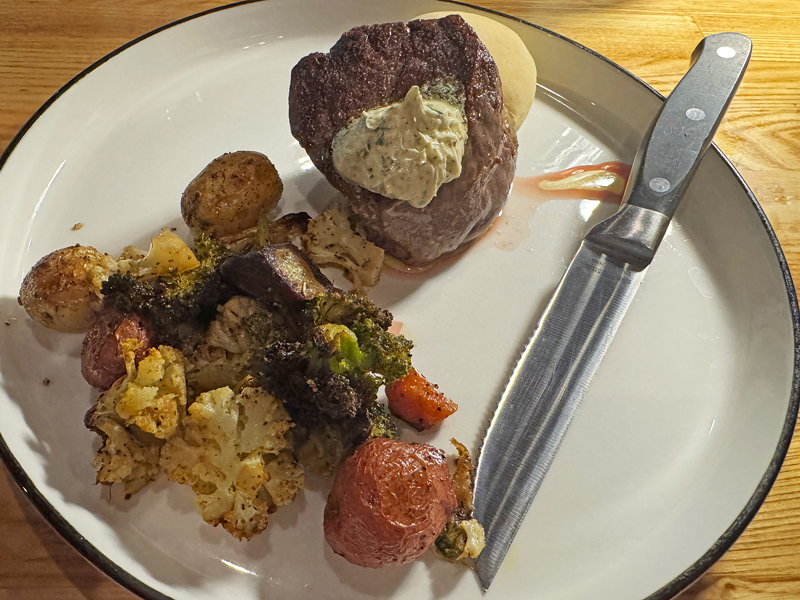
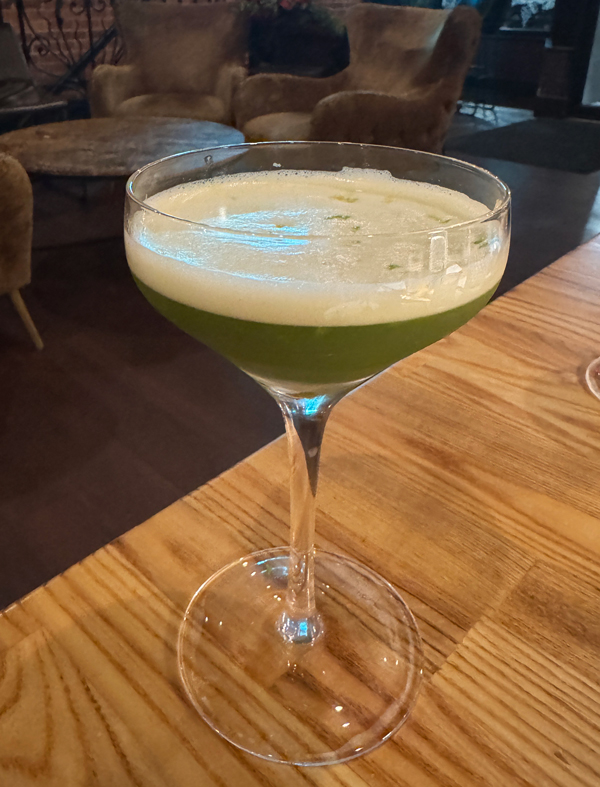
Filet mignon was the main course, served with herb butter and roasted vegetables, and paired with a 0.0% ABV basil gimlet, which also might have tricked a serious cocktail connoisseur. Chef Hite and his team nailed the filets, perfect in every way.
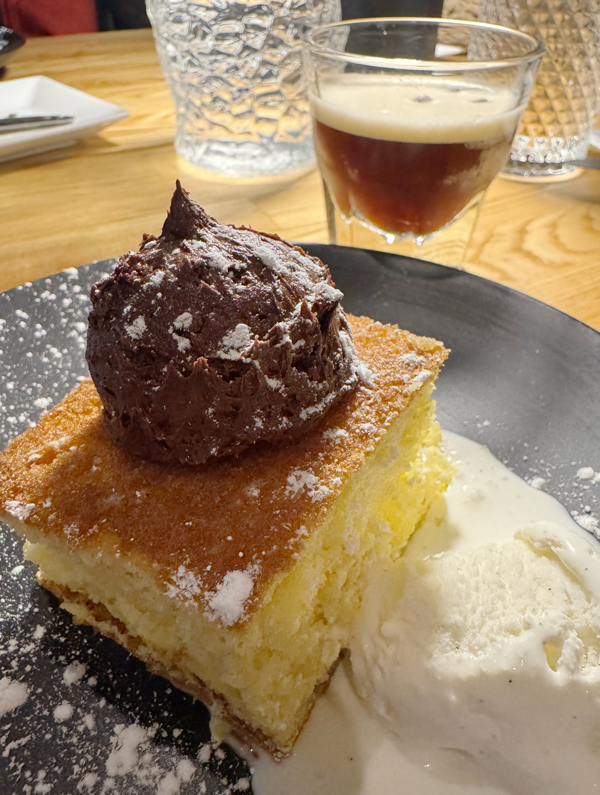
Giving up alcohol means more room for sweets, perhaps. We finished the evening with yellow butter cake with chocolate buttercream icing and ice cream, served with a 0.0% ABV espresso martini. Gomez’s iteration of the espresso martini included the addition of a few cloves, which I may try in a non-alcoholic martini at home. I do like to use my espresso machine for that purpose but had not yet contemplated making a booze-free espresso martini.
Chef Hite and Gomez thanked their guests, alerted us to upcoming events, and were thanked with a round of applause.
As I was preparing this story, a press release arrived in my inbox offering comment on the benefits and challenges of Dry January from Brent Franson, developer of Death Clock, an AI-driven app that analyzes a user’s health profile against lifestyle, diet, exercise, and other data from large studies to estimate that person’s expectancy and provide ways to improve it. He offered Evansville Living these sentiments:
“Let’s approach this with a scientific lens: the narrative that moderate alcohol consumption might be benign or even beneficial is increasingly challenged by emerging research. Consuming less than one or two drinks per week might have a negligible impact on your health, but it’s crucial to acknowledge that any consumption beyond this threshold can have tangible negative effects.
During these breaks from alcohol, one of the most immediate benefits is an enhancement in physical health. This period of abstinence allows your body to recover from the cumulative effects of alcohol consumption, which can include inflammation, liver stress, and disruptions to your metabolic processes.
Moreover, taking a break from alcohol serves as a pragmatic experiment to reassess your dependency and relationship with alcohol. It’s an opportunity to observe how life unfolds without the routine consumption of alcohol and to challenge the notion that it’s essential for relaxation or social engagement.
A critical aspect often overlooked is the impact of alcohol on sleep. While alcohol might seem to aid in falling asleep, it significantly disrupts the sleep architecture, particularly the REM cycle, which is crucial for cognitive functions and overall well-being. Regular drinkers might initially experience worsened sleep quality upon abstaining, a manifestation of the brain’s adjustment to the absence of alcohol. However, persevering through this adjustment period is key to experiencing the profound benefits of improved sleep quality and, by extension, enhanced cognitive function and mood.”
For those observing Dry January or Damp January, you’re halfway to the finish line. Take time to reward yourself!