

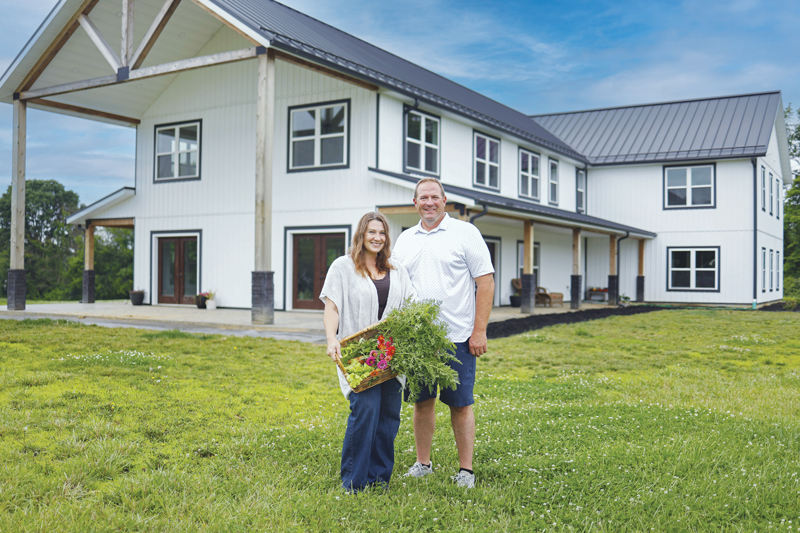
What led you to make the dramatic lifestyle change of buying nearly 14 acres and establishing a farm?
Due to life and health factors, we felt that moving back out to the West Side and into the country would be beneficial to our family. I have severe migraines and other chronic pain issues, so the goal was to make a change into a more sustainable lifestyle that would allow us time and space to get away from the hustle and bustle of town and to work on improved health, primarily focusing on switching from fewer processed foods to more homegrown and whole foods.
How was that decision influenced by your family history?
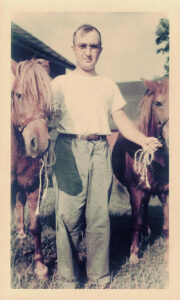
My grandfather, J.C. Brettin, and his father, Christoph Wilhelm Johan Brettin, were farmers. My mom said that my great-grandfather had a dairy herd and farmed 260 acres. I was born in Manhattan, Kansas, but when my parents got divorced, my mom moved back to LaPorte, Indiana, to that same farm property, albeit much smaller. My childhood memories were of my grandfather and his cows being moved back and forth. I did not picture myself doing anything like this in my adulthood, but I am so grateful to be in this place. I’ve pretty much turned into my grandparents and my dad since moving out here.
Tell us about your gardening goals.
First is our food gardening. Some of our most bountiful plants have been tomatoes, peppers, and lettuces. We also love growing potatoes, which has been a very simple staple to grow. We have implemented multiple different containers over the last two summers to grow them in, including milk crates and dollar store laundry baskets, as well as our new wire “potato tower,” all of which have been extremely successful using a “lasagna method” of layering straw, soil, and farm collected compost. We haven’t been quite as successful at melons, but every summer is a new adventure, and perfecting that and adding other staples like corn, broccoli, and cauliflower on the list to master are on the agenda. In addition to the existing mulberry trees and blackberries, we have added perennial options, including fruit trees, asparagus, strawberries, and three grapevine rows.
Next is the “farm side” of the property, where I have been trying to create a flower farm. We have thousands of daffodils that come up every spring, and we also have tilled and planted sunflowers and zinnias each summer. I switched over to adding a lot of perennials that I didn’t have to replant year to year, including different varieties of small rose bushes, dahlias, irises, black-eyed Susans, and lilies. Ideally, I would like to set up something more formal on that side of the farm for the flowers, but until we can run water over there, it’s very much a “plant it and give it to God” methodology that relies on good soil composition and well-timed rains to work each summer.
What’s your favorite part of your new lifestyle?
The peace that living out in a mostly rural area brings and the satisfaction of knowing where my food comes from. After investing in a dehydrator, I am looking forward to preserving much more food this year. In 2023, we canned over 200 pounds of tomatoes. In 2024, we canned over 400 pounds of tomatoes to keep as food reserves and to share with friends. So, it all becomes a learning process and about teaching yourself new things. Some things work great, and others need time, attention, and practice to perfect, and you have to be willing to learn as you go!
Sweet Homecoming
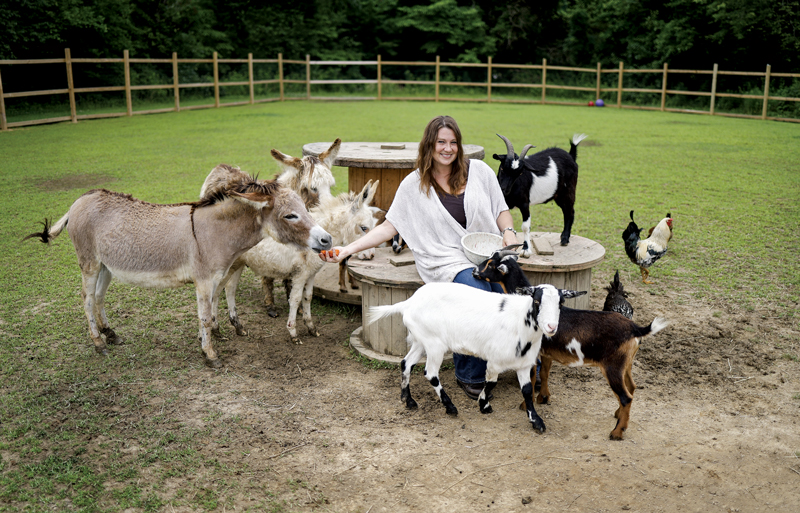
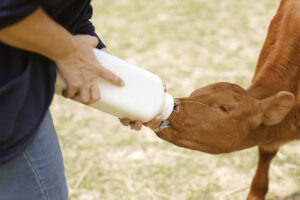
The Davises’ farm is home to five rescue dogs, one rescue cat, a dozen-plus chickens, three donkeys, and four goats, with two more goats scheduled to join the farm this summer. An addition this spring was a calf with a soft brown coat, a sweet disposition, and only one eye — “she was born that way,” Nikki says. Juney was an early Mother’s Day present from a friend’s farm and has been warmly welcomed by the Davises’ other animals. “She will grow to be 1,000 pounds, and she will never see a slaughterhouse,” Bob says. “She’ll be spoiled for the rest of her life.”