

Read the full feature story in the January/February 2026 issue.
When Joann Bogard mentioned many of her The Mindful Organizer clients struggle parting with sentimental items, I felt that pang of tenderness — try wrenching my parents’ wedding champagne glasses from my hands! To keep personal treasures from becoming clutter, I recently turned to Swedish death cleaning.
The Scoop
Author and artist Margareta Magnusson popularized the term for purging possessions to spare loved ones that burden after you pass away. I’ve helped prepare four extended family residences for estate sales, so I fully support this principle. Embracing it, though, has been harder.
Bogard recommends keeping only what you can display. “At your fingertips, it’s visual, and it makes you smile, but not if it’s in a box where you’re never going to look at it again,” she says.
The Process
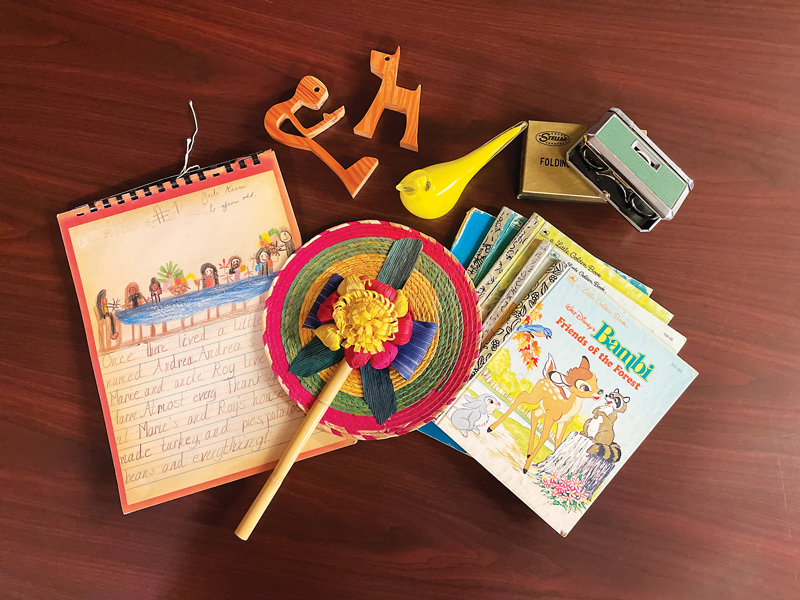
I identified items I feel deep connections to and found ways to make them usable. Concert tickets can become framed wall art. T-shirts from college clubs can be sewn into a cozy blanket. Yearbooks can be digitized, their hard copies returned to the schools’ archives. But a multi-colored jewelry tray has held more dust than rings. Someone who decorates with a feminine touch may love the floral handkerchiefs I collected as a child. Did my paternal grandmother even use her opera glasses? Cool as they are, they can go.
The Verdict
Sentimental treasures still dot my decor, like the milk bottle-turned-flower vase from my paternal grandfather’s dairy farm and the tiny glass birds that my maternal grandmother loved. I’ve found that Bogard was right — seeing those trinkets triggers memories far more valuable than the items themselves. But instead of keeping those Little Golden Books, sharing and reading them with my cousins’ young children will create a new generation of memories, and ultimately, that’s the legacy I want them to leave.